Love this? Save it for later!
Share the inspiration with your friends
I figured cutting out gingerbread cookies was just about following a stencil and hoping the dough didn’t crack. It took about twenty minutes for that assumption to fall apart completely when my first batch collapsed into a puddle of molasses and regret.
Let’s be honest, there is a specific kind of panic that sets in when you realize your dough is too warm to hold a shape. You’re standing in your kitchen, flour on your nose, wondering if you’ve ruined Christmas morning before it even started. I used to think that if the recipe didn’t require chilling for three days, it wasn’t going to hold up. But here is the thing I learned the hard way: soft chewy gingerbread cutout cookies with royal icing aren’t about rigidity. They are about balance.
My grandmother used to make these with a recipe that called for lard and a stiff dough that felt more like playdough than food. They were pretty, sure, but they tasted like cardboard and nostalgia. I wanted something different. I wanted a cookie that held its intricate details but gave way with a tender, chewy bite. It’s a tricky dance between structure and texture, and honestly, I failed a lot of times to get it right.
There was one Tuesday in November, raining sideways, when I finally stopped trying to force the dough into submission. I adjusted the ratio of brown sugar to molasses, added an extra egg yolk for richness, and let the dough rest just long enough to relax the gluten. The result wasn’t just a cookie; it was a canvas. The royal icing sat on top without bleeding, and the gingerbread underneath had that perfect snap followed by a soft center.
It wasn’t magic. It was just understanding that the spices need time to bloom and the dough needs room to breathe. Now, when I see those detailed stars and trees holding their shape on a cooling rack, I don’t feel panic. I feel a quiet satisfaction. You know, the kind that comes from knowing exactly why something works, not just that it does. That’s the promise of this recipe. It’s reliable, it’s forgiving, and it tastes like the holidays actually should.
Why You’ll Love This Recipe
There is a reason this soft chewy gingerbread cutout cookies with royal icing recipe has become the centerpiece of our holiday baking season. It isn’t just about the pretty pictures for social media, although, let’s face it, they are stunning. It’s about the experience of making them and the result you actually get to eat.
- Perfect Texture Balance: Most gingerbread recipes lean too cakey or too crisp. This version strikes a difficult but perfect balance. The edges set just enough to hold the royal icing, but the center remains delightfully chewy and tender. It’s the kind of texture that makes you close your eyes after the first bite.
- Flavor That Isn’t Overpowering: Ginger can easily take over a recipe, turning it into a spicy shock to the system. Here, the ginger is warm and aromatic, balanced by the deep richness of molasses and the warmth of cloves and cinnamon. It’s complex without being aggressive.
- Icing That Actually Stays Put: One of the biggest frustrations with decorated cookies is icing that bleeds into the dough or cracks as it dries. The royal icing here is piped to perfection, creating a smooth, hard shell that contrasts beautifully with the soft cookie underneath. It’s a professional finish without the professional headache.
- Make-Ahead Friendly: Holiday schedules are chaotic. You don’t have time to bake, decorate, and clean all in one afternoon. This recipe allows you to bake the cookies days in advance, store them, and then decorate when you have the calm moments. It’s designed for real life, not just perfect blog photos.
- Crowd-Pleaser Status: Whether you have picky toddlers who just want sugar or adults who appreciate a good spice profile, these cookies work. The neutral sweetness of the royal icing appeals to everyone, while the gingerbread base adds that seasonal soul.
What makes this recipe different from the rest is the attention to the dough’s hydration. By using both brown sugar and a touch of honey, we retain moisture longer. This means the cookies stay soft for days, unlike many cutout cookies that turn into hard bricks after 24 hours. It’s comfort food reimagined—beautiful enough for a gift box, but cozy enough for a quiet cup of coffee.
What Ingredients You Will Need
This recipe uses simple, wholesome ingredients to deliver bold flavor and satisfying texture without the fuss. You don’t need a specialty store to find these items. Most of them are likely already in your pantry or spice rack. The key is quality, especially with the spices and the molasses, as they define the entire character of the cookie.
For the Gingerbread Dough
- All-purpose flour: The base of the structure. Use a reliable brand like King Arthur or Gold Medal for consistent protein content, which helps the cookies hold their shape.
- Baking soda: Essential for the rise and for neutralizing the acidity in the molasses. Make sure it’s fresh; old baking soda leads to flat, dense cookies.
- Salt: Just a teaspoon to balance the sweetness and enhance the spices.
- Ground ginger: The star of the show. Don’t use powdered ginger if you can avoid it; ground is fresher and more potent. For the best flavor, buy whole ginger roots and grind them yourself if you have the time.
- Ground cinnamon: Adds warmth and depth. Pairing it with ginger creates that classic holiday scent.
- Ground cloves: Use sparingly. A little goes a long way. It adds that deep, medicinal note that defines gingerbread.
- Unsalted butter: Room temperature is crucial here. If it’s too cold, it won’t cream properly. If it’s melted, the dough will be greasy. Aim for soft but still solid.
- Light brown sugar: Packed tightly. This provides moisture and a caramel-like flavor that dark brown sugar can sometimes overpower.
- Molasses: Use regular, unsulfured molasses. Blackstrap is too bitter, and golden molasses is too mild. This is the flavor backbone.
- Egg: A large egg acts as the binder. Room temperature eggs incorporate more easily into the butter mixture.
- Honey: A tablespoon of honey helps retain moisture, ensuring that chewy texture we’re aiming for.
For the Royal Icing

- Confectioners’ sugar: Sifted to remove lumps. This is non-negotiable for smooth icing. If you see grains, your icing will be gritty.
- Egg whites: Pasteurized liquid egg whites from a carton are safest and easiest. They provide structure and shine without the risk of salmonella.
- Cream of tartar: A pinch stabilizes the egg whites, allowing them to hold stiff peaks more reliably.
- Vanilla extract: Pure vanilla adds a subtle floral note that complements the spices.
- Food coloring: Gel-based colors are best. They provide vibrant hues without thinning the icing consistency, which is critical for detailed piping.
For the best results, I recommend using a high-quality molasses like Grandma’s or Grandma’s Fancy. The flavor difference is noticeable. Also, don’t skip the honey in the dough; it’s the secret weapon for keeping these soft chewy gingerbread cutout cookies with royal icing tender for days.
Equipment Needed
You don’t need a fancy kitchen to make these cookies, but having the right tools makes the process much less frustrating. The biggest hurdle with cutout cookies is rolling and cutting, so a good rolling pin is essential. I prefer a French-style rolling pin without a handle because it gives you better control over the thickness. If you don’t have one, a standard wooden pin works fine, just be mindful of your grip.
A large baking sheet with a flat surface is necessary. Avoid dark non-stick pans if you can, as they can cause the edges to burn before the centers are set. Light-colored aluminum sheets are ideal. If you only have dark pans, lower your oven temperature by 25 degrees Fahrenheit.
For the royal icing, you’ll need piping bags. I recommend reusable silicone bags because they are easier to fill and clean than disposable ones. If you use disposable bags, double-bag them to prevent tearing under pressure. Small round tips, like a Wilton #2 or #3, are perfect for outlining and writing. A larger tip, like a #5 or #7, is good for flooding.
A stand mixer or a hand mixer will save your arms when creaming the butter and sugar. While you can do it by hand, it takes significant effort. Finally, have a wire cooling rack ready. You need the cookies to cool completely before icing, or the heat will melt the royal icing and ruin your design.
Preparation Method
Making these cookies is a process of patience, but the steps are straightforward. Here is how to get it right.
- Cream the butter and sugar: In a large bowl, beat the room temperature butter and brown sugar together until light and fluffy. This should take about 3-4 minutes. You want to incorporate air into the mixture, which helps the cookies spread slightly and become tender. Scrape down the sides of the bowl to ensure everything is mixed evenly.
- Add wet ingredients: Add the egg, honey, and molasses to the butter mixture. Beat on medium speed until fully combined. The mixture might look slightly curdled at first, but keep mixing until it comes together into a glossy, smooth paste. This usually takes another 2 minutes.
- Mix dry ingredients: In a separate medium bowl, whisk together the flour, baking soda, salt, ginger, cinnamon, and cloves. This ensures that the spices are distributed evenly so you don’t get a spicy bite in one cookie and a bland one in another.
- Combine wet and dry: Gradually add the dry ingredients to the wet ingredients. Mix on low speed just until the flour disappears. Do not overmix. Once the flour is incorporated, the dough will come together in a ball. Overmixing develops gluten, which leads to tough cookies.
- Chill the dough: Divide the dough in half. Flatten each half into a disk shape. Wrap tightly in plastic wrap. Chill in the refrigerator for at least 2 hours, or up to 3 days. This step is critical. It firms up the fat, preventing the cookies from spreading too much during baking, which helps them hold their cutout shapes.
- Preheat and prepare sheets: Preheat your oven to 350°F (175°C). Line your baking sheets with parchment paper. This prevents sticking and makes cleanup easier. You can also use silicone baking mats.
- Roll out the dough: Take one disk of dough out of the fridge. On a lightly floured surface, roll it out to about 1/4 inch thickness. If the dough is too cold and cracks, let it sit for 5 minutes. If it’s too sticky, add a little more flour. Roll evenly to ensure uniform baking.
- Cut out shapes: Use your favorite cookie cutters to cut out shapes. Dip the cutter in flour between cuts to prevent sticking. Place the cutouts on the prepared baking sheets, leaving about 1 inch of space between them for slight spreading.
- Bake: Bake for 8-10 minutes. The cookies should look set around the edges but still slightly soft in the center. They will firm up as they cool. Do not overbake, or they will lose their chewy texture. If you bake them until they are hard in the oven, they will be crunchy, not chewy.
- Cool completely: Let the cookies cool on the baking sheet for 5 minutes, then transfer them to a wire rack to cool completely. They must be at room temperature before you add the royal icing. Warm cookies will melt the icing.
- Prepare the royal icing: In a clean, grease-free bowl, beat the pasteurized egg whites and cream of tartar until foamy. Add the confectioners’ sugar and vanilla. Beat on high speed until stiff, glossy peaks form. This should take about 5-7 minutes. The icing should hold its shape when you lift the beater.
- Pipe and decorate: Divide the icing into small bowls for coloring. Thin some of the icing with a few drops of water for flooding. Pipe the outlines first, then flood the centers. Use a toothpick to pop any air bubbles and spread the icing evenly. Let the icing dry completely, which can take several hours or overnight.
Cooking Tips & Techniques
There are a few tricks I’ve learned through trial and error that can save you from common pitfalls. The first is temperature control. If your kitchen is warm, the butter in the dough can soften too quickly. If you notice the dough getting soft while you are rolling, pop it back in the fridge for 10 minutes. Cold dough cuts cleaner shapes than warm dough.
Another common mistake is over-flouring the rolling surface. If you add too much flour, it gets incorporated into the dough, making the cookies tough and dry. Use just enough to prevent sticking, and brush off any excess flour from the cutouts before baking. Also, rotate your baking sheets halfway through the bake time. Ovens often have hot spots, and rotating ensures even browning.
When making the royal icing, the consistency is everything. For outlining, the icing needs to be thick enough to hold its shape. For flooding, it should flow like honey and settle flat within 15 seconds. If it’s too thick, add water one drop at a time. If it’s too thin, you may need to add a tiny bit more sugar, but be careful not to make it too sweet.
Don’t rush the drying process. Royal icing needs air circulation to harden. If you stack the cookies before the icing is fully dry, they will stick together and ruin the design. Patience here pays off in professional-looking results.
Variations & Adaptations
While the classic gingerbread flavor is timeless, there are ways to adapt this recipe to suit different tastes or dietary needs.
- Spice It Up: For a hotter kick, add a pinch of cayenne pepper or use fresh grated ginger instead of ground. Fresh ginger adds a brighter, more pungent flavor.
- Vegan Option: You can substitute the butter with a high-quality vegan butter stick. For the egg, use a flax egg (1 tablespoon ground flaxseed mixed with 3 tablespoons water). The texture might be slightly denser, but the flavor will still be great.
- Gluten-Free: Use a 1-to-1 gluten-free flour blend that contains xanthan gum. This helps mimic the structure of wheat flour. Note that gluten-free doughs can be more fragile, so handle them gently.
- Orange Zest: Add the zest of one orange to the dough. The citrus notes complement the ginger and molasses beautifully, adding a fresh aroma to the spices.
- Chocolate Drizzle: Instead of royal icing, melt dark chocolate and drizzle it over the cooled cookies. This is a quicker option and appeals to chocolate lovers.
I personally love adding a teaspoon of espresso powder to the dough. It doesn’t make the cookies taste like coffee, but it deepens the chocolate and molasses notes, making the flavor more complex and rich.
Serving & Storage Suggestions
These cookies are best served at room temperature. The chewy texture is most apparent when they aren’t cold. If you store them in the fridge, let them come to room temperature before eating.
For storage, keep the cookies in an airtight container at room temperature. Layer them with parchment paper to prevent sticking. They will stay soft and chewy for up to a week. If you are decorating them, it’s best to ice them just before serving or store them in the fridge for no more than 2-3 days, as the royal icing can absorb moisture from the air and become sticky.
To freeze the baked cookies, place them in a single layer in an airtight container with parchment between layers. They can be frozen for up to 3 months. Thaw at room temperature before icing. Do not freeze iced cookies, as the icing can become soggy or crack.
These cookies pair wonderfully with a hot cup of tea or coffee. The warmth of the beverage complements the spices in the cookie. They also make excellent gifts when packaged in clear cellophane bags with a ribbon. Just make sure the icing is fully dry before packaging to avoid smudging.
Nutritional Information & Benefits
While these are definitely a treat, understanding their nutritional profile can help you enjoy them mindfully. One cookie contains approximately 120-150 calories, depending on the size and amount of icing. The primary sources of calories are carbohydrates from the flour and sugars, with some fat from the butter.
Molasses is a good source of iron and manganese, adding a nutritional bonus compared to plain sugar. Ginger has anti-inflammatory properties and can aid in digestion, which is helpful when enjoying sweet treats. The spices like cinnamon and cloves are rich in antioxidants.
These cookies are not suitable for those with gluten or egg allergies unless modifications are made. They are also high in sugar, so portion control is key. Enjoy them as a special holiday indulgence rather than an everyday snack. Balancing sweet treats with a healthy diet is about moderation and appreciation.
Conclusion
Making soft chewy gingerbread cutout cookies with royal icing is more than just baking; it’s a ritual. It’s about slowing down, getting your hands a little messy, and creating something beautiful. This recipe has been tested and refined to ensure success, even for those who might be nervous about decorating.
I hope you try this recipe and make it your own. Feel free to experiment with flavors and designs. The cookies are forgiving, and the joy is in the making. If you have questions or want to share your creations, please leave a comment below. I love seeing how others interpret this recipe.
Happy baking, and may your holidays be sweet and full of warmth. Don’t forget to share your photos on social media and tag us. We can’t wait to see your festive creations.
Frequently Asked Questions
Why did my gingerbread cookies spread too much?
This usually happens if the dough was too warm when it went into the oven. Make sure you chill the dough thoroughly before rolling and cutting. Also, check that your baking soda is fresh, as old baking soda can affect the spread.
Can I use dark molasses instead of light molasses?
You can, but dark or blackstrap molasses has a stronger, more bitter flavor. It might overpower the other spices. If you use it, reduce the amount slightly or balance it with a bit more brown sugar.
How do I fix royal icing that is too thick?
Add water one drop at a time, mixing well after each drop. It’s easy to add too much, so be patient. You want the icing to flow smoothly but still hold its shape.
Can I make the cookies ahead of time?
Yes, you can bake the cookies up to 3 days in advance. Store them in an airtight container at room temperature. Decorate them closer to the time you plan to serve them for the best texture.
What kind of cookie cutters work best?
Any standard cookie cutter works. For intricate designs, use cutters with sharp edges. If you are cutting out multiple cookies from the same dough, dip the cutter in flour between each cut to prevent sticking.
For more holiday inspiration, you might also enjoy our fudgy red velvet crinkle cookies or our creamy gingerbread cheesecake bars. If you need a savory balance, try our easy baked brie with honey and walnuts or our easy cranberry brie bites. For a quick lunch option, check out our easy turkey cheese lunchbox roll-ups.
Pin This Recipe!
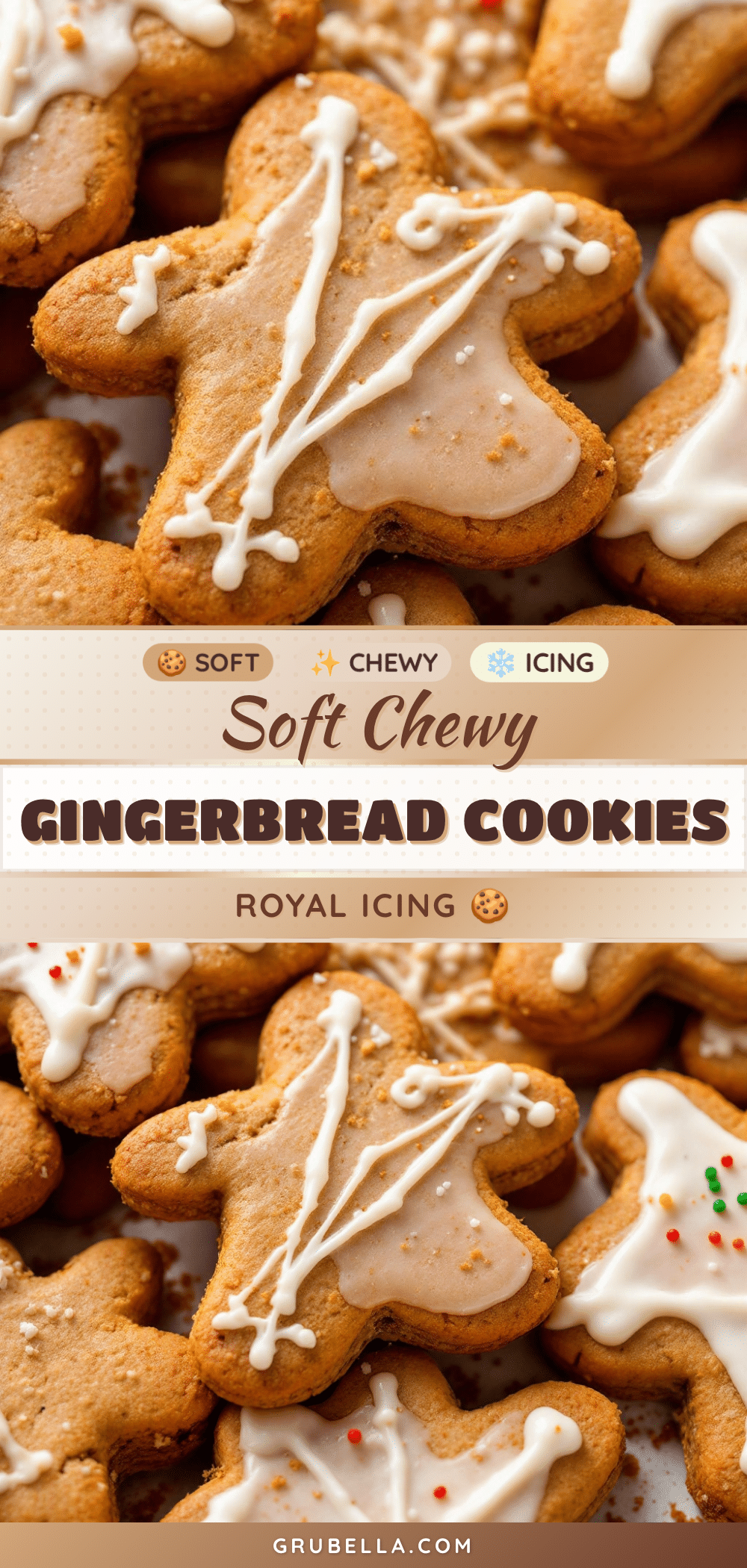
Soft Chewy Gingerbread Cutout Cookies with Royal Icing

These soft chewy gingerbread cutout cookies strike the perfect balance between structure and texture, featuring a tender center and crisp edges. Paired with a smooth, professional-quality royal icing, they are ideal for holiday decorating and make-ahead baking.
- Prep Time: 30 minutes
- Cook Time: 10 minutes
- Total Time: 2 hours 40 minutes
- Yield: Approximately 24-30 cookies 1x
- Category: Dessert
- Cuisine: American
Ingredients
- 2 1/2 cups all-purpose flour
- 1 tsp baking soda
- 1 tsp salt
- 1 tbsp ground ginger
- 1 tsp ground cinnamon
- 1/2 tsp ground cloves
- 1 cup unsalted butter, room temperature
- 1 cup light brown sugar, packed
- 1/4 cup molasses (regular, unsulfured)
- 1 large egg, room temperature
- 1 tbsp honey
- 4 cups confectioners’ sugar, sifted
- 1/4 cup pasteurized liquid egg whites
- 1/4 tsp cream of tartar
- 1 tsp vanilla extract
- Gel-based food coloring
Instructions
- In a large bowl, beat room temperature butter and brown sugar together until light and fluffy, about 3-4 minutes. Scrape down the sides of the bowl.
- Add the egg, honey, and molasses to the butter mixture. Beat on medium speed until fully combined and glossy, about 2 minutes.
- In a separate medium bowl, whisk together the flour, baking soda, salt, ginger, cinnamon, and cloves.
- Gradually add the dry ingredients to the wet ingredients, mixing on low speed just until the flour disappears. Do not overmix.
- Divide the dough in half, flatten into disks, wrap tightly in plastic wrap, and chill in the refrigerator for at least 2 hours (or up to 3 days).
- Preheat oven to 350°F (175°C) and line baking sheets with parchment paper.
- On a lightly floured surface, roll one disk of dough to 1/4 inch thickness. Cut out shapes using cookie cutters dipped in flour.
- Place cutouts on prepared baking sheets, leaving 1 inch of space between them.
- Bake for 8-10 minutes until edges are set but centers are still slightly soft. Do not overbake.
- Let cookies cool on the baking sheet for 5 minutes, then transfer to a wire rack to cool completely.
- In a clean, grease-free bowl, beat egg whites and cream of tartar until foamy. Add confectioners’ sugar and vanilla, beating on high speed until stiff, glossy peaks form.
- Divide icing into bowls for coloring. Pipe outlines and flood centers. Let dry completely before stacking or packaging.
Notes
Ensure butter is room temperature but still solid for proper creaming. Chill dough thoroughly to prevent spreading and help shapes hold. Use gel-based food coloring to avoid thinning the icing. Rotate baking sheets halfway through baking for even browning. Do not freeze iced cookies as the icing may become soggy.
Nutrition
- Serving Size: 1 cookie
- Calories: 135
- Sugar: 16
- Sodium: 120
- Fat: 5
- Saturated Fat: 3
- Carbohydrates: 22
- Fiber: 0.5
- Protein: 1.5
Keywords: gingerbread cookies, royal icing, holiday baking, cutout cookies, soft chewy cookies, Christmas cookies, make-ahead dessert