Love this? Save it for later!
Share the inspiration with your friends
“You’ve got to let the meat tell you when it’s ready,” my neighbor Joe said, wiping sweat from his brow as smoke curled lazily from his old offset smoker. It was a humid Saturday afternoon at the local cookout, and honestly, I was just there for the company and the promise of some seriously good barbecue. Joe wasn’t one to fuss or rush—he had this calm confidence that came from years of tending to briskets the way a gardener tends to roses.
I remember how the smell pulled me in from the driveway—the rich, smoky aroma mixed with a hint of caramelized crust that made my mouth water before I even sat down. Joe explained his secret was letting the brisket rest overnight after smoking it low and slow for hours. I was skeptical at first; I mean, who has the patience for that when you’re hungry? But that bite—the tender, juicy meat that pulled apart with the gentlest touch—changed my mind. It’s not just brisket; it’s an experience, a ritual, a little piece of competition magic right in your backyard.
That day, I realized this tender smoked brisket overnight competition style recipe isn’t just about cooking—it’s about respect for the process and the payoff that comes with it. Maybe you’ve been there, staring at your smoker wondering if you’re doing it right. Well, let me tell you, this recipe stuck with me because it’s simple enough to follow but gives you that mouthwatering, crowd-stopping brisket that makes everyone ask for seconds. So grab your smoker, and let’s get started on making your own signature smoked brisket that’s just as tender and flavorful as the pros’.
Why You’ll Love This Tender Smoked Brisket Overnight Recipe
After testing countless methods and brisket cuts, this recipe truly stands out as the best competition style smoked brisket you can make at home. It balances flavor, tenderness, and ease in a way that suits both seasoned pitmasters and weekend grillers.
- Low and Slow Magic: Smoking at a steady 225°F (107°C) overnight locks in moisture and builds that signature bark.
- Overnight Rest: Letting the brisket rest wrapped in foil and towels overnight intensifies tenderness and flavor—like Joe showed me.
- Simple Ingredients: Just a few pantry staples for the rub—no complicated marinades or sauces needed.
- Perfect for Events: Whether it’s a family reunion, a backyard party, or a competition, this brisket will be the centerpiece everyone remembers.
- Flavor Complexity: The smoky bark combined with a subtle spice rub keeps each bite exciting without overwhelming the natural beefy goodness.
- Stress-Free Timing: Prep the night before, smoke while you sleep, and wake up to brisket that’s ready to impress—no last-minute scrambling.
What makes this brisket different? Honestly, it’s the patience and respect for the process—no shortcuts, just good technique. And that overnight rest? It’s a game-changer that I learned the hard way after many briskets turned out dry or tough. This recipe isn’t just a meal; it’s a way to bring that competition style right to your backyard, making you look like a pro with a minimal fuss approach.
What Ingredients You Will Need
This recipe uses simple, wholesome ingredients to deliver bold flavor and that satisfying tender texture without the fuss. You likely have most of these pantry staples on hand, and the rest are easy to find at any grocery store or butcher.
- Brisket: 10-12 pounds (4.5-5.5 kg) whole packer brisket (includes flat and point)
- Coarse Kosher Salt: 1/4 cup (60 ml) – I recommend Diamond Crystal for even seasoning
- Coarse Black Pepper: 1/4 cup (60 ml) freshly cracked – essential for that classic bark
- Paprika: 2 tablespoons (30 ml) – adds a subtle smoky sweetness
- Garlic Powder: 1 tablespoon (15 ml) – for depth and savoriness
- Onion Powder: 1 tablespoon (15 ml) – complements the garlic and paprika
- Optional Cumin: 1 teaspoon (5 ml) – for a warm, earthy undertone (skip if you prefer classic)
- Wood Chips or Chunks: Hickory or oak preferred – about 2 cups (475 ml) soaked in water for 30 minutes
- Yellow Mustard: 1/4 cup (60 ml) – used as a binder for the rub, not for flavor
Ingredient Tips: For the brisket, pick a cut with good marbling—fat is flavor, trust me. If you’re aiming for a leaner option, be prepared for slightly less juiciness but still delicious results. The mustard is just a base to help the rub stick; it won’t taste like mustard after smoking.
Equipment Needed
- Offset Smoker or Pellet Smoker: An offset smoker like my old Brinkmann works great, but a pellet smoker is an easier alternative for consistent temp control.
- Charcoal and Wood Chunks: Charcoal briquettes paired with hickory or oak wood chunks for that authentic smoke flavor.
- Meat Thermometer: A digital probe thermometer is a lifesaver to monitor internal temperature without opening the smoker.
- Aluminum Foil & Butcher Paper: For wrapping the brisket during the stall and overnight rest (butcher paper keeps bark crisp).
- Cooler or Insulated Container: To hold the wrapped brisket overnight for resting (a large Igloo cooler works perfectly).
- Sharp Knife: For trimming the brisket before cooking and slicing after resting.
If you don’t have a fancy smoker, no worries—I’ve smoked brisket in a simple charcoal grill with a water pan and indirect heat. Just keep an eye on temps and add wood chips often. Remember, patience and attention are your best tools here, not gadgets.
Preparation Method
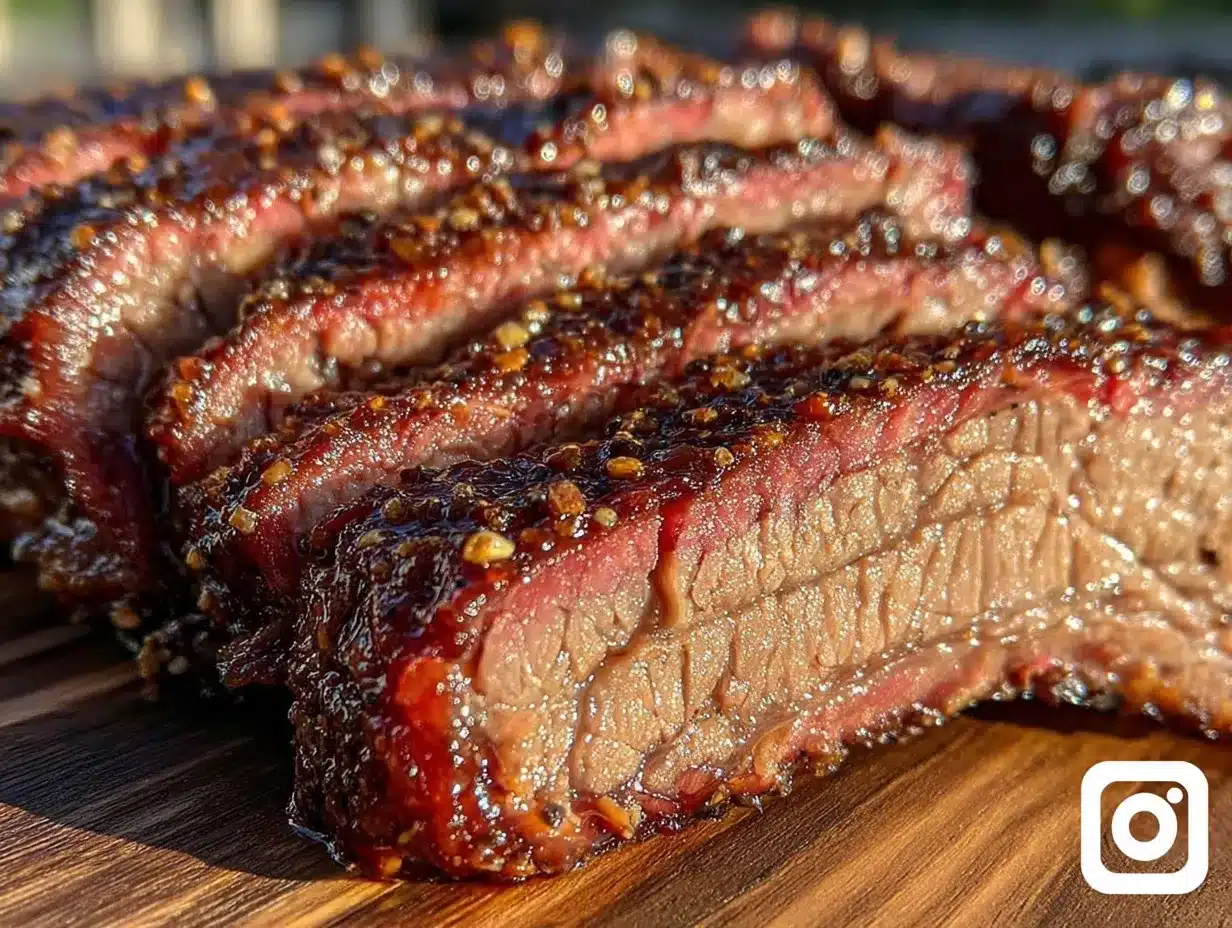
- Trim the Brisket: Remove excess silver skin and hard fat, leaving about 1/4 inch (6 mm) of fat cap for moisture. This helps the smoke penetrate while keeping it juicy. (Time: 15-20 minutes)
- Apply Mustard Binder: Coat the entire brisket evenly with yellow mustard. Don’t worry, it won’t taste mustardy—it just helps the rub stick better.
- Make the Rub: In a bowl, combine kosher salt, black pepper, paprika, garlic powder, onion powder, and optional cumin. Mix well.
- Season the Brisket: Generously apply the rub all over the brisket, pressing it into the meat. Be liberal on the fat side too, as it renders down and flavors the meat.
- Prepare the Smoker: Preheat your smoker to a steady 225°F (107°C). Set up for indirect heat with charcoal on one side and a water pan on the other to maintain moisture.
- Start Smoking: Place the brisket fat side up on the grate away from direct heat. Add soaked wood chunks for smoke flavor. Close the lid and maintain 225°F (107°C). (Time: approx. 10-12 hours)
- Monitor the Temperature: Use your digital probe to check the internal temp. When it hits around 165°F (74°C), the brisket usually enters the “stall” where temp plateaus.
- Wrap the Brisket: Wrap tightly in butcher paper or aluminum foil to help push through the stall and keep moisture. Return it to the smoker.
- Finish Cooking: Continue smoking until the internal temperature reaches 200-205°F (93-96°C). At this point, the brisket will be tender and ready to rest.
- Overnight Rest: Remove the wrapped brisket and place it in an insulated cooler or wrap it in towels to rest overnight (8-12 hours). This helps redistribute juices and tenderizes the meat further.
- Slice and Serve: The next day, slice against the grain with a sharp knife into 1/4 inch (6 mm) slices. Serve warm and enjoy that melt-in-your-mouth goodness!
Pro tip: If you find the bark soft after resting, you can pop the slices under a broiler for a minute or two to crisp it back up. Just watch carefully to avoid burning.
Cooking Tips & Techniques
Smoking brisket is as much art as science, but a few tricks can save you from common pitfalls.
- Temperature Patience: Resist the urge to crank the heat. Low and slow at around 225°F (107°C) is key to tender meat and a good bark.
- Don’t Skip the Stall: The stall is when the brisket temp seems stuck. Wrapping helps push through it without drying out the meat.
- Use a Reliable Thermometer: I learned the hard way that guessing internal temp leads to tough brisket. Invest in a probe that lets you monitor without opening the smoker.
- Resting is Non-Negotiable: That overnight rest is what transforms good brisket into competition-level tender brisket. It’s worth the wait, trust me.
- Wood Choice Matters: Hickory and oak are classic, but fruit woods like apple or cherry add a sweeter smoke if you want a milder flavor.
- Trim Smartly: Leaving too much fat makes slicing a mess, but trimming it all off dries the meat. Aim for about 1/4 inch (6 mm) fat cap.
- Keep the Smoke Clean: Avoid heavy smoke that tastes bitter. Thin blue smoke is your friend, not thick white billows.
Honestly, my first few briskets were a mess—too dry, too smoky, or just plain tough. But once I nailed the temp control and resting, brisket became my go-to showstopper for barbecues. You’ll get there, and this recipe will be your trusty guide.
Variations & Adaptations
This competition style smoked brisket recipe is versatile and forgiving, allowing you to tweak it to suit your taste or dietary needs.
- Spice Variations: Swap paprika for smoked paprika to boost smokiness or add chili powder for heat. For a sweeter bark, try a touch of brown sugar in the rub.
- Gluten-Free Option: All ingredients here are naturally gluten-free, but double-check your spices and mustard brands to avoid cross-contamination.
- Cooking Method: If you don’t have a smoker, try the oven-smoking technique: use a smoker box or soaked wood chips on a gas grill at 225°F (107°C) to mimic the low and slow smoke environment.
- Fat Cap Orientation: Some prefer cooking fat side down to protect the meat from direct heat; others swear by fat side up to baste the meat. Try both and see what you prefer.
- Personal Twist: I once added a splash of beef broth to the foil wrap before the stall to keep things extra moist—a little trick I picked up from a pitmaster friend that worked wonders.
Serving & Storage Suggestions
Serve this brisket warm or at room temperature, sliced thin against the grain for maximum tenderness. It pairs brilliantly with classic sides like creamy coleslaw, baked beans, or crispy garlic chicken for a hearty feast.
If you’re preparing ahead, wrap leftover slices tightly in foil or plastic wrap and store in the refrigerator for up to 4 days. For longer storage, freeze brisket in airtight containers or vacuum-sealed bags for up to 3 months.
To reheat without drying, gently warm slices in a low oven (around 250°F / 120°C) wrapped in foil or steam briefly. Flavors actually deepen if you let the brisket sit refrigerated overnight before reheating.
Nutritional Information & Benefits
A 3-ounce (85 g) serving of smoked brisket typically contains around 200-250 calories, 18-22 grams of protein, and 15-18 grams of fat, depending on trimming and marbling. It’s a rich source of iron, zinc, and B vitamins—great for energy and muscle repair.
This recipe uses minimal added sugars or artificial ingredients, making it a cleaner option than many store-bought barbecue sauces or processed meats. For those watching carbs, brisket is naturally low-carb and keto-friendly.
Keep in mind, brisket is a red meat, so moderation is key for heart health. But when prepared with care and served with plenty of veggies, it fits nicely into a balanced diet.
Conclusion
If you’re looking for that perfect tender smoked brisket overnight competition style recipe that brings bold smoky flavor and melt-in-your-mouth tenderness, this is it. The method isn’t complicated, but it demands patience and a little love for the process.
Feel free to customize the rub or wood choice to make it your own—this brisket is a canvas for your flavors. Honestly, I keep coming back to this recipe because it nails that juicy, tender texture every time, and the overnight rest really brings the whole thing together.
Give it a try, share your results, and let me know how your brisket turns out—happy smoking!
FAQs About Tender Smoked Brisket Overnight Competition Style
How long should I smoke a brisket for competition style?
Typically, it takes about 10-12 hours at 225°F (107°C), depending on the size of your brisket and smoker consistency.
Why do you have to rest brisket overnight?
Resting allows the juices to redistribute and the meat fibers to relax, resulting in a tender, juicy brisket that’s easier to slice.
Can I use a gas grill instead of a smoker?
Yes! Use a smoker box or foil packet with soaked wood chips, and maintain low indirect heat around 225°F (107°C) for best results.
What’s the difference between wrapping in foil and butcher paper?
Foil seals in moisture fully, resulting in a softer bark; butcher paper lets some moisture escape, keeping the bark crisper while still tenderizing the meat.
How do I know when my brisket is done?
When the internal temperature hits 200-205°F (93-96°C) and a probe slides in like softened butter, it’s ready to rest and serve.
Pin This Recipe!
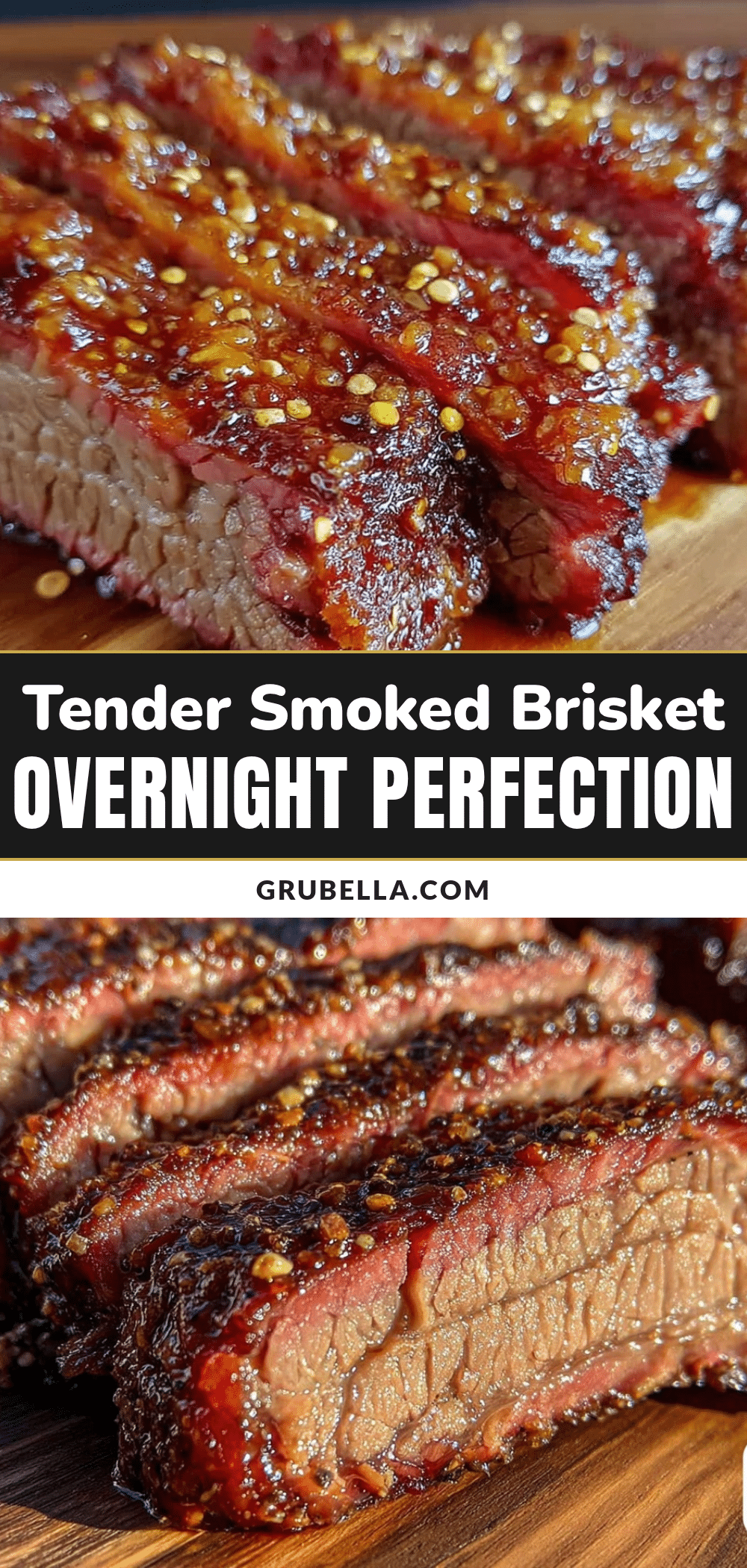
Tender Smoked Brisket Overnight Recipe Best Competition Style Guide
This competition style smoked brisket recipe delivers tender, juicy meat with a rich smoky flavor by smoking low and slow overnight and resting the brisket wrapped for maximum tenderness.
- Prep Time: 20 minutes
- Cook Time: 10-12 hours
- Total Time: 10 hours 20 minutes to 12 hours 20 minutes plus 8-12 hours resting
- Yield: 10-12 servings 1x
- Category: Main Course
- Cuisine: American Barbecue
Ingredients
- 10–12 pounds whole packer brisket (includes flat and point)
- 1/4 cup coarse kosher salt (Diamond Crystal recommended)
- 1/4 cup coarse black pepper, freshly cracked
- 2 tablespoons paprika
- 1 tablespoon garlic powder
- 1 tablespoon onion powder
- 1 teaspoon optional cumin
- About 2 cups hickory or oak wood chips or chunks, soaked in water for 30 minutes
- 1/4 cup yellow mustard (used as a binder)
Instructions
- Trim the brisket by removing excess silver skin and hard fat, leaving about 1/4 inch of fat cap for moisture (15-20 minutes).
- Coat the entire brisket evenly with yellow mustard as a binder.
- In a bowl, combine kosher salt, black pepper, paprika, garlic powder, onion powder, and optional cumin; mix well to make the rub.
- Generously apply the rub all over the brisket, pressing it into the meat including the fat side.
- Preheat your smoker to a steady 225°F. Set up for indirect heat with charcoal on one side and a water pan on the other to maintain moisture.
- Place the brisket fat side up on the grate away from direct heat. Add soaked wood chunks for smoke flavor. Close the lid and maintain 225°F for approximately 10-12 hours.
- Use a digital probe thermometer to monitor internal temperature. When it hits around 165°F, the brisket enters the stall.
- Wrap the brisket tightly in butcher paper or aluminum foil to help push through the stall and keep moisture. Return it to the smoker.
- Continue smoking until the internal temperature reaches 200-205°F, indicating the brisket is tender and ready to rest.
- Remove the wrapped brisket and place it in an insulated cooler or wrap it in towels to rest overnight for 8-12 hours to redistribute juices and tenderize further.
- Slice against the grain into 1/4 inch slices and serve warm.
Notes
Use a digital probe thermometer to avoid opening the smoker frequently. Wrapping in butcher paper keeps bark crisper, while foil results in softer bark. Resting overnight is essential for tenderness. Hickory and oak woods provide classic smoke flavor; fruit woods like apple or cherry can be used for milder smoke. If bark softens after resting, briefly broil slices to crisp.
Nutrition
- Serving Size: 3 ounces (85 grams)
- Calories: 225
- Sodium: 450
- Fat: 16
- Saturated Fat: 6
- Carbohydrates: 1
- Protein: 20
Keywords: smoked brisket, competition style brisket, overnight brisket, barbecue, low and slow, smoked meat, brisket recipe