Love this? Save it for later!
Share the inspiration with your friends
“You know that moment when you stumble upon something totally unexpected in the most ordinary place? Well, it happened to me last summer at a tiny farmers market tucked behind a bookstore in my neighborhood. I was chatting with an elderly vendor named Gus, who wasn’t just selling peppers—he was practically handing out jars of magic. He swore by his homemade lacto-fermented hot sauce, made with peppers he preserved himself, and honestly, I was skeptical. I mean, fermented hot sauce? It sounded like a science experiment gone rogue.
But Gus was insistent, telling me about the tangy punch and complex flavors that only time and natural fermentation could unlock. He even cracked open a jar to share a taste right there on the spot, the fiery, slightly sour burst making my eyes water and my taste buds sing. That cracked ceramic bowl he used to mix the peppers looked ancient, and I remember almost knocking over a stack of jars while juggling my phone to take notes. Classic me.
That chance encounter planted a seed. I had to try making this flavorful lacto-fermented hot sauce with preserved peppers myself. What started as a curious experiment turned into a kitchen ritual that I keep coming back to, especially when I want something that brings serious heat, depth, and that gut-friendly probiotic kick. Maybe you’ve been there—looking for a hot sauce that’s not just spicy but alive with flavor. Let me tell you, this recipe is the real deal, and I’m excited to share it with you.”
Why You’ll Love This Recipe
From my many trials in the kitchen, this lacto-fermented hot sauce recipe truly stands out—and here’s why I think you’ll love it too:
- Quick & Easy: After the initial prep, it’s mostly hands-off fermentation for about 2 weeks, so you can set it and forget it while it works its magic.
- Simple Ingredients: No exotic items here—just fresh peppers, salt, garlic, and a few pantry staples. You probably already have everything on hand.
- Perfect for Spicy Food Lovers: Whether you’re adding heat to tacos, eggs, or even crispy garlic chicken, this sauce adds a lively, tangy punch.
- Crowd-Pleaser: It’s one of those rare hot sauces that impresses both heat-seekers and flavor fans alike.
- Unbelievably Delicious: The natural fermentation adds a depth and complexity that bottled sauces just can’t touch.
What really makes this recipe different is the preserved peppers themselves. While many hot sauces rely on vinegar, this one gets its tang from lacto-fermentation, which not only boosts flavor but also packs a probiotic punch. I’ve experimented with blending the peppers to just the right consistency—smooth enough to drizzle, but still with a bit of body. Plus, fermenting the peppers with garlic and salt brings out layers of flavor you won’t find in your average jar.
This isn’t just hot sauce; it’s a kitchen staple that feels like a little culinary adventure each time you taste it. Honestly, after the first bite, I’d close my eyes just savoring the blend of heat, tang, and that subtle, funky depth. It’s comfort food with a fermented twist—and trust me, once you make it, you’ll be hooked.
What Ingredients You Will Need
This lacto-fermented hot sauce recipe uses simple, wholesome ingredients that create bold flavor and satisfying heat without fuss. Most are pantry staples or fresh from the garden, and substitutions are easy if you want to adjust the heat or accommodate dietary needs.
- Fresh hot peppers (about 1 pound / 450 g) – I prefer a mix of jalapeños and fresno peppers for balanced heat and flavor, but feel free to use serranos or even habaneros if you like it hotter.
- Non-iodized salt (3 tablespoons) – Sea salt or kosher salt works well; avoid iodized salt as it can inhibit fermentation.
- Filtered water (2 cups / 480 ml) – Chlorine-free water is best to keep the fermentation alive and happy.
- Garlic cloves (4-5 medium, peeled) – Adds savory depth and a bit of pungency.
- Optional spices – A pinch of cumin or smoked paprika can add a subtle smoky layer. I like to keep it simple, but these are great if you want to experiment.
If fresh peppers aren’t in season, you can use frozen ones—just thaw and drain excess water. For a lower heat version, swap half the peppers for mild ones like banana peppers. For a vegan-friendly twist, this recipe is naturally plant-based, and since it uses no vinegar, it’s perfect for those avoiding added acids. I usually buy my peppers from the local farmer’s market to get the freshest flavor possible, but grocery store peppers work fine too.
Equipment Needed
- Glass fermentation jar or crock (1-quart / 1-liter size) – I use a wide-mouth mason jar because it’s easy to pack and clean.
- Weight or fermentation lid – To keep peppers submerged under the brine, a fermentation weight or a small glass dish works well.
- Sharp knife and cutting board – For chopping the peppers and garlic.
- Blender or food processor – For pureeing the fermented peppers into sauce.
- Measuring spoons and cups – Accuracy matters for salt and water ratios.
If you don’t have a fermentation-specific lid, you can cover the jar with a clean cloth secured by a rubber band to allow airflow while keeping dust out. I once used a zip-top bag filled with water as a makeshift airlock in a pinch—it wasn’t perfect, but it worked! For those on a budget, mason jars and simple weights are great starter options, and cleaning is a breeze with hot soapy water after fermentation.
Preparation Method
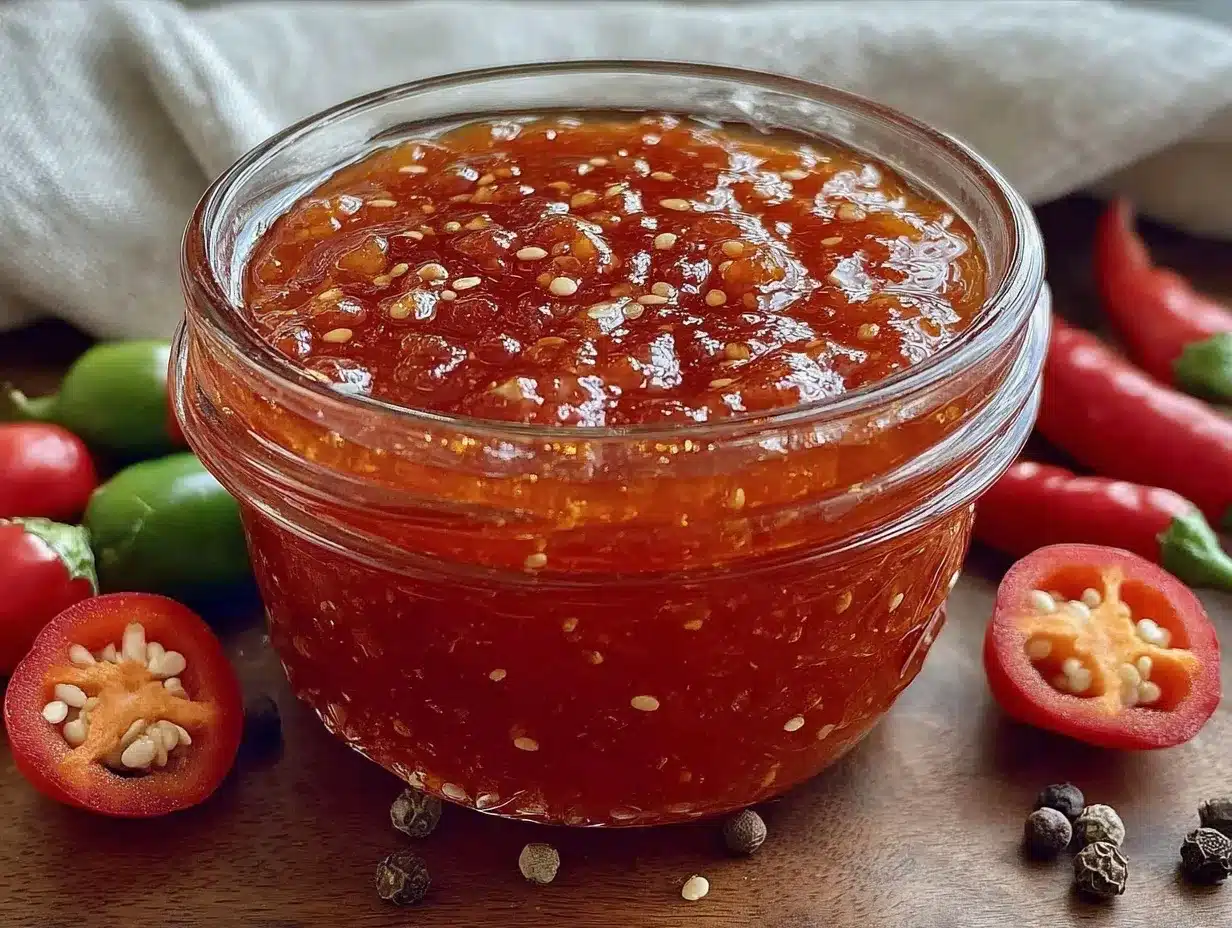
- Prepare the brine: Dissolve 3 tablespoons of non-iodized salt in 2 cups (480 ml) of filtered water. Stir until fully dissolved. This salty solution creates the perfect environment for good bacteria to thrive. (Time: 5 minutes)
- Wash and chop the peppers: Rinse the peppers under cold water. Remove stems and roughly chop them into quarters, leaving seeds if you want more heat. (Time: 10 minutes)
- Peel the garlic: Smash the cloves lightly with the side of a knife to peel them easily. (Time: 3 minutes)
- Pack peppers and garlic into the jar: Tightly pack the chopped peppers and garlic cloves into your fermentation jar, leaving about 1-2 inches of headspace at the top. (Time: 5 minutes)
- Pour the brine over the peppers: Pour the saltwater brine into the jar slowly until all the peppers are submerged. It’s crucial that the peppers stay below the brine to prevent mold. (Time: 2 minutes)
- Weigh down the peppers: Place a fermentation weight or a small glass dish on top of the peppers to keep them submerged. Cover the jar with your fermentation lid or a cloth secured with a rubber band. (Time: 2 minutes)
- Ferment at room temperature: Leave the jar in a cool, dark spot between 65-75°F (18-24°C). Let it ferment for 10-14 days. You’ll notice bubbles, a tangy aroma, and some cloudy brine—that’s good! (Time: 10-14 days)
- Check daily: Open the jar once a day to release gases and ensure peppers remain submerged. If you spot any scum or mold, skim it off immediately. (Time: 1-2 minutes per day)
- Blend into sauce: After fermentation, transfer the peppers and garlic with some brine to a blender. Blend until smooth, adjusting thickness with more brine if needed. (Time: 5-7 minutes)
- Bottle and refrigerate: Pour your hot sauce into a sterilized bottle or jar and refrigerate. Flavors will mature over time, and the sauce will keep for several months. (Time: 5 minutes)
Pro tip: If your sauce is too salty or potent, mix in a little water or a touch of honey to balance it out. And don’t rush the fermentation; patience really pays off in flavor depth.
Cooking Tips & Techniques
Fermenting peppers can seem intimidating, but a few tricks make all the difference. First, always use non-iodized salt because iodine can kill the beneficial bacteria you want for fermentation. Also, filtered or spring water is best since tap water can contain chlorine that interferes with fermentation.
Keep the peppers submerged under the brine. I learned this the hard way after my first batch developed a fuzzy white layer—turns out it was kahm yeast, harmless but unpleasant. Skimming it off and keeping everything submerged solved the problem.
Use a clean jar and utensils to avoid introducing unwanted bacteria. I recommend sterilizing your jar with boiling water before starting. Also, don’t stir or shake the jar during fermentation; just let nature take its course.
Timing is flexible, but I’ve found 10 to 14 days strikes the perfect balance between tangy and spicy. Too short, and the sauce is bland; too long, and it can get overly sour. If you want a milder sauce, start tasting it around day 7.
When blending, add brine gradually to control the consistency. Some people like their sauce chunky, others smooth as silk. I prefer somewhere in the middle so you get both texture and pourability.
Variations & Adaptations
One of the best things about this lacto-fermented hot sauce is how easy it is to tweak. Here are a few variations I’ve tried and loved:
- Smoky Chipotle Twist: Add dried chipotle peppers to the mix before fermentation for a smoky undertone.
- Fruit-Infused Heat: Toss in some pineapple chunks or mango to the jar for a sweet and spicy combo perfect for summer grilling.
- Herb-Forward: Add fresh cilantro or basil during fermentation to create a fresh, herbaceous flavor profile.
If you want a faster version, you can skip fermentation and blend fresh peppers with vinegar and salt, but you’ll miss that unique tang and probiotic benefit. For those avoiding nightshades, try fermenting spicy radishes or horseradish instead—they bring heat and complexity in a different way.
Personally, I once made a batch with preserved serrano peppers from last season’s harvest and added a touch of smoked paprika—it became my go-to sauce for spicy roasted vegetables that winter.
Serving & Storage Suggestions
This lacto-fermented hot sauce tastes best chilled or at room temperature. Serve it drizzled over tacos, scrambled eggs, grilled meats, or even roasted veggies. It brings a lively brightness that wakes up any dish.
For storage, keep the sauce refrigerated in a sealed glass jar or bottle. It will keep for up to 3 months, and the flavor deepens with time—so don’t be afraid to make a big batch. If you want to store it longer, freezing in ice cube trays works well for portion control.
When reheating dishes with this sauce, add it after cooking to preserve the probiotics and fresh tang. I like pairing it with creamy sides like avocado or sour cream to balance the heat.
Nutritional Information & Benefits
This homemade lacto-fermented hot sauce is low in calories and fat but high in flavor and probiotics, thanks to the natural fermentation. The peppers provide a good dose of vitamin C and antioxidants, and the garlic adds immune-boosting compounds.
Since no vinegar or sugars are added, it’s a gut-friendly condiment suitable for paleo, keto, and vegan diets. Just watch the salt content if you’re on a low-sodium plan.
Personally, incorporating fermented foods like this sauce into my diet has helped with digestion and added variety to meals without processed ingredients. It’s a tasty way to support your gut health while turning up the heat.
Conclusion
So, why try this flavorful lacto-fermented hot sauce with preserved peppers? Because it’s more than just a condiment—it’s a little jar of complex, tangy heat that brings life to your dishes and a probiotic boost to your gut. I love how this recipe marries simple ingredients with time-honored fermentation techniques, creating something truly special from humble peppers.
Feel free to make it your own by adjusting the heat, adding fruits or herbs, or experimenting with different pepper varieties. Trust me, once you make this sauce, you’ll keep coming back to it for everything from spicy roasted vegetables to grilled chicken.
Give it a try, and let me know how your batch turns out in the comments. Share your twists or questions—I’m always excited to hear from fellow hot sauce lovers. Remember, a little patience in fermentation goes a long way, and the reward is a sauce that’s bursting with character and flavor. Happy fermenting!
Frequently Asked Questions
- How long does the fermentation process take?
Typically 10 to 14 days at room temperature, but you can taste it earlier or later depending on your flavor preference. - Can I use any type of peppers?
Yes! Feel free to mix mild or hot varieties depending on your heat tolerance. - Do I need special fermentation equipment?
No, a clean glass jar and a weight to keep peppers submerged work just fine. - How do I know if my hot sauce has gone bad?
If you see mold or a rotten smell, discard the batch. Some white kahm yeast is harmless but should be skimmed off. - Can I speed up the fermentation?
You can try fermenting in a warmer spot, but slower fermentation usually yields better flavor.
Pin This Recipe!
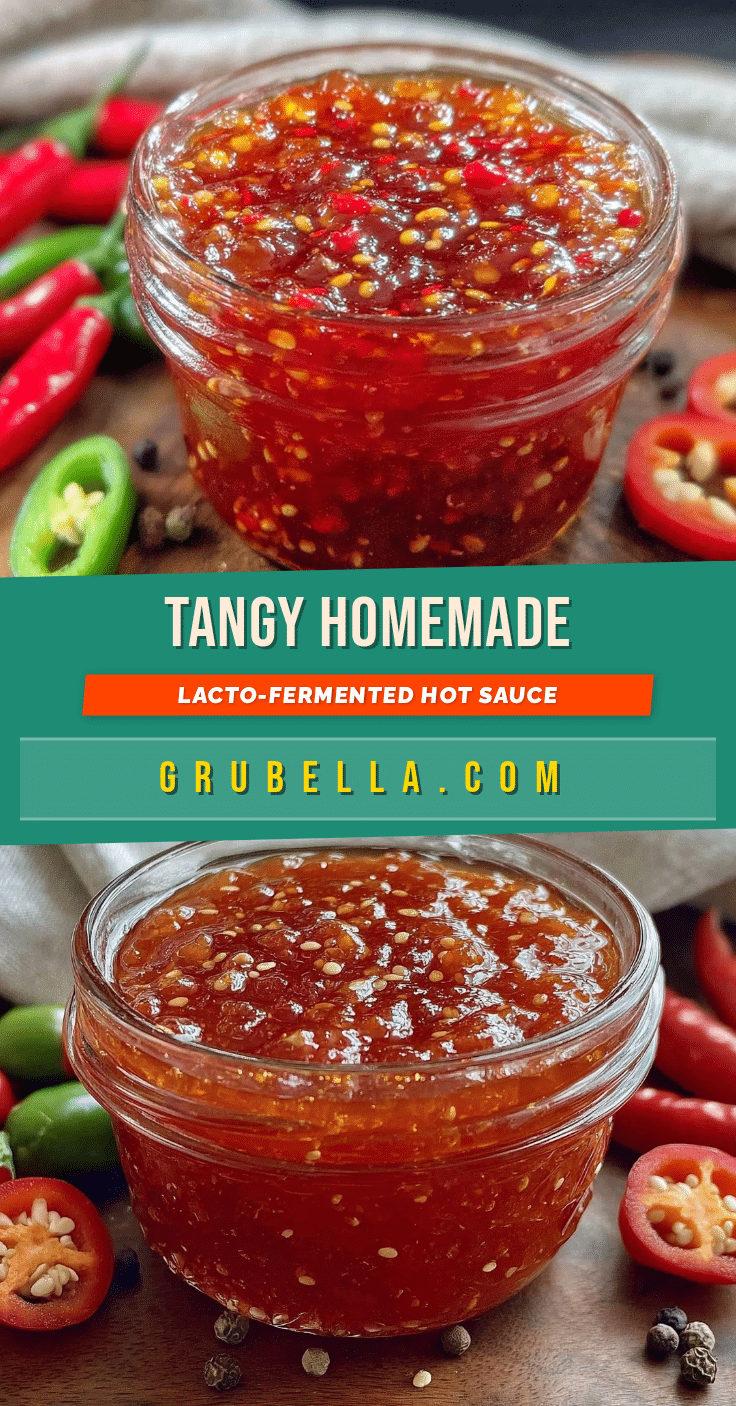
Flavorful Lacto-Fermented Hot Sauce Recipe
A simple and easy homemade lacto-fermented hot sauce made with fresh peppers, garlic, and salt, offering a tangy, probiotic-rich condiment with complex flavors.
- Prep Time: 25 minutes
- Cook Time: 10-14 days fermentation
- Total Time: 10-14 days and 25 minutes
- Yield: About 1 quart (4 cups) of hot sauce 1x
- Category: Condiment
- Cuisine: American
Ingredients
- 1 pound (450 g) fresh hot peppers (jalapeños and fresno peppers recommended, or serranos/habaneros for more heat)
- 3 tablespoons non-iodized salt (sea salt or kosher salt)
- 2 cups (480 ml) filtered water (chlorine-free)
- 4–5 medium garlic cloves, peeled
- Optional: pinch of cumin or smoked paprika
Instructions
- Prepare the brine by dissolving 3 tablespoons of non-iodized salt in 2 cups (480 ml) of filtered water. Stir until fully dissolved.
- Wash and chop the peppers by rinsing under cold water, removing stems, and roughly chopping into quarters, leaving seeds if more heat is desired.
- Peel the garlic cloves by lightly smashing them with the side of a knife.
- Tightly pack the chopped peppers and garlic cloves into a 1-quart (1-liter) glass fermentation jar, leaving 1-2 inches of headspace at the top.
- Pour the saltwater brine over the peppers until they are fully submerged under the brine.
- Place a fermentation weight or small glass dish on top of the peppers to keep them submerged. Cover the jar with a fermentation lid or a cloth secured with a rubber band.
- Ferment the jar at room temperature (65-75°F / 18-24°C) in a cool, dark spot for 10-14 days. Expect bubbles, a tangy aroma, and cloudy brine.
- Check the jar daily to release gases and ensure peppers remain submerged. Skim off any scum or mold immediately.
- After fermentation, transfer the peppers and garlic with some brine to a blender and blend until smooth, adding more brine to adjust consistency as needed.
- Pour the hot sauce into a sterilized bottle or jar and refrigerate. Flavors will mature over time and the sauce will keep for several months.
Notes
Use non-iodized salt and filtered water to ensure successful fermentation. Keep peppers submerged under the brine to prevent mold. Open the jar daily to release gases. Adjust fermentation time between 10-14 days to taste. Add optional spices like cumin or smoked paprika for flavor variations. If sauce is too salty or potent, dilute with water or a touch of honey.
Nutrition
- Serving Size: 2 tablespoons
- Calories: 10
- Sugar: 1
- Sodium: 900
- Carbohydrates: 2
- Fiber: 0.5
- Protein: 0.3
Keywords: lacto-fermented hot sauce, fermented peppers, homemade hot sauce, probiotic hot sauce, spicy condiment, preserved peppers, easy hot sauce recipe