Love this? Save it for later!
Share the inspiration with your friends
This was supposed to be a ciabatta. I had the starter bubbling away, the hydration percentages all mapped out on a sticky note, and a vision of those open, irregular air pockets that make a perfect loaf. But somewhere between feeding my sourdough starter at 6 AM and realizing I had a work call in twenty minutes, I grabbed the wrong bowl. A deeper, wider one. I poured in the water, added the flour, and then—honestly, I don’t even know how—I dumped in half the olive oil meant for a salad dressing. It was a Tuesday. The kitchen was a mess, I was already running late, and I stood there staring at this slick, oily dough thinking, well, this isn’t going to work.
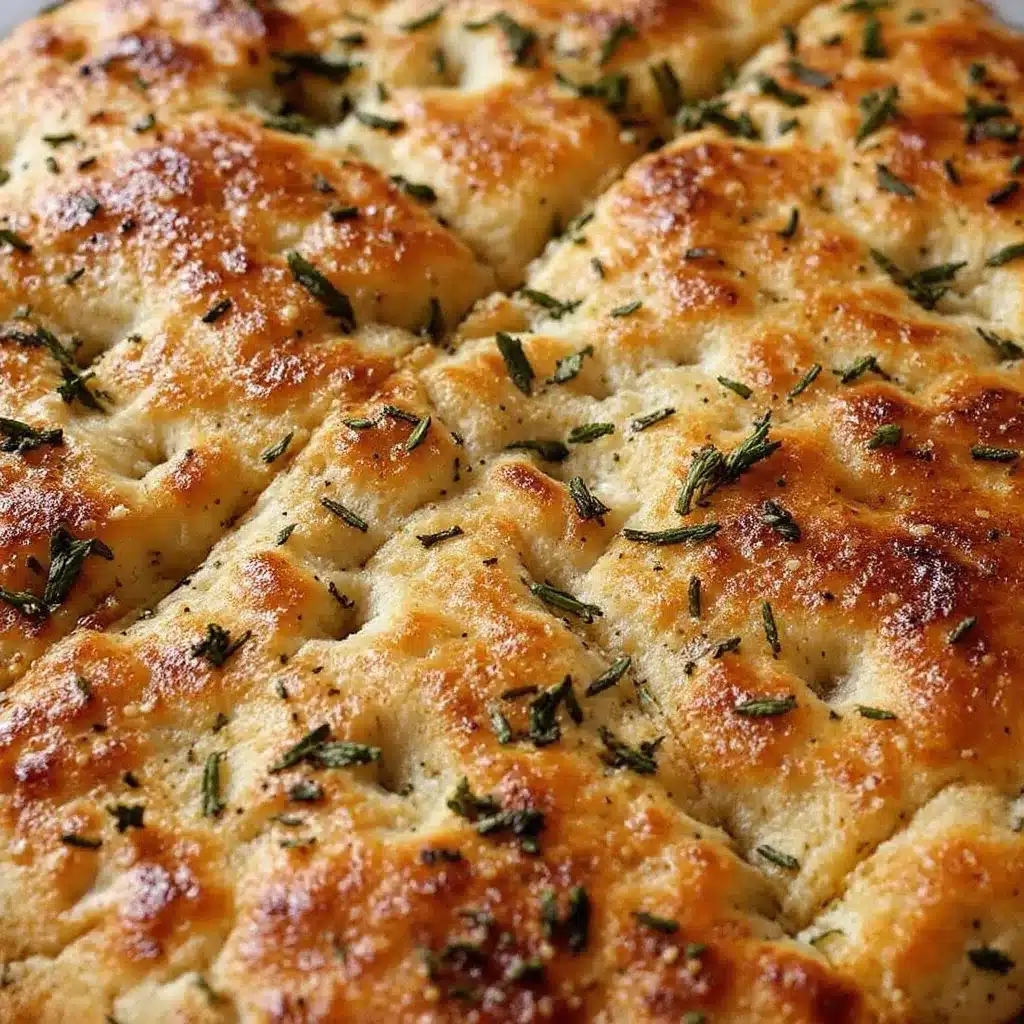
What came out of the oven two hours later was nothing like the plan. It was better. The dough, instead of being a stiff, sticky mess, was soft, supple, and practically glowing with that extra fat. I dimpled it with my fingers, gave it a final drizzle of oil, and topped it with some rosemary I had snipped from a plant that was somehow still alive on my windowsill. The smell that filled my apartment was so good, my neighbor actually knocked on the door to ask what I was baking. That focaccia was the fluffiest, most flavorful accident I’ve ever had. It had that perfect balance of a crispy, golden crust and an airy, almost pillowy interior that you usually only get from a long, slow fermentation. And the best part? It was done in a single day.
Maybe you’ve been there—staring at a bowl of dough that’s gone wrong, or feeling like sourdough is this big, intimidating project that requires a weekend and a science degree. I get it. But this recipe changed my mind. It’s forgiving. It’s fast. And it taught me that sometimes the best things in the kitchen come from a happy accident. I keep making it because it’s the one bread that makes me feel like a pro, even on a chaotic Tuesday.
Why You’ll Love This Recipe
Let’s be real—sourdough can be a diva. It wants specific temperatures, precise feeding schedules, and a lot of patience. This same-day focaccia is the complete opposite. It’s the chill, low-maintenance cousin who shows up to the party with a great attitude and makes everyone feel good.
- Quick & Easy: From mixing to eating in under 5 hours. No overnight waits, no complicated folds. Perfect for when that bread craving hits at noon and you want it for dinner.
- Simple Ingredients: You only need flour, water, your sourdough starter, salt, olive oil, and rosemary. That’s it. No yeast packets, no specialty flours.
- Perfect for Beginners: If you’ve been scared of sourdough, this is the recipe to start with. The high hydration and olive oil make the dough incredibly forgiving. It’s almost impossible to overwork or ruin.
- Crowd-Pleaser: I’ve brought this to potlucks, served it alongside pasta for family dinners, and even gifted it to neighbors. It disappears every single time. Kids love the soft texture, adults love the sophisticated flavor.
- Unbelievably Delicious: That crackly, salty crust. The tender, airy crumb. The fragrant rosemary and peppery olive oil. It’s the kind of bread that makes you close your eyes after the first bite and just… sigh.
What makes this recipe different from the hundreds of other focaccia recipes out there is the technique. By using a warm water bath for the bowl during the bulk fermentation, you trick the dough into thinking it’s in a cozy, proofing box. This speeds up the process without sacrificing that complex, tangy sourdough flavor. It’s a little hack I learned after too many cold, sluggish winter rises. This isn’t just another version of focaccia—it’s the best version for a busy life.
What Ingredients You Will Need
This recipe uses simple, wholesome ingredients to deliver that signature focaccia texture—crispy on the outside, soft and airy on the inside—without any fuss. Most of these are pantry staples for anyone who keeps a sourdough starter.
- Bread Flour (500g / about 4 cups): This is your best bet for that chewy, structured crumb. Bread flour has a higher protein content than all-purpose, which gives the focaccia its satisfying bite. I prefer King Arthur Flour for its consistent quality, but any good bread flour will work. If you only have all-purpose, you can use it, but the texture will be slightly softer and less chewy.
- Water (400g / 1 ¾ cups, lukewarm): Lukewarm water (around 80-85°F or 27-30°C) is key for activating the starter and keeping the dough warm enough for a same-day rise. Too hot, and you’ll kill the beneficial bacteria. Too cold, and your rise will take forever. Just think “bath water” temperature—warm to the touch but not hot.
- Active Sourdough Starter (150g / about ¾ cup): This is the heart of the recipe. Your starter should be bubbly, active, and have doubled in size within 4-6 hours of its last feeding. A hungry, sluggish starter will result in a dense focaccia. I like to feed mine in the morning, and by lunchtime it’s ready to go.
- Extra-Virgin Olive Oil (80g / ⅓ cup, plus more for drizzling): Don’t skimp here. The olive oil is not just a flavor—it’s a structural component. It tenderizes the dough and helps create that crispy, golden crust. Use a good quality oil you love the taste of, because you’ll be drizzling it on top too. I’m partial to a buttery California olive oil for this.
- Fine Sea Salt (10g / about 1 ½ teaspoons): Salt is crucial for flavor and for controlling the fermentation. I use fine sea salt because it dissolves evenly. Avoid coarse kosher salt unless you weigh it, as the volume can vary significantly.
- Fresh Rosemary (2-3 sprigs, leaves removed and roughly chopped): Fresh is non-negotiable here. Dried rosemary will burn in the hot oven and turn into bitter little needles. Fresh rosemary becomes fragrant and slightly crispy, adding a wonderful piney, aromatic note. If you don’t have rosemary, you can use fresh thyme, oregano, or even just flaky sea salt.
- Flaky Sea Salt (for finishing): A sprinkle of Maldon or another flaky salt right before baking adds that perfect crunchy, salty pop on top. It’s a small detail that makes a huge difference.
Equipment Needed
You don’t need a fancy bakery setup for this. A few basic tools will get the job done beautifully.
- Large Mixing Bowl: A 4-5 quart bowl is ideal. I use a glass or ceramic bowl because they retain heat well, which helps the dough stay warm during the first rise.
- Digital Kitchen Scale: Honestly, this is the most important tool for consistent sourdough baking. Measuring flour by volume (cups) is notoriously inaccurate. A scale ensures you get the hydration right every single time. You can get a decent one for under $20.
- Bench Scraper or Dough Scraper: This is a lifesaver for handling sticky, high-hydration dough. It makes folding the dough and transferring it to the pan so much easier.
- 9×13-inch Baking Pan: A metal pan is best for heat conduction and getting a crispy bottom crust. Glass or ceramic will work, but you might need to add a few minutes to the bake time. Make sure it’s at least 2 inches deep to contain the dough as it rises.
- Plastic Wrap or a Clean Shower Cap: You’ll need something to cover the dough while it proofs. A reusable shower cap is my favorite trick—it’s cheap, fits perfectly over a bowl, and doesn’t create waste.
- Cooling Rack: Essential for letting the focaccia cool evenly after baking. If you leave it in the hot pan, the steam will make the bottom crust soggy.
Preparation Method
This is where the magic happens. Follow these steps, and you’ll have a bakery-worthy focaccia by dinner time.
- Mix the Dough (10:00 AM): In your large mixing bowl, combine the 400g lukewarm water and 150g active sourdough starter. Whisk them together until the starter is mostly dissolved and the mixture looks milky and bubbly. Add the 500g bread flour and 10g fine sea salt. Use your hand or a sturdy spatula to mix until no dry bits of flour remain. The dough will be very shaggy and sticky—that’s normal. Cover the bowl with plastic wrap or a damp towel and let it rest for 30 minutes. This is called the autolyse, and it gives the flour time to hydrate and start developing gluten.
- Add the Oil & Perform Stretch and Folds (10:30 AM): After the rest, pour the 80g of olive oil over the dough. Now, you’re going to do a series of “stretch and folds” to build strength without kneading. With a wet hand (to prevent sticking), grab one side of the dough, stretch it up as high as it will go without tearing, and fold it over the top of the dough. Rotate the bowl 90 degrees and repeat. Do this 4 times total (a full rotation). The dough will be slick and oily, and that’s perfect. Cover the bowl again.
- Bulk Fermentation with a Warm Water Bath (10:30 AM – 1:30 PM): This is my secret for a same-day rise. Fill your kitchen sink or a larger bowl with warm water (about 90°F / 32°C). Place your covered mixing bowl into the warm water bath. The water should come about halfway up the sides of the bowl. Let it sit there for 3 hours. Every 30 minutes for the first 2 hours, perform another set of 4 stretch and folds right in the bowl. The dough will start off very loose and sticky, but by the end of the 3 hours, it should be smooth, puffy, and have doubled in size. It will feel alive and jiggly.
- Prepare the Pan & Second Rise (1:30 PM – 2:30 PM): Generously coat your 9×13-inch baking pan with olive oil—don’t be shy. Use a pastry brush or your fingers to get it all over the bottom and sides. Gently turn the dough out into the pan. It will be very soft. Using oiled hands, gently coax the dough to spread into the corners of the pan. If it resists, let it rest for 10-15 minutes and try again. Don’t force it or you’ll deflate it. Cover the pan with plastic wrap and let it rise for another 1 hour at room temperature (not in the water bath). The dough should puff up and nearly double in height again.
- Dimple, Top, and Preheat (2:30 PM): About 30 minutes before baking, preheat your oven to 425°F (220°C) with a rack in the middle. Drizzle a generous tablespoon of olive oil over the top of the risen dough. Now for the fun part: with oiled fingers, press deep dimples all over the surface of the dough, right down to the bottom of the pan. Don’t be timid—this is what creates those iconic focaccia craters. Sprinkle the chopped fresh rosemary and a generous pinch of flaky sea salt all over the top.
- Bake (3:00 PM – 3:25 PM): Place the pan on the middle rack and bake for 20-25 minutes, rotating the pan halfway through, until the top is a deep golden brown and the bottom sounds hollow when you tap it. If it’s browning too quickly, tent it loosely with foil for the last 5 minutes.
- Cool (3:25 PM – 3:45 PM): Let the focaccia cool in the pan on a wire rack for 10 minutes. Then, carefully transfer it out of the pan directly onto the cooling rack. This is crucial to keep the bottom from getting soggy. Let it cool for at least another 20 minutes before slicing. I know it’s hard to wait, but the texture really sets as it cools.
Cooking Tips & Techniques
I’ve made this recipe more times than I can count, and I’ve learned a few things the hard way. Here’s how to nail it every time.
Don’t skip the warm water bath. This is the single most important trick for a same-day sourdough. Without it, your dough will take 6-8 hours to bulk ferment, and you’ll be eating focaccia for breakfast instead of dinner. I learned this lesson one cold January afternoon when my dough sat on the counter for 5 hours without moving. The warm bath mimics a proofing box and keeps the yeast happy and active.
Use wet hands for everything. This dough is very sticky due to the high hydration. The best way to handle it is to keep your hands lightly wet with water or oiled with olive oil. Trying to use dry flour will just make the dough tough and change the hydration ratio. I keep a small bowl of water next to my work station to dip my fingers in between folds.
Don’t overthink the dimpling. Some people get precious about making perfect, even dimples. Don’t. The beauty of focaccia is its rustic, handmade look. Just use your fingertips and press down firmly and randomly. You want to push all the way to the bottom of the pan to create those deep wells that hold the olive oil and salt.
Watch the bake, not the clock. Ovens vary wildly. My old apartment oven ran hot and would burn the bottom of the focaccia in 18 minutes. My current oven takes a full 25 minutes. Look for visual cues: a deep golden-brown top, crispy edges that have pulled away from the pan, and a hollow sound when you tap the bottom. If you’re unsure, an instant-read thermometer inserted into the center should read 200-205°F (93-96°C).
Variations & Adaptations
Once you’ve mastered the basic recipe, the possibilities are endless. This is where you can really make it your own.
- Herb & Garlic Focaccia: Before the second rise, gently press 4-5 thinly sliced cloves of garlic into the dough along with the rosemary. The garlic roasts and sweetens in the oven, becoming soft and spreadable. Add a sprinkle of red pepper flakes for heat.
- Everything Bagel Focaccia: After dimpling and oiling, sprinkle the top generously with everything bagel seasoning (poppy seeds, sesame seeds, dried garlic, dried onion, and salt). It’s incredible for breakfast sandwiches or alongside a bowl of soup.
- Sun-Dried Tomato & Olive Focaccia: During the last stretch and fold, gently incorporate ½ cup of chopped sun-dried tomatoes (in oil, drained) and ½ cup of pitted Kalamata olives. The salty, briny flavors infuse the entire dough. This is my go-to for Italian appetizer recipes.
- Cheese Lover’s Focaccia: About 5 minutes before the focaccia is done baking, pull it out of the oven and sprinkle 1 cup of shredded mozzarella or crumbled feta over the top. Return it to the oven to finish baking. The cheese gets bubbly and golden, creating a sort of foccacia-pizza hybrid.
- Gluten-Free Adaptation: This is tricky with sourdough, but you can try using a high-quality gluten-free bread flour blend. The texture will be more cake-like and less chewy. You’ll also need to use a gluten-free sourdough starter. I’ve had moderate success, but it’s not quite the same as the real thing.
Serving & Storage Suggestions
Focaccia is one of those rare breads that is delicious at every stage of its life—warm from the oven, at room temperature, or even toasted the next day.
Serving: I prefer to serve it warm, straight from the oven, with a small bowl of good olive oil and balsamic vinegar for dipping. It’s also incredible served alongside a hearty Tuscan white bean soup or used as the base for a fancy sandwich. Slice it horizontally and stuff it with prosciutto, fresh mozzarella, and arugula for a lunch that feels like a special occasion.
Storage: Store leftover focaccia in an airtight container or a paper bag at room temperature for up to 2 days. Do not refrigerate it—the cold air will dry it out and make the crumb stale. If you need to keep it longer, slice it and freeze it.
Reheating: The best way to revive day-old focaccia is to pop it in a 350°F (175°C) oven for 5-7 minutes. It will crisp back up and taste almost fresh-baked. You can also toast it in a toaster oven or even a hot skillet with a drizzle of oil. Avoid the microwave—it will turn your beautiful, crispy focaccia into a sad, rubbery sponge.
Freezing: Focaccia freezes beautifully. Let it cool completely, then wrap it tightly in plastic wrap, followed by a layer of foil. Freeze for up to 3 months. To thaw, leave it at room temperature for a few hours, then reheat in the oven. I often make a double batch and freeze one for a rainy day.
Nutritional Information & Benefits
While I wouldn’t call focaccia a health food, this version has some surprising benefits thanks to the sourdough fermentation process.
| Nutrient | Per Serving (1/8 of recipe) |
|---|---|
| Calories | ~280 |
| Total Fat | 12g |
| Saturated Fat | 2g |
| Carbohydrates | 36g |
| Fiber | 1.5g |
| Protein | 6g |
| Sodium | 410mg |
The sourdough fermentation process breaks down phytic acid, a compound in grains that can inhibit mineral absorption. This means your body can more easily access the iron, zinc, and magnesium in the flour. The olive oil provides heart-healthy monounsaturated fats and antioxidants. Rosemary is rich in anti-inflammatory compounds and adds a boost of flavor without any extra calories. If you’re watching your sodium, you can reduce the flaky salt on top. This focaccia is also vegetarian and vegan-friendly.
Conclusion
This same-day sourdough focaccia has become a staple in my kitchen for a reason. It proves that you don’t need a complicated schedule or a perfectly maintained starter to enjoy incredible, homemade sourdough bread. It’s forgiving, it’s fast, and it delivers that deep, complex flavor that only a long fermentation can provide. Whether you’re a seasoned sourdough baker or someone who’s been too intimidated to try, this recipe is for you.
I love this recipe because it feels like a little victory every time. That moment when you pull the pan out of the oven, the top is perfectly golden and crackling, the rosemary is fragrant, and you know you made that from scratch in just a few hours—it never gets old. I encourage you to play with the toppings and make it your own. Add your favorite herbs, throw in some olives, or keep it classic. There are no wrong answers here.
I’d love to hear how yours turns out! Leave a comment below and tell me about your favorite topping combination, or tag me in your photos on social media. Happy baking, and don’t forget to save a piece for yourself before it disappears!
Frequently Asked Questions
Can I use all-purpose flour instead of bread flour?
Yes, you can. The focaccia will be slightly softer and less chewy, but it will still be delicious. If using all-purpose, you might want to reduce the water by about 20g to compensate for the lower protein content.
My starter isn’t very active. Will this still work?
It might, but the rise will be slower and the flavor less tangy. For best results, use a starter that has been fed within the last 4-6 hours and is bubbly and doubled in size. A “discard” starter that is hungry and flat will not give you a good rise in a same-day recipe.
Can I make this dairy-free or vegan?
Absolutely. This recipe is naturally dairy-free and vegan as written. There is no butter or milk involved. The olive oil and sourdough starter are all you need.
Why is my focaccia dense and not airy?
This usually happens for one of three reasons: your starter wasn’t active enough, you didn’t let the dough rise long enough during bulk fermentation, or you deflated the dough too aggressively when transferring it to the pan. Next time, check that your starter is really bubbly and let the dough get puffy and jiggly before shaping.
Can I use dried rosemary instead of fresh?
I really don’t recommend it. Dried rosemary burns easily in a hot oven and turns into sharp, bitter little pieces. Fresh rosemary softens and becomes fragrant. If you absolutely have no fresh herbs, try using dried thyme or oregano instead, which are more forgiving, or simply use flaky salt and black pepper.
Pin This Recipe!
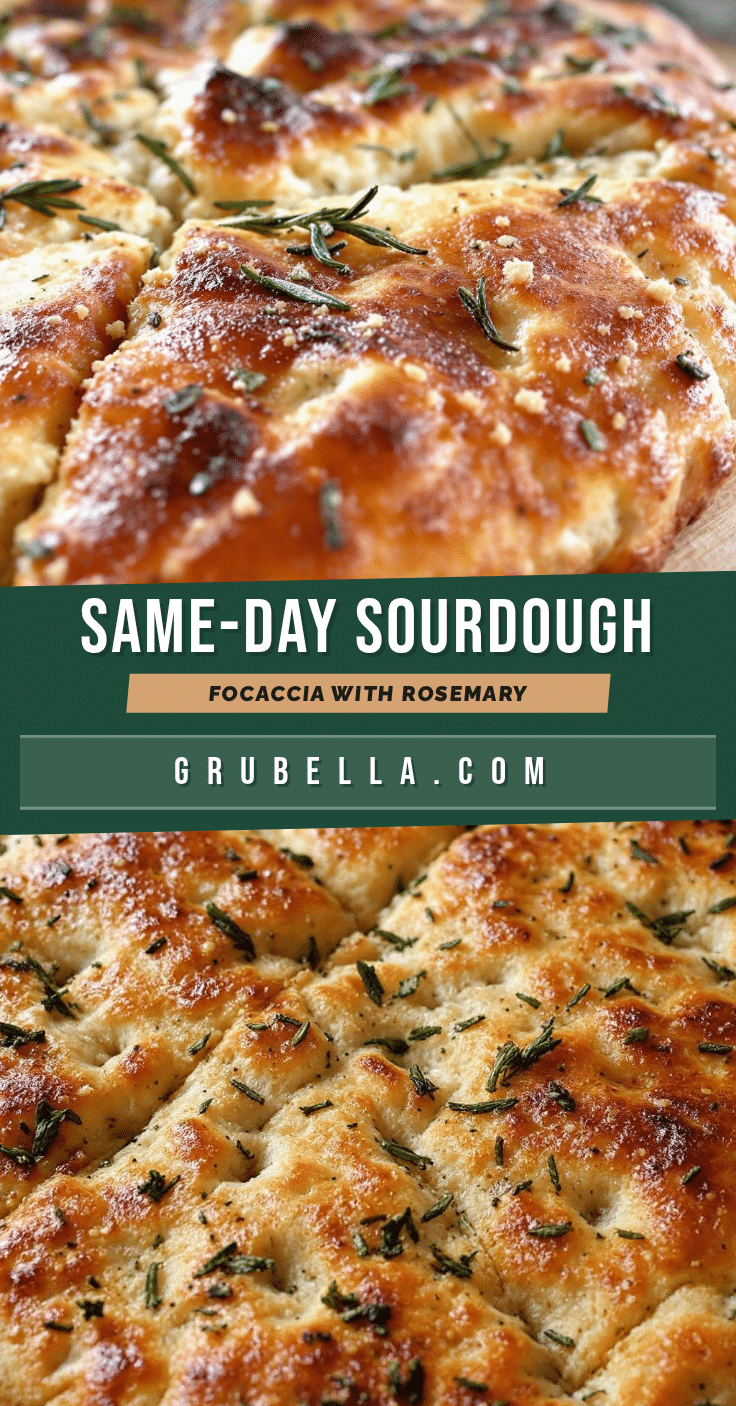
Easy Same-Day Sourdough Focaccia with Rosemary

A forgiving, quick sourdough focaccia that delivers a crispy golden crust and an airy, pillowy interior in under 5 hours. Perfect for beginners and busy bakers, this recipe uses a warm water bath to speed up fermentation without sacrificing flavor.
- Prep Time: 15 minutes
- Cook Time: 25 minutes
- Total Time: 4 hours 45 minutes
- Yield: 8 servings 1x
- Category: Bread
- Cuisine: Italian
Ingredients
- 500g bread flour (about 4 cups)
- 400g lukewarm water (1 ¾ cups)
- 150g active sourdough starter (about ¾ cup)
- 80g extra-virgin olive oil (⅓ cup), plus more for drizzling
- 10g fine sea salt (about 1 ½ teaspoons)
- 2–3 sprigs fresh rosemary, leaves removed and roughly chopped
- Flaky sea salt for finishing
Instructions
- Mix the Dough (10:00 AM): In a large mixing bowl, combine 400g lukewarm water and 150g active sourdough starter. Whisk until the starter is mostly dissolved and the mixture looks milky and bubbly. Add 500g bread flour and 10g fine sea salt. Mix with your hand or a sturdy spatula until no dry bits of flour remain. The dough will be very shaggy and sticky. Cover the bowl with plastic wrap or a damp towel and let it rest for 30 minutes (autolyse).
- Add the Oil & Perform Stretch and Folds (10:30 AM): After the rest, pour 80g of olive oil over the dough. With a wet hand, grab one side of the dough, stretch it up as high as it will go without tearing, and fold it over the top. Rotate the bowl 90 degrees and repeat. Do this 4 times total (a full rotation). Cover the bowl again.
- Bulk Fermentation with a Warm Water Bath (10:30 AM – 1:30 PM): Fill your kitchen sink or a larger bowl with warm water (about 90°F / 32°C). Place the covered mixing bowl into the warm water bath, with water coming about halfway up the sides. Let it sit for 3 hours. Every 30 minutes for the first 2 hours, perform another set of 4 stretch and folds right in the bowl. The dough should become smooth, puffy, and doubled in size.
- Prepare the Pan & Second Rise (1:30 PM – 2:30 PM): Generously coat a 9×13-inch baking pan with olive oil. Gently turn the dough out into the pan. Using oiled hands, gently coax the dough to spread into the corners. If it resists, let it rest for 10-15 minutes and try again. Cover the pan with plastic wrap and let it rise for another 1 hour at room temperature until nearly doubled in height.
- Dimple, Top, and Preheat (2:30 PM): About 30 minutes before baking, preheat your oven to 425°F (220°C) with a rack in the middle. Drizzle a generous tablespoon of olive oil over the top of the risen dough. With oiled fingers, press deep dimples all over the surface, right down to the bottom of the pan. Sprinkle chopped fresh rosemary and a generous pinch of flaky sea salt over the top.
- Bake (3:00 PM – 3:25 PM): Place the pan on the middle rack and bake for 20-25 minutes, rotating the pan halfway through, until the top is deep golden brown and the bottom sounds hollow when tapped. If browning too quickly, tent loosely with foil for the last 5 minutes.
- Cool (3:25 PM – 3:45 PM): Let the focaccia cool in the pan on a wire rack for 10 minutes. Then carefully transfer it out of the pan directly onto the cooling rack. Let it cool for at least another 20 minutes before slicing.
Notes
The warm water bath is crucial for a same-day rise; without it, bulk fermentation will take 6-8 hours. Use wet hands for handling the sticky dough. Don’t overthink the dimpling—rustic is beautiful. Ovens vary, so watch for visual cues: deep golden-brown top, crispy edges, and hollow sound when tapped. For best results, use an active starter that has been fed within 4-6 hours.
Nutrition
- Serving Size: 1/8 of recipe
- Calories: 280
- Sodium: 410
- Fat: 12
- Saturated Fat: 2
- Carbohydrates: 36
- Fiber: 1.5
- Protein: 6
Keywords: sourdough focaccia, same-day focaccia, rosemary focaccia, easy sourdough bread, beginner sourdough, quick sourdough, focaccia recipe