Love this? Save it for later!
Share the inspiration with your friends
This was supposed to be a full-blown, twelve-jar operation—the kind of jam-making day where you clear your schedule, put on a podcast, and brace yourself for an afternoon of chopping and stirring. I had a five-pound box of figs sitting on my counter, a brand-new water bath canner I was dying to use, and big plans to stock my pantry for months. Then my neighbor stopped by to borrow a ladder, I got distracted, and somewhere between that conversation and the stove, I grabbed the wrong bottle from my pantry shelf. Instead of the plain balsamic I usually reach for, I grabbed the aged balsamic—the good stuff, the one I save for drizzling over strawberries. By the time I realized my mistake, the vinegar was already simmering away with the figs, and honestly, I was too tired to start over.
So I just let it ride. I figured I’d end up with a weird, overly tangy mess that I’d quietly toss and never speak of again. You know that feeling when you’re watching something go sideways and you just let it happen because you’re too worn out to fight it? That was me. But then something strange started happening. The kitchen filled with this incredible smell—not just sweet and fruity, but deep and almost savory, like something you’d find in a fancy cheese shop. I dipped a spoon in to taste it, fully expecting to wince, and instead I just stood there, holding that spoon, thinking, Wait. What?
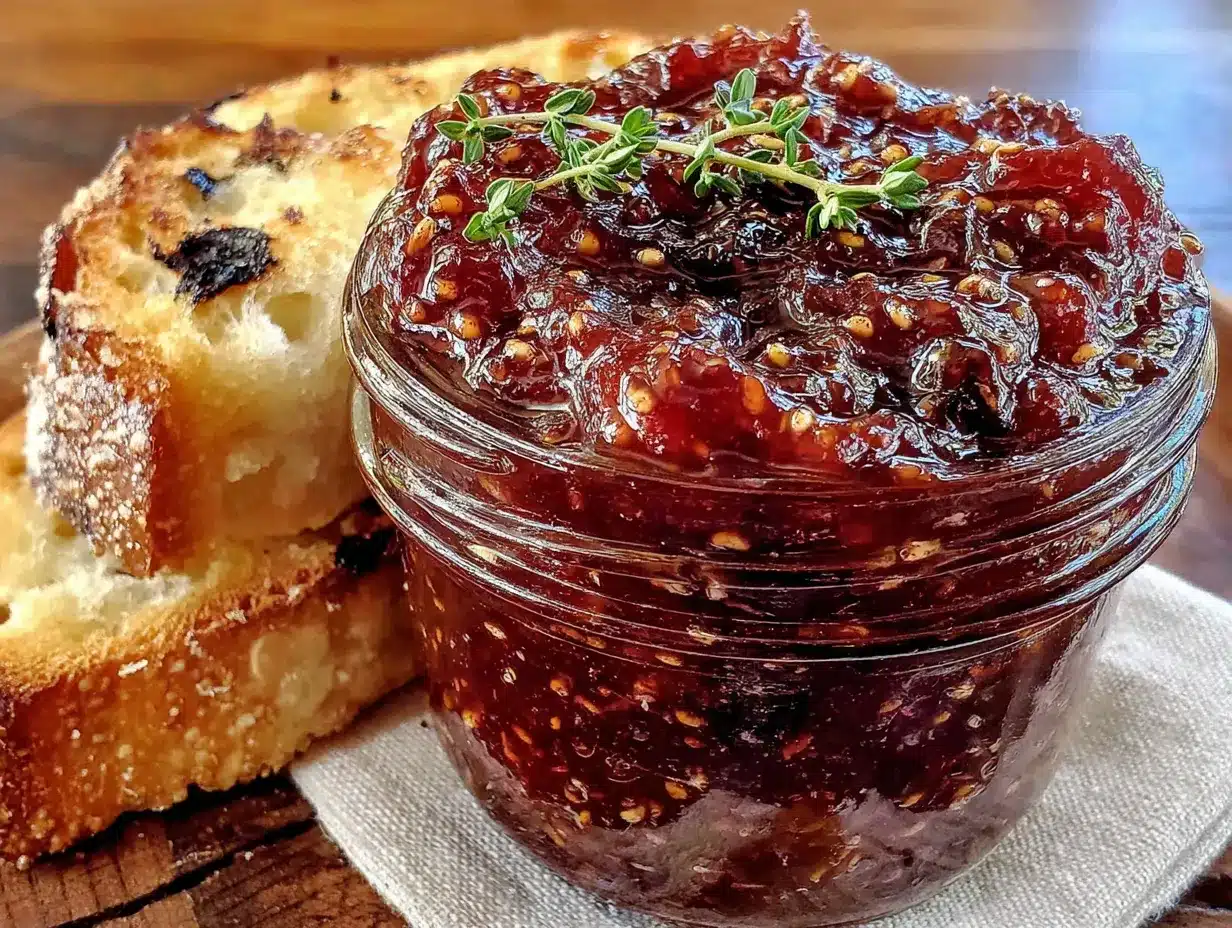
The balsamic didn’t overpower the figs. It did the opposite. It made them taste more like themselves—richer, darker, more complex. And that sprig of thyme I’d thrown in on a whim? It tied everything together in a way that felt almost too good to be accidental. I mean, I’ll take credit for the thyme, but the whole happy accident with the vinegar? That was pure luck. Now I make this small-batch fig jam with balsamic and thyme on purpose every single time, and I honestly think it’s better than any recipe I’ve ever followed intentionally. Maybe you’ve had one of those kitchen moments where a mistake turned into a keeper. This is mine.
Why You’ll Love This Recipe
Let me tell you why this small-batch fig jam with balsamic and thyme has become my most-requested recipe, even beating out my grandma’s strawberry preserves (don’t tell her I said that).
- Quick & Easy : We’re talking about 45 minutes from start to finish. No water bath canning required unless you want to go that route. This is a small batch, so it comes together fast and fits perfectly into a weekday evening.
- Simple Ingredients : You only need five main ingredients—fresh figs, sugar, balsamic vinegar, fresh thyme, and a squeeze of lemon. Chances are you already have most of these in your kitchen right now.
- Perfect for Gifting : A jar of this jam tied with a bit of twine makes the kind of gift that makes people think you spent hours in the kitchen. It looks fancy, but you and I know the truth.
- Crowd-Pleaser : I’ve served this on cheese boards, spread it on toast, and spooned it over pork chops. Every single time, someone asks for the recipe. It’s that good.
- Unbelievably Delicious : The balsamic adds this subtle tangy depth that cuts through the sweetness of the figs, while the thyme brings an earthy, almost floral note. It’s not your average jam—it’s next-level.
What makes this version different from every other fig jam recipe out there is the balance. Most fig jams are just sweet, and honestly, that gets boring after a few bites. The balsamic and thyme combination creates a savory-sweet profile that keeps you coming back for more. It’s comfort food reimagined—faster, simpler, but with the same soul-soothing satisfaction. Perfect for impressing guests without stress, or turning a simple breakfast into something memorable.
What Ingredients You Will Need
This recipe uses simple, wholesome ingredients to deliver bold flavor and satisfying texture without the fuss. Here’s what you’ll need to gather before you start cooking.
For the Jam
- Fresh figs, stems removed and quartered (about 1 pound or 450g) – Look for ripe but firm figs. Black Mission, Brown Turkey, or Kadota figs all work beautifully. If the figs are too soft, they’ll break down too quickly and you’ll end up with more of a sauce than a jam. I prefer using Black Mission figs when I can find them because they have that deep, almost wine-like flavor that pairs so well with balsamic.
- Granulated sugar (½ cup or 100g) – You don’t need as much sugar as traditional jam recipes because figs are naturally sweet. This amount gives you a nice set without being cloying.
- Aged balsamic vinegar (2 tablespoons) – Please don’t use the cheap stuff here. You want a balsamic that’s thick and syrupy, with some age on it. I recommend getting one from a specialty store or a brand like Lucini or Fini. The flavor difference is night and day.
- Fresh thyme sprigs (3 to 4 sprigs) – Fresh is non-negotiable here. Dried thyme just doesn’t give you the same gentle, aromatic quality. You’ll remove the sprigs before jarring, so you get the flavor without the texture.
- Fresh lemon juice (1 tablespoon, from about half a lemon) – This adds brightness and helps the jam set by providing natural pectin. Always use fresh lemon juice, not bottled.
- Pinch of salt – Just a tiny pinch. It might sound weird, but salt amplifies the sweetness and balances the acidity of the balsamic.
Optional Add-Ins
- Vanilla extract (½ teaspoon) – Adds a warm, cozy note that works beautifully with figs.
- Orange zest (from ½ an orange) – Brightens the whole thing up and gives it a more complex citrus undertone.
- Black pepper (a few cracks) – If you’re feeling adventurous, a tiny bit of freshly cracked black pepper adds a surprising warmth that complements the balsamic.
If you can’t find fresh figs, you can use frozen figs that have been thawed and drained. Just be aware that frozen figs tend to be softer and will break down more quickly, so you might need to reduce the cooking time slightly. I’ve also made this with dried figs that I rehydrated in warm water for about 20 minutes, and it worked in a pinch, though the texture is a bit different—more like a thick compote than a traditional jam.
Equipment Needed
You don’t need a lot of fancy equipment for this small-batch fig jam with balsamic and thyme, which is part of why I love making it. Here’s what you’ll want to have on hand.
- Medium heavy-bottomed saucepan or Dutch oven (2 to 3 quarts) – A heavy bottom prevents the jam from scorching. I use my Le Creuset 2.5-quart Dutch oven, but any sturdy saucepan will do. Avoid thin, cheap pans—you’ll end up with burned jam and a lot of cursing.
- Wooden spoon or silicone spatula – For stirring. I prefer a wooden spoon because it feels right for jam-making, but a heat-safe silicone spatula works just as well.
- Sharp knife and cutting board – For prepping the figs. A dull knife will just squish them.
- Glass jar with a tight-fitting lid (8 to 12 ounces) – You’ll need one jar for storing the jam. A Weck jar or a repurposed pasta sauce jar works great. Just make sure it’s clean and sterilized.
- Small plate or saucer – For testing the set. Pop this in the freezer before you start cooking.
- Ladle and funnel – A canning funnel makes transferring the hot jam into the jar much less messy. Trust me on this one.
If you don’t have a heavy-bottomed saucepan, you can use a nonstick skillet with higher sides. Just keep a closer eye on the heat because nonstick pans distribute heat differently. And if you don’t have a canning funnel, you can carefully pour the jam from the saucepan directly into the jar, but prepare for drips. I learned that the hard way and spent ten minutes cleaning sticky jam off my counter.
Preparation Method
Alright, let’s get cooking. This small-batch fig jam with balsamic and thyme comes together in about 45 minutes, and most of that is hands-off simmering time.
- Prep the figs. Rinse your fresh figs gently under cool water and pat them dry with a clean kitchen towel. Remove the stems by cutting them off with a sharp knife, then quarter each fig. If you have really large figs, you can cut them into sixths instead. The pieces should be roughly uniform in size so they cook evenly. Don’t worry about being perfect—figs are forgiving.
- Combine everything in the saucepan. Place the quartered figs, granulated sugar, aged balsamic vinegar, fresh thyme sprigs, lemon juice, and a pinch of salt into your medium saucepan. Give everything a good stir with your wooden spoon until the sugar starts to dissolve and the figs are coated. Let the mixture sit for about 5 minutes. This helps draw out some of the fig’s natural juices and gets the sugar melting before you apply heat.
- Start cooking over medium heat. Turn the heat to medium and bring the mixture to a gentle simmer. You’ll see the figs start to release more liquid, and the sugar will dissolve completely. Stir occasionally to prevent anything from sticking to the bottom. This takes about 5 to 7 minutes. You’re looking for a steady bubble, not a violent boil.
- Reduce heat and simmer. Once you’ve got a nice simmer going, reduce the heat to medium-low. Let the jam cook gently for 20 to 25 minutes, stirring every few minutes. You’ll notice the figs breaking down and the liquid reducing. The jam will start to thicken and darken in color. If you see foam forming on the surface, skim it off with a spoon—it’s just impurities and air bubbles, and removing it gives you a clearer, prettier jam.
- Test the set. After about 20 minutes, start checking if the jam is ready. Grab that small plate you put in the freezer earlier. Drop a small spoonful of jam onto the cold plate and let it sit for about 30 seconds. Then tilt the plate. If the jam wrinkles slightly and moves slowly, it’s ready. If it runs quickly like thin syrup, it needs more time. Keep cooking and test every 3 to 4 minutes until you get that wrinkle. The jam will also thicken more as it cools, so don’t overcook it.
- Remove the thyme sprigs. Once your jam has reached the right consistency, use tongs or a fork to fish out the thyme sprigs. Give them a gentle squeeze over the pot to release any trapped jam, then discard the sprigs. Give the jam one final stir.
- Jar the jam. Carefully ladle the hot jam into your clean glass jar, leaving about ¼ inch of headspace at the top. Wipe the rim of the jar with a clean, damp cloth to remove any sticky residue. Screw on the lid tightly. Let the jar cool completely on your counter before moving it to the refrigerator. You’ll hear a satisfying pop as the lid seals if you’re using a jar with a proper seal.
A quick note on timing: if you want a chunkier jam with more visible fig pieces, cook it for the shorter end of the range (about 20 minutes). If you prefer a smoother, more spreadable texture, let it go the full 25 minutes and give it a few gentle mashes with your spoon at the end. I personally like it somewhere in the middle—some chunks for texture, but spreadable enough for toast.
Cooking Tips & Techniques
I’ve made this small-batch fig jam with balsamic and thyme more times than I can count, and I’ve definitely made my share of mistakes along the way. Here are the things I wish someone had told me when I first started making jam.
Don’t walk away from the stove. I know it’s tempting to start cleaning up or check your phone, but jam can go from perfectly thickened to burned in about 30 seconds. Stay close, stir often, and keep an eye on the heat. If you notice the jam starting to stick to the bottom, turn the heat down immediately. Low and slow is your friend here.
Use a heavy-bottomed pan. This isn’t just food snobbery. A heavy bottom distributes heat evenly and prevents hot spots that cause scorching. My first few batches of jam were made in a thin stainless steel pot, and I ended up with little burned bits in every batch. Switched to a Dutch oven, and the problem disappeared.
Trust the plate test, not the clock. Every batch of figs is different. Some are juicier, some are drier, and the weather can even affect how quickly the jam cooks. The plate test is way more reliable than any timer. If you don’t have a freezer-safe plate, you can also use a spoon test—dip a cold metal spoon into the jam, lift it out, and see if the jam coats the back of the spoon thickly and doesn’t run off immediately.
Let it cool before you judge the texture. Hot jam is thin. I can’t tell you how many times I’ve thought I undercooked a batch, only to find it perfectly set the next morning. If your jam seems too loose after cooling, you can always pour it back into the saucepan and cook it a few more minutes. But you can’t un-cook an overcooked batch, so err on the side of slightly underdone.
Season as you go. Taste the jam before you remove the thyme sprigs. Does it need more lemon? A tiny pinch more salt? Another drizzle of balsamic? Adjust now, because once it’s jarred, you’re committed. I once forgot to add the lemon juice until after I’d jarred the jam, and it was noticeably flat and one-dimensional.
Variations & Adaptations
One of the best things about this small-batch fig jam with balsamic and thyme is how easy it is to adapt. Here are some variations I’ve tried and loved.
Vegan Version: This recipe is already vegan! No butter, no dairy, no animal products. Just figs, sugar, and flavor. You’re good to go.
Low-Sugar Option: You can reduce the sugar to ¼ cup if you prefer a less sweet jam. Just be aware that the jam will be a bit looser and won’t keep as long in the fridge. I’d recommend using it within two weeks if you go this route. You can also substitute the granulated sugar with coconut sugar for a more caramel-like flavor, though the color will be darker.
Spiced Fig Jam: Add ½ teaspoon of ground cinnamon, ¼ teaspoon of ground ginger, and a pinch of ground cloves along with the sugar. This turns it into a holiday-worthy jam that’s incredible on scones or stirred into oatmeal. I made this version for a Christmas brunch once, and it disappeared in about ten minutes.
Rosemary Variation: If you’re not a thyme fan, swap in two sprigs of fresh rosemary instead. Rosemary and figs are a classic pairing, and the piney, slightly lemony flavor works beautifully with the balsamic. Just be careful not to overdo it—rosemary is stronger than thyme, so two sprigs is plenty.
Honey-Sweetened Version: Replace the granulated sugar with ⅓ cup of honey. Keep in mind that honey will make the jam a bit more liquid, so you might need to cook it an extra 5 minutes to reach the right consistency. I like using a mild honey like orange blossom or clover so it doesn’t overpower the figs.
Boozy Fig Jam: Stir in 1 tablespoon of brandy, bourbon, or port wine during the last 5 minutes of cooking. The alcohol mostly cooks off, leaving behind a warm, complex flavor that’s incredible on a cheese board. I made a bourbon version last fall and served it with sharp cheddar and crackers, and honestly, it was the highlight of the party.
Serving & Storage Suggestions
This small-batch fig jam with balsamic and thyme is incredibly versatile. Here’s how I like to use it.
Serving Temperature: Serve the jam at room temperature or slightly chilled. If you’re using it on a cheese board, let it come to room temperature for about 20 minutes so it’s spreadable and the flavors open up. Straight from the fridge, it’s firmer and harder to spread.
Classic Uses: Spread it on toast, biscuits, or scones for breakfast. Swirl it into yogurt or oatmeal. Use it as a filling for thumbprint cookies or between layers of a vanilla cake. It’s also incredible spooned over pancakes or waffles instead of syrup.
Savory Pairings: This is where the jam really shines. Serve it alongside a cheese board with aged cheddar, blue cheese, or brie. Spoon it over roasted pork tenderloin or chicken thighs during the last few minutes of cooking. Use it as a glaze for grilled salmon or shrimp. I’ve even stirred a spoonful into salad dressings for a sweet-tangy kick.
Storage Instructions: Store the jam in an airtight jar in the refrigerator for up to 3 weeks. Because this is a small-batch recipe with less sugar than traditional preserves, it’s not shelf-stable at room temperature. If you want to can it for long-term storage, you’ll need to process the jars in a water bath canner for 10 minutes. The flavor actually deepens after a day or two in the fridge, so don’t be alarmed if it tastes even better on day two.
Freezing Instructions: You can freeze this jam for up to 6 months. Let it cool completely, then transfer it to a freezer-safe container, leaving about ½ inch of headspace for expansion. Thaw it overnight in the refrigerator before using. The texture might be slightly softer after freezing, but the flavor remains excellent.
Reheating: If the jam thickens too much in the fridge, just microwave it for 10 to 15 seconds, or let the jar sit in a bowl of warm water for a few minutes. Stir well before serving.
Nutritional Information & Benefits
While this small-batch fig jam with balsamic and thyme is definitely a treat, it does offer some nutritional perks worth mentioning.
Estimated Nutritional Values (per 1-tablespoon serving):
- Calories: 45
- Total Fat: 0g
- Sodium: 1mg
- Total Carbohydrates: 11g
- Sugars: 10g
- Fiber: 1g
- Protein: 0g
Health Benefits: Figs are a good source of dietary fiber, which supports digestive health and helps you feel full longer. They also contain potassium, magnesium, and calcium—minerals that are important for bone health and muscle function. The balsamic vinegar adds a touch of antioxidants, and thyme is known for its antimicrobial properties and vitamin C content. Of course, this is still a sweet spread, so enjoy it in moderation as part of a balanced diet.
Dietary Considerations: This recipe is naturally gluten-free, dairy-free, egg-free, and vegan. It contains no nuts, though if you’re serving it with cheese or crackers, be mindful of potential allergens there. The sugar content makes it unsuitable for strict keto or low-carb diets, but the low-sugar variation I mentioned earlier can help reduce the carb load.
Conclusion
This small-batch fig jam with balsamic and thyme started as a happy accident, but it’s earned a permanent spot in my kitchen. It’s the kind of recipe that feels special without being complicated—something you can whip up on a random Tuesday and feel like you’ve accomplished something genuinely delicious. The balance of sweet figs, tangy balsamic, and earthy thyme is just unforgettable. I mean that sincerely. I’ve made this for friends, family, and even a few skeptical neighbors, and every single person has asked for the recipe.
I hope you give this a try and make it your own. Maybe you’ll add a pinch of cinnamon, swap in rosemary, or serve it over a pork roast instead of toast. That’s the beauty of a simple recipe like this—it’s a starting point, not a rulebook. I’d love to hear how it turns out for you. Drop a comment below and let me know what you paired it with, or if you came up with a variation I haven’t tried yet. And if you share a photo on Pinterest or Instagram, tag me so I can see your beautiful jar of jam. Happy cooking, friend!
Frequently Asked Questions
Can I use dried figs instead of fresh?
Yes, you can. Rehydrate the dried figs in warm water for about 20 minutes, then drain them well before using. The texture will be a bit different—more like a thick compote—but the flavor is still excellent. You might need to reduce the sugar slightly since dried figs are more concentrated in sweetness.
How long does this jam last in the fridge?
Stored in an airtight jar, this jam will keep for up to 3 weeks in the refrigerator. Because it’s a small-batch recipe with less sugar than traditional preserves, it’s not shelf-stable at room temperature. If you want to keep it longer, you can freeze it for up to 6 months.
Can I make this jam without balsamic vinegar?
You can, but it won’t have the same depth of flavor. The balsamic adds a tangy, slightly sweet complexity that balances the figs beautifully. If you don’t have balsamic, try substituting with red wine vinegar plus a teaspoon of honey, or just skip it and add an extra tablespoon of lemon juice for brightness.
My jam turned out too runny. What went wrong?
Don’t worry—this happens to everyone. The jam likely just needed more cooking time. Every batch of figs has different water content, so the cooking time can vary. Pour the jam back into the saucepan and simmer it for another 5 to 10 minutes, testing the set every few minutes with the cold plate test. It will thicken as it cools, too.
Can I double this recipe?
Absolutely. You can double or even triple the ingredients, but keep in mind that a larger batch will take longer to cook and reduce. Use a larger pot and expect the cooking time to increase by about 10 to 15 minutes. Just make sure you have enough jars on hand!
Pin This Recipe!
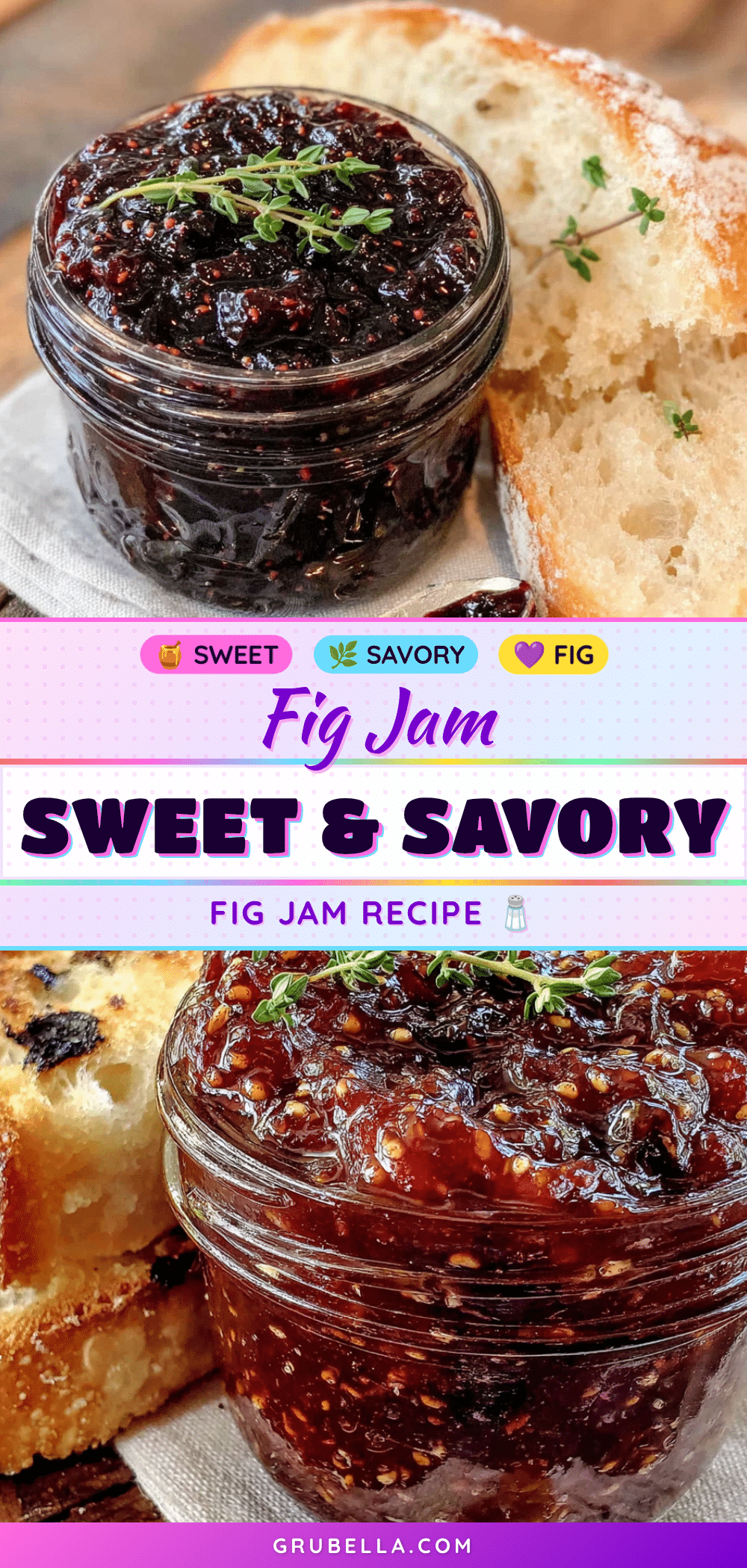
Easy Small-Batch Fig Jam with Balsamic and Thyme
This small-batch fig jam with balsamic and thyme is a happy accident turned keeper—sweet, tangy, and earthy, perfect for cheese boards, toast, or glazing meats. Ready in about 45 minutes with simple ingredients.
- Prep Time: 10 minutes
- Cook Time: 30 minutes
- Total Time: 45 minutes
- Yield: 1 cup (about 8 servings) 1x
- Category: Condiment
- Cuisine: American
Ingredients
- 1 pound (450g) fresh figs, stems removed and quartered
- ½ cup (100g) granulated sugar
- 2 tablespoons aged balsamic vinegar
- 3 to 4 sprigs fresh thyme
- 1 tablespoon fresh lemon juice
- Pinch of salt
- ½ teaspoon vanilla extract (optional)
- Zest of ½ orange (optional)
- Few cracks black pepper (optional)
Instructions
- Rinse figs gently under cool water and pat dry. Remove stems and quarter figs (or cut into sixths if very large).
- In a medium heavy-bottomed saucepan or Dutch oven, combine quartered figs, sugar, balsamic vinegar, thyme sprigs, lemon juice, and a pinch of salt. Stir until sugar begins to dissolve. Let sit for 5 minutes.
- Place saucepan over medium heat and bring to a gentle simmer. Cook for 5 to 7 minutes, stirring occasionally, until figs release liquid and sugar dissolves completely.
- Reduce heat to medium-low and simmer gently for 20 to 25 minutes, stirring every few minutes. Skim off any foam that forms on the surface.
- Test the set: Place a small plate in the freezer before starting. After 20 minutes, drop a small spoonful of jam onto the cold plate. Let sit for 30 seconds, then tilt. If the jam wrinkles and moves slowly, it’s ready. If it runs quickly, continue cooking and test every 3 to 4 minutes.
- Remove thyme sprigs with tongs or a fork, gently squeezing to release trapped jam. Discard sprigs. Stir in any optional add-ins (vanilla, orange zest, black pepper) if using.
- Ladle hot jam into a clean glass jar, leaving ¼ inch headspace. Wipe rim, screw on lid tightly, and let cool completely on counter before refrigerating.
Notes
For chunkier jam, cook for shorter time (20 minutes). For smoother jam, cook longer (25 minutes) and mash gently. Jam thickens as it cools. Store in refrigerator for up to 3 weeks or freeze for up to 6 months. If canning, process jars in water bath canner for 10 minutes.
Nutrition
- Serving Size: 1 tablespoon
- Calories: 45
- Sugar: 10
- Sodium: 1
- Carbohydrates: 11
- Fiber: 1
Keywords: fig jam, balsamic fig jam, thyme fig jam, small batch jam, easy fig jam, homemade jam, fig preserves