Love this? Save it for later!
Share the inspiration with your friends
“I never thought I’d be the type to keep a crumpled recipe card taped inside a weathered wooden cabinet door,” I confessed to my friend one rainy afternoon. But there it was—faded, splattered, and full of scribbles—my coastal grandma’s lemon poppy seed scone recipe. She wasn’t the baking type you might picture, more the brisk sea air and salt-in-the-wind kind of woman, always bustling about her garden or chatting with neighbors. Yet, every time I make these scones, I’m swept back to her tiny kitchen by the harbor, where the kettle’s whistle mingled with seagulls and the scent of fresh lemon zest filled the air.
One chilly Saturday, I decided to tackle the recipe again, despite forgetting a key step the last time and nearly turning the batter into a sticky mess. Honestly, it was a disaster, but that first bite—tangy, crumbly, with just the right crunch from the poppy seeds—made me grin. You know that feeling when something simple just hits the spot? That’s exactly what these scones do. They’re not fancy or pretentious, but they bring a kind of cozy comfort that feels like a warm hug from the sea itself.
Maybe you’ve been there, searching for a scone recipe that’s both bright and soothing, perfect for a slow morning or an impromptu tea party. Well, this one has stuck with me for years, and for good reason. It’s the kind of recipe you’ll want to share, maybe with a dollop of clotted cream and a cup of your favorite tea, watching the waves or just enjoying a quiet moment.
Why You’ll Love This Recipe
After countless tests and plenty of taste tests (my friends and local book club are the real MVPs here), I can tell you this recipe is a keeper. Here’s why it stands apart:
- Quick & Easy: Whips up in about 30 minutes, so it’s great for those mornings when you want something special without spending hours in the kitchen.
- Simple Ingredients: Nothing fancy needed. You likely have all the pantry staples already, making it perfect for last-minute baking urges.
- Perfect for Cozy Gatherings: Whether it’s a weekend brunch or a casual tea with neighbors, these scones bring a touch of seaside charm to the table.
- Crowd-Pleaser: The zesty lemon and nutty poppy seeds get rave reviews from everyone, from kids to grandparents.
- Unbelievably Delicious: The tender crumb combined with the slight crunch of poppy seeds and the richness of clotted cream is pure comfort food magic.
This isn’t just another lemon poppy seed scone recipe. The secret? A coastal grandma’s knack for balancing tangy lemon zest with just enough sweetness and a tender, flaky texture that’s a little crumbly, a little buttery. Plus, topping it with clotted cream adds that silky, indulgent finish that makes every bite memorable.
What Ingredients You Will Need
This recipe uses simple, wholesome ingredients to deliver bold flavor and satisfying texture without the fuss. Most are pantry staples, with a few easy-to-find fresh items. Here’s what you’ll gather before you start:
- All-purpose flour (2 cups / 250g) – I prefer King Arthur for consistent results
- Baking powder (2 teaspoons) – the leavening agent for fluffy scones
- Granulated sugar (1/4 cup / 50g) – for just the right touch of sweetness
- Poppy seeds (2 tablespoons) – the nutty crunch that makes these scones special
- Salt (1/2 teaspoon) – balances the flavors
- Cold unsalted butter (1/2 cup / 115g), cubed – the secret to flaky layers (use frozen butter cubes if you want extra flakiness)
- Large egg (1), room temperature – helps bind the dough
- Heavy cream (3/4 cup / 180ml), plus extra for brushing – adds richness and moisture
- Lemon zest (from 1 large lemon) – fresh and bright, not bottled
- Fresh lemon juice (1 tablespoon) – for that authentic coastal zing
- Vanilla extract (1 teaspoon) – subtle warmth in the background
- Clotted cream (for serving) – find it at specialty stores or online; it’s worth the splurge!
If you’re looking for substitutions, almond flour works well for a gluten-free adaptation, but be warned—the texture shifts a bit. For dairy-free options, swap heavy cream with full-fat coconut milk and use a plant-based butter alternative. Fresh lemon zest and juice are non-negotiable here—they deliver that unmistakable coastal brightness.
Equipment Needed
- Mixing bowls: Large enough to comfortably combine ingredients.
- Pastry cutter or two knives: To cut butter into the flour; a food processor works too, but hands-on mixing gives better control.
- Baking sheet: Lined with parchment paper or a silicone mat.
- Measuring cups and spoons: Accuracy matters, especially with baking powder and butter.
- Zester or microplane: For fresh lemon zest.
- Whisk: To blend wet ingredients smoothly.
- Cooling rack: For letting scones rest without sogginess.
I used to dread cleaning up after baking, but a silicone mat makes the cleanup a breeze. If you don’t have a pastry cutter, two butter knives crisscrossed work just fine, and you get the bonus of feeling like a baking pro.
Preparation Method
- Preheat your oven to 400°F (200°C) and line a baking sheet with parchment paper. This high temp helps create that golden crust we all love.
- Mix dry ingredients: In a large bowl, whisk together 2 cups (250g) all-purpose flour, 2 teaspoons baking powder, 1/4 cup (50g) granulated sugar, 2 tablespoons poppy seeds, and 1/2 teaspoon salt. Make sure everything is evenly combined for consistent rising.
- Cut in the butter: Add the cold, cubed 1/2 cup (115g) unsalted butter. Using a pastry cutter or two knives, work the butter into the flour mixture until it resembles coarse crumbs with pea-sized bits of butter remaining. Don’t overmix—those little chunks make the scones flaky.
- Combine wet ingredients: In a separate bowl, whisk 1 large room-temperature egg, 3/4 cup (180ml) heavy cream, 1 teaspoon vanilla extract, the zest of 1 large lemon, and 1 tablespoon fresh lemon juice until smooth.
- Form the dough: Pour the wet mixture into the dry ingredients. Stir gently with a wooden spoon or spatula just until the dough comes together. It will be slightly sticky but hold shape. If it feels too dry, add a tablespoon of cream at a time; too wet, add a sprinkle of flour.
- Shape the scones: Turn the dough out onto a floured surface. Pat into a 7-inch (18cm) circle about 1-inch (2.5cm) thick. Using a sharp knife or bench scraper, cut the circle into 8 wedges. Transfer them carefully to the baking sheet, spacing about 2 inches apart.
- Brush and bake: Lightly brush the tops with heavy cream for a glossy finish. Bake for 18-22 minutes until golden brown and a toothpick inserted into the center comes out clean.
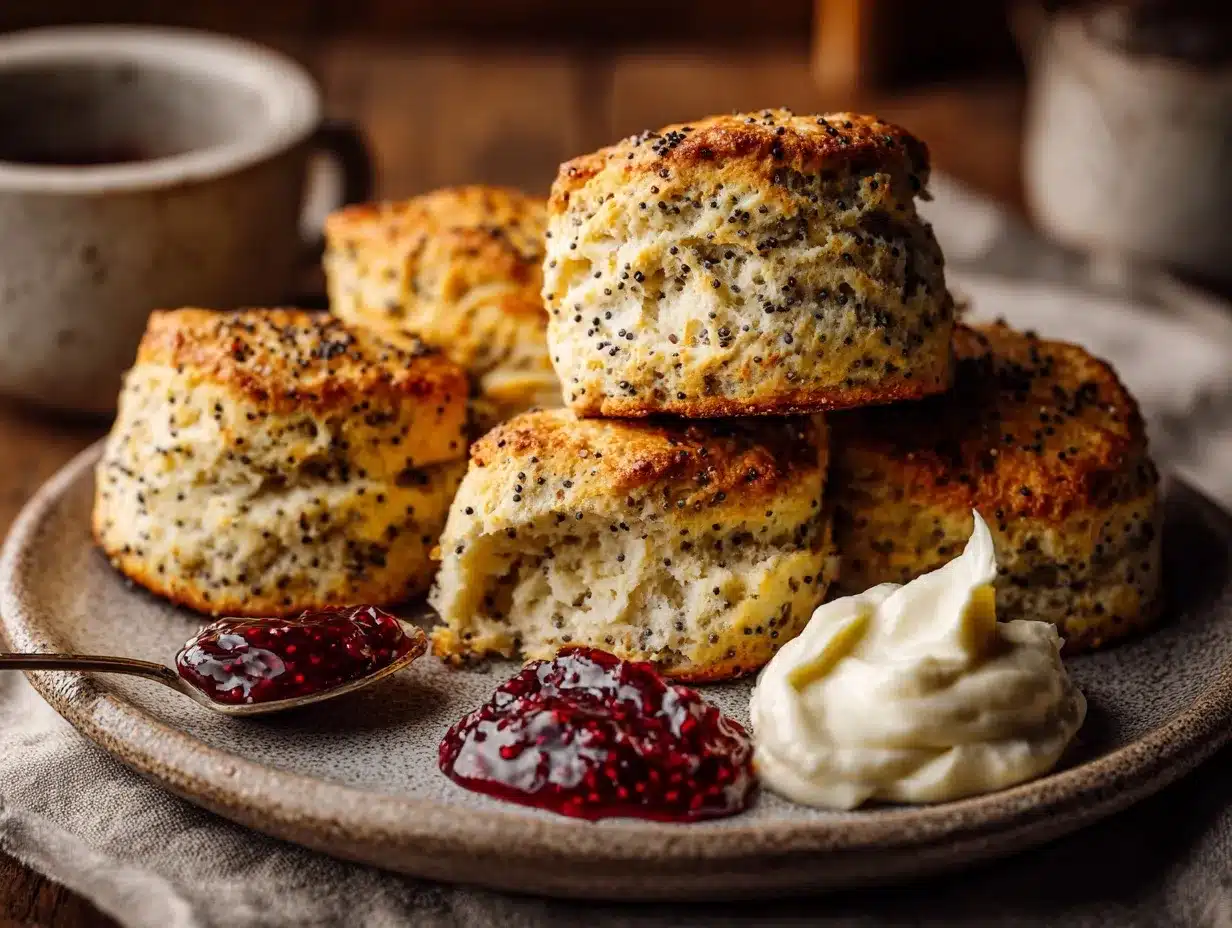
- Cool and serve: Transfer scones to a cooling rack for at least 10 minutes. Serve warm with clotted cream and, if you like, a spoonful of your favorite jam.
Pro tip: Keep your butter cold throughout, and don’t overwork the dough. I once got distracted by a phone call mid-step, and my dough became too warm—lesson learned! The scones were tasty, but a bit denser.
Cooking Tips & Techniques
The key to these lemon poppy seed scones is in the butter and handling. Cold butter creates steam during baking, which puffs up the scones into flaky layers. If you melt the butter or mix too much, you’ll lose that texture.
When zesting lemons, avoid the white pith—it’s bitter and can ruin the delicate balance of flavors. I always zest over a small bowl to catch every bit.
Don’t skip brushing the tops with cream. It helps develop that inviting golden crust. If you want to get fancy, a sprinkle of coarse sugar adds a little sparkle and crunch.
One mistake I often see is overmixing the dough. It’s tempting to make it smooth, but scones benefit from a lumpy, rustic look. Overworking activates gluten, leading to tough results.
Timing matters—bake on the middle rack for even heat and keep an eye toward the end. Ovens vary, so start checking at 18 minutes. The scones should smell buttery and lemony, with a slightly firm top.
Variations & Adaptations
- Blueberry Lemon Poppy Seed: Add 1/2 cup fresh or frozen blueberries folded gently into the dough for a fruity twist.
- Gluten-Free Version: Substitute with a 1:1 gluten-free baking flour. The texture will be a touch more crumbly, but still delicious.
- Dairy-Free Option: Use coconut cream instead of heavy cream and a vegan butter alternative to keep the richness without dairy.
- Herbed Scones: Add 1 tablespoon chopped fresh thyme or rosemary for a savory note that pairs beautifully with lemon zest.
- Personal Favorite Variation: I sometimes mix in a tablespoon of finely chopped candied ginger—adds a little warmth and surprise that guests love.
Serving & Storage Suggestions
Serve these scones warm, ideally within an hour of baking, topped generously with clotted cream and maybe a spoonful of homemade strawberry jam. They pair wonderfully with a robust black tea or a light, floral Earl Grey.
If you have leftovers (and you might), store them in an airtight container at room temperature for up to two days. For longer storage, freeze in a zip-top bag for up to one month. To reheat, pop them in a 350°F (175°C) oven for about 8 minutes until warmed through and crisp on the outside.
Flavors deepen a bit after a day, so if you’re okay with less crispness, they’re still delightful the next morning, especially with a fresh smear of clotted cream.
Nutritional Information & Benefits
Each scone (without clotted cream) contains approximately 250 calories, 12g fat, 30g carbohydrates, and 4g protein. The use of fresh lemon zest and juice adds a boost of vitamin C and antioxidants, while poppy seeds contribute a small dose of calcium and fiber.
While these scones aren’t low-calorie, the ingredients are wholesome, with no artificial additives. Using unsalted butter and controlling sugar levels lets you enjoy them guilt-free in moderation.
For those with gluten sensitivities, the gluten-free variation makes this treat accessible without losing too much of that coastal charm.
Conclusion
Honestly, cozy coastal grandma’s lemon poppy seed scones with clotted cream have become one of those recipes I turn to when I want simple comfort wrapped in bright flavor. They’re approachable, reliable, and bring a little sunshine to any day—rainy or not.
Feel free to adjust the lemon zest or sugar to match your taste. Maybe you like it a bit more tart or sweeter; that’s the joy of baking at home. I love how this recipe bridges the gap between old-fashioned charm and modern ease.
If you try these scones, I’d love to hear how they turned out or what variation you enjoyed the most. Drop a comment below or share your photos—let’s keep the coastal spirit alive, one scone at a time!
Frequently Asked Questions
Can I make these scones ahead of time?
Yes! You can prepare the dough, shape the scones, and refrigerate for up to 24 hours before baking. Just add a couple of extra minutes to the baking time if chilled.
What can I use if I don’t have clotted cream?
Thick whipped cream or mascarpone cheese works as a delicious substitute, though the texture and flavor will be slightly different.
How do I store leftover scones?
Store scones in an airtight container at room temperature for 1-2 days or freeze for up to a month. Reheat in the oven for best texture.
Can I use frozen lemon zest or juice?
Fresh lemon zest and juice are best for bright flavor, but frozen can be used in a pinch. Just be mindful that frozen zest might be less aromatic.
Are poppy seeds necessary?
Poppy seeds add a signature crunch and nutty flavor, but if you’re not a fan, you can omit or replace them with chia seeds or even sesame seeds for a different twist.
For those curious about other delightful baked goods, my crispy garlic chicken recipe also brings a cozy vibe to the table, perfect alongside these scones for a weekend brunch treat.
Pin This Recipe!

Cozy Coastal Lemon Poppy Seed Scones Recipe with Clotted Cream

These lemon poppy seed scones are tender, flaky, and bright with fresh lemon zest and juice, perfect for cozy mornings or tea parties. Served best warm with clotted cream, they offer a comforting coastal flavor.
- Prep Time: 15 minutes
- Cook Time: 20 minutes
- Total Time: 35 minutes
- Yield: 8 scones 1x
- Category: Breakfast, Brunch, Snack
- Cuisine: Coastal American
Ingredients
- 2 cups (250g) all-purpose flour
- 2 teaspoons baking powder
- 1/4 cup (50g) granulated sugar
- 2 tablespoons poppy seeds
- 1/2 teaspoon salt
- 1/2 cup (115g) cold unsalted butter, cubed
- 1 large egg, room temperature
- 3/4 cup (180ml) heavy cream, plus extra for brushing
- Zest of 1 large lemon
- 1 tablespoon fresh lemon juice
- 1 teaspoon vanilla extract
- Clotted cream (for serving)
Instructions
- Preheat your oven to 400°F (200°C) and line a baking sheet with parchment paper.
- In a large bowl, whisk together the flour, baking powder, sugar, poppy seeds, and salt until evenly combined.
- Add the cold, cubed butter to the dry ingredients. Use a pastry cutter or two knives to cut the butter into the flour mixture until it resembles coarse crumbs with pea-sized bits of butter remaining. Do not overmix.
- In a separate bowl, whisk together the egg, heavy cream, vanilla extract, lemon zest, and lemon juice until smooth.
- Pour the wet mixture into the dry ingredients. Stir gently with a wooden spoon or spatula just until the dough comes together. If too dry, add cream 1 tablespoon at a time; if too wet, add a sprinkle of flour.
- Turn the dough out onto a floured surface and pat into a 7-inch (18cm) circle about 1-inch (2.5cm) thick.
- Cut the circle into 8 wedges using a sharp knife or bench scraper. Transfer wedges to the prepared baking sheet, spacing about 2 inches apart.
- Lightly brush the tops with heavy cream for a glossy finish.
- Bake for 18-22 minutes until golden brown and a toothpick inserted into the center comes out clean.
- Transfer scones to a cooling rack and let cool for at least 10 minutes.
- Serve warm with clotted cream and optional jam.
Notes
Keep butter cold to ensure flaky layers. Avoid overmixing the dough to prevent tough scones. Brush tops with cream for a golden crust. Fresh lemon zest and juice are essential for bright flavor. Dough can be refrigerated up to 24 hours before baking; add extra baking time if chilled.
Nutrition
- Serving Size: 1 scone
- Calories: 250
- Fat: 12
- Carbohydrates: 30
- Protein: 4
Keywords: lemon poppy seed scones, scones recipe, clotted cream, lemon zest, easy scones, coastal baking, breakfast scones, tea party scones