Love this? Save it for later!
Share the inspiration with your friends
He didn’t ask for it because he was bored. He asked because he tasted it. We were sitting at the kitchen table, the kind of late-October evening where the wind is rattling the windowpanes and you just want to stay inside. He took a spoonful, paused, and then looked at me with that specific look that means “please make this again before the weather changes.”
I honestly didn’t think it was that good. It’s just squash. It’s just cream. But he insisted. And then he asked for more the next night. And again on the third night. Now, I’m not saying I’m annoyed, but when someone eats your dinner three times in a week, you start to realize you’ve stumbled onto something special.
This isn’t the regular butternut squash you buy at the grocery store. It’s smaller, sweeter, and has a nutty flavor that actually tastes like fall. The skin is tender enough to eat, which saves you from peeling for twenty minutes. That’s the kind of hack I’m here for. You know how much I love shortcuts that don’t sacrifice flavor.
Watching him scrape the last bit from his bowl was my confirmation. This creamy honeynut squash bisque is the real deal. It’s not just a soup; it’s a warm hug in a bowl. And if you’re looking for other ways to use that cozy autumn vibe, you might also enjoy trying a classic creamy butternut squash soup if you ever get your hands on the bigger variety. But for now, I’m sticking with this smaller, sweeter gem.
I’ve made this recipe so many times since that first bowl that I have it memorized. It’s become our go-to when the temperature drops. There’s something about the way the steam rises off the spoon that just makes the rest of the world feel a little less stressful. It’s simple, it’s fast, and it tastes like you spent hours on it. You know how it is—sometimes the best meals are the ones that just happen.
Why You’ll Love This Recipe
Let’s be honest, most squash soups are fine. They’re decent. They’re good for when you have leftover vegetables you don’t know what to do with. But this honeynut squash bisque? It’s different. It’s the kind of recipe that makes you close your eyes after the first bite and just sigh. It’s comfort food reimagined—healthier, faster, but with the same soul-soothing satisfaction.
I’ve tested this recipe with different creams, different squashes, and even different sweeteners. I’ve burned onions, over-blended batches until they were gluey, and under-seasoned soups that tasted like plain orange water. Through all those trials, I’ve found the sweet spot. Here is why this version stands out from the rest:
- Quick & Easy: This comes together in under 30 minutes. I’m talking real time, not “prep and cleanup included” time. Perfect for busy weeknights or when you just want dinner on the table fast.
- Simple Ingredients: No fancy grocery trips needed. You likely already have everything in your kitchen. Just squash, onion, broth, cream, and spices. That’s it. No obscure powders or expensive oils.
- Perfect for Cozy Nights: Great for those rainy afternoons or chilly evenings when you want something warm and filling. It pairs beautifully with a slice of crusty bread or a sandwich.
- Crowd-Pleaser: Always gets rave reviews from kids and adults alike. Even the pickiest eaters usually don’t notice the vegetables hidden in the smooth texture.
- Unbelievably Delicious: The texture and flavor combo is next-level. It’s velvety, sweet, and slightly savory. The honeynut squash brings a natural sweetness that reduces the need for added sugar.
What makes this recipe different from the rest is the squash itself. Regular butternut squash is great, but honeynut is a hybrid that’s smaller, sweeter, and has a more intense flavor. Plus, the skin is thin enough to roast and blend right in. This means you get more fiber and nutrients, and you save time on peeling. It’s a creative twist that makes this not just another version—it’s your best version. It’s the kind of recipe that makes you feel like a pro chef, even if you’re just following a simple list.
This isn’t just good—it is the kind of meal that turns a simple Tuesday dinner into something memorable. It’s perfect for impressing guests without stress, or turning a simple meal into something that feels special. You don’t need a fancy kitchen or years of experience. Just a pot, a blender, and some patience.
What Ingredients You Will Need
This recipe uses simple, wholesome ingredients to deliver bold flavor and satisfying texture without the fuss. The beauty of this bisque lies in how few components you need. Most of the flavor comes from the squash itself and how you roast it. Roasting caramelizes the natural sugars, which deepens the flavor profile significantly compared to boiling. You may highlight if the ingredients are pantry staples, seasonal, or easy to substitute. For this recipe, most items are staples, but the squash is seasonal, typically available from late fall through winter.
- Honeynut Squash: 2 medium squash, halved and seeded. These are smaller than butternut squash and have a sweeter, nuttier flavor. The skin is tender, so no peeling required. Look for squash that feels heavy for its size with a firm, unblemished skin.
- Unsalted Butter: 2 tablespoons. I recommend using high-quality butter for the best richness. It adds a silky mouthfeel and helps sauté the aromatics. If you need a dairy-free option, you can substitute with olive oil or a plant-based butter.
- Yellow Onion: 1 medium onion, diced. This adds a savory base note. Yellow onions are the standard all-purpose onion and work perfectly here. If you have red onions, they work too, but they might change the color slightly.
- Garlic: 2 cloves, minced. Fresh garlic is best here. Pre-minced jarred garlic can sometimes taste metallic or bitter when cooked. Fresh cloves give that sharp, aromatic punch that balances the sweetness.
- Vegetable or Chicken Broth: 2 cups. Use a low-sodium broth so you can control the salt level. I prefer a good quality vegetable broth to keep it vegetarian, but chicken broth adds a deeper savory depth. Homemade broth is always best if you have it.
- Heavy Cream: ½ cup. This is what makes it a “bisque” rather than just a soup. It adds richness and a luxurious texture. For a lighter version, you can use half-and-half or whole milk, but the texture won’t be as thick. Coconut cream is a good dairy-free alternative for a rich, tropical twist.
- Nutmeg: ¼ teaspoon, freshly grated. Freshly grated nutmeg makes a huge difference. Pre-ground nutmeg loses its potency quickly. A little goes a long way and adds that classic warm, autumnal spice note.
- Maple Syrup: 1 tablespoon (optional). Since honeynut squash is already sweet, you might not need this. Taste it before adding. If you want it sweeter, use pure maple syrup instead of sugar for a more complex flavor.
- Salt and Black Pepper: To taste. Seasoning is key. Don’t be shy with the salt, as it enhances the natural flavors of the squash. Freshly cracked black pepper adds a nice bite.
- Sage Leaves: For garnish. Fresh sage leaves fried in a little butter until crispy add a fantastic texture and earthy aroma. It’s the perfect finishing touch.
Keep this section scannable. You don’t need long paragraphs here. Just the facts. If you can’t find honeynut squash, butternut is a fine substitute, but you’ll need to peel it first and add a little extra maple syrup to mimic the sweetness. Seasonal ingredients like this squash are at their peak in October and November, so grab them while they’re fresh.
Equipment Needed
You don’t need a fancy kitchen to make this soup. A few basic tools will get you to a restaurant-quality result. Here is what you’ll need:
- Baking Sheet: A standard half-sheet pan for roasting the squash. Line it with parchment paper for easy cleanup. I prefer parchment paper because it prevents sticking and makes washing the pan a breeze.
- Chef’s Knife: A sharp knife is essential for cutting through the squash. Honeynut squash can be firm, so take your time. If your knife is dull, you’ll struggle. Keep it sharp.
- Large Pot or Dutch Oven: Something with a heavy bottom is best for sautéing the onions evenly. A Dutch oven is ideal because it retains heat well, but a large saucepan works too.
- Immersion Blender or Standard Blender: An immersion blender is convenient because you can blend the soup right in the pot. If you use a standard blender, be careful when blending hot liquids. Leave the vent open and cover it with a towel to prevent explosions. It sounds dramatic, but hot soup can shoot out if you’re not careful.
- Measuring Spoons and Cups: Basic measuring tools. Accuracy helps, especially with spices.
If you don’t have an immersion blender, a regular blender works fine. Just blend in batches. For budget-friendly options, a basic knife and pot are all you really need. Maintenance tip: Keep your knife sharp. A dull knife is dangerous and inefficient. A quick sharpening can make cutting the squash much easier.
Preparation Method

Let’s get into the nitty-gritty. This process is straightforward, but there are a few tricks to get that perfect texture and flavor. Follow these steps closely.
- Preheat and Prep (5 minutes): Preheat your oven to 400°F (200°C). Line a baking sheet with parchment paper. This will make cleanup so much easier. You don’t want roasted squash stuck to the pan.
- Roast the Squash (30-40 minutes): Cut the honeynut squash in half lengthwise. Scoop out the seeds and stringy pulp with a spoon. Place them cut-side down on the baking sheet. Drizzle with a little olive oil and sprinkle with salt. Roast for 30-40 minutes until the flesh is tender and caramelized. You can test it by poking the skin with a fork; it should go through easily. The edges should be browned and slightly crispy. This caramelization is key for flavor.
- Sauté Aromatics (5 minutes): While the squash roasts, melt the butter in a large pot over medium heat. Add the diced onion and cook until soft and translucent, about 3-4 minutes. Add the minced garlic and cook for another minute until fragrant. Be careful not to burn the garlic, as it will turn bitter. Stir constantly.
- Combine and Simmer (10 minutes): Once the squash is roasted, let it cool for a few minutes until it’s safe to handle. Scoop the soft flesh out of the skin and add it to the pot with the onions. Pour in the vegetable or chicken broth. Bring the mixture to a boil, then reduce the heat to low and let it simmer for 10 minutes. This helps the flavors meld together. The squash should be very soft and easy to mash with a spoon.
- Blend Until Smooth (2-3 minutes): Remove the pot from the heat. Use an immersion blender to blend the soup until completely smooth. If using a standard blender, blend in batches. Be careful with hot liquids. Blend until there are no lumps. The soup should be velvety and thick. If it’s too thick, add a little more broth. If it’s too thin, simmer it a bit longer.
- Finish and Season (2 minutes): Stir in the heavy cream, nutmeg, and maple syrup (if using). Taste the soup and adjust the seasoning with salt and pepper. Add more cream if you want it richer, or more broth if you want it lighter. The flavor should be sweet, savory, and creamy. Let it heat through for another minute.
- Serve: Ladle the soup into bowls. Garnish with crispy fried sage leaves and a drizzle of cream or olive oil. Serve immediately with crusty bread or crackers. Enjoy while it’s hot!
Personal tip: If you’re making this ahead of time, let it cool completely before storing. Reheat it gently on the stove, adding a splash of broth if it has thickened too much in the fridge. It reheats well, but don’t boil it vigorously or the cream might separate.
Cooking Tips & Techniques
Here are some professional techniques and personal lessons I’ve learned along the way to help you succeed.
- Roast, Don’t Boil: Roasting the squash first is the most important step. It caramelizes the sugars and adds a depth of flavor that boiling just can’t match. Don’t skip this step. It’s worth the extra 10 minutes of prep.
- Don’t Burn the Garlic: Garlic burns easily and quickly. Add it to the onions when they are almost done cooking. If you add it too early, it will turn black and bitter. Keep an eye on it.
- Blending Safety: If you use a standard blender, never fill it more than halfway with hot liquid. The steam needs to escape. Leave the center cap off and cover the top with a clean kitchen towel. Hold it down firmly and start on low speed, then increase to high. This prevents hot soup from exploding out of the blender.
- Adjust Consistency: The thickness of the soup depends on how much liquid you add. Start with less broth and add more as needed. You want a texture that coats the back of a spoon. If it’s too thin, simmer it uncovered to reduce. If it’s too thick, add more broth or cream.
- Seasoning is Key: Taste as you go. The sweetness of the squash can vary, so you might need more salt or pepper than you think. Don’t be afraid to adjust. The goal is a balanced flavor profile.
Common mistake: Over-blending. If you blend the soup for too long, it can become gluey due to the starches in the squash. Blend just until smooth. Also, under-seasoning is a common issue. Squash can be bland if not seasoned properly. Make sure you add enough salt.
Variations & Adaptations
This recipe is versatile, so feel free to tweak it to suit your tastes or dietary needs.
- Dairy-Free: Skip the butter and cream. Use olive oil for sautéing and coconut cream instead of heavy cream. The soup will be slightly different in flavor but still delicious and creamy. Coconut cream adds a nice richness.
- Spicy Kick: Add a pinch of cayenne pepper or red pepper flakes when sautéing the onions. This adds a nice heat that balances the sweetness. It’s a great option if you like a little spice.
- Herbal Twist: Instead of sage, try fresh thyme or rosemary. These herbs add a different aromatic profile. Thyme is particularly good with squash. Add the herbs when sautéing the onions to infuse the oil.
- Vegan Option: Use vegetable broth and coconut cream. This makes the entire recipe vegan. The flavor remains rich and satisfying. You can also add a tablespoon of nutritional yeast for a cheesy, savory note.
- Protein Boost: Add cooked chicken or chickpeas to the soup for extra protein. This turns it into a heartier meal. It’s a great way to use up leftover chicken.
Personal variation: I sometimes add a diced apple to the roasting pan with the squash. It adds a fresh, tart contrast to the sweet squash. It’s a nice change of pace, especially in early fall when apples are in season.
Serving & Storage Suggestions
This soup is best served hot, straight from the pot. It pairs beautifully with crusty bread, sourdough, or crackers. I also love it with a grilled cheese sandwich on the side. The dipping is essential.
- Serving Temperature: Serve immediately while hot. The cream keeps it warm for a while, but it’s best fresh.
- Garnishes: Top with crispy fried sage leaves, a drizzle of heavy cream, or a sprinkle of nutmeg. These add texture and visual appeal. It makes the soup look restaurant-quality.
- Complementary Dishes: Serve with a simple green salad or a tomato soup dip. It’s also great with a sandwich.
- Storage: Store leftovers in an airtight container in the refrigerator for up to 4 days. The flavors actually improve after a day or two as they meld together.
- Freezing: This soup freezes well. Let it cool completely, then freeze in portion-sized containers for up to 3 months. Thaw in the refrigerator overnight and reheat gently on the stove.
- Reheating: Reheat on the stove over low heat, stirring occasionally. Add a splash of broth or cream if it has thickened too much. Do not boil, as the cream may separate.
Notes on flavor development: The soup tastes better the next day. The flavors have time to meld, and the sweetness becomes more pronounced. If you’re making it for a dinner party, consider making it a day ahead.
Nutritional Information & Benefits
Here is an estimated nutritional breakdown per serving (approx. 1.5 cups):
- Calories: 180-220 kcal
- Carbohydrates: 25-30g
- Protein: 3-4g
- Fat: 10-12g
- Fiber: 5-6g
Honeynut squash is rich in vitamins A and C, which are great for immune health and skin. It’s also a good source of fiber, which aids digestion. The cream adds fat and calories, but it also helps absorb the fat-soluble vitamins in the squash. If you’re watching your calorie intake, you can reduce the cream or use half-and-half. For a gluten-free option, ensure your broth and garnishes are gluten-free. This soup is naturally gluten-free and dairy-free if you use the substitutions mentioned earlier. It’s a wholesome, nutrient-dense meal that feels indulgent but is actually quite healthy.
Conclusion
This creamy honeynut squash bisque is worth every minute of prep. It’s simple, delicious, and perfect for the fall season. I hope you try it and enjoy it as much as my husband did. Feel free to customize it with your favorite spices or garnishes. It’s a blank canvas for your creativity.
Let me know how it turns out in the comments below. Did you add extra spice? Did you use coconut cream? I’d love to hear your variations. If you make this recipe, share a photo on social media and tag me. I love seeing your creations. And don’t forget to share this recipe with friends who love cozy soups.
Thanks for reading. I hope this recipe brings some warmth to your kitchen this fall. Happy cooking!
FAQs
Can I use butternut squash instead of honeynut squash?
Yes, you can. Butternut squash is larger and less sweet, so you may need to add a little more maple syrup. You will also need to peel it before roasting, which takes extra time. The flavor will be similar but slightly less intense.
How do I store leftover squash bisque?
Store it in an airtight container in the refrigerator for up to 4 days. You can also freeze it for up to 3 months. Let it thaw in the refrigerator before reheating.
Can I make this soup ahead of time?
Yes, this soup actually tastes better the next day. Make it a day ahead, let it cool, and refrigerate. Reheat gently on the stove before serving.
Is this soup gluten-free?
Yes, this recipe is naturally gluten-free. Just make sure your broth and any garnishes you use are gluten-free. Most broths are, but always check the label.
Can I freeze this soup?
Yes, it freezes well. Cool it completely, then freeze in portion-sized containers. Thaw in the refrigerator overnight and reheat gently on the stove. Add a splash of cream if needed.
Pin This Recipe!
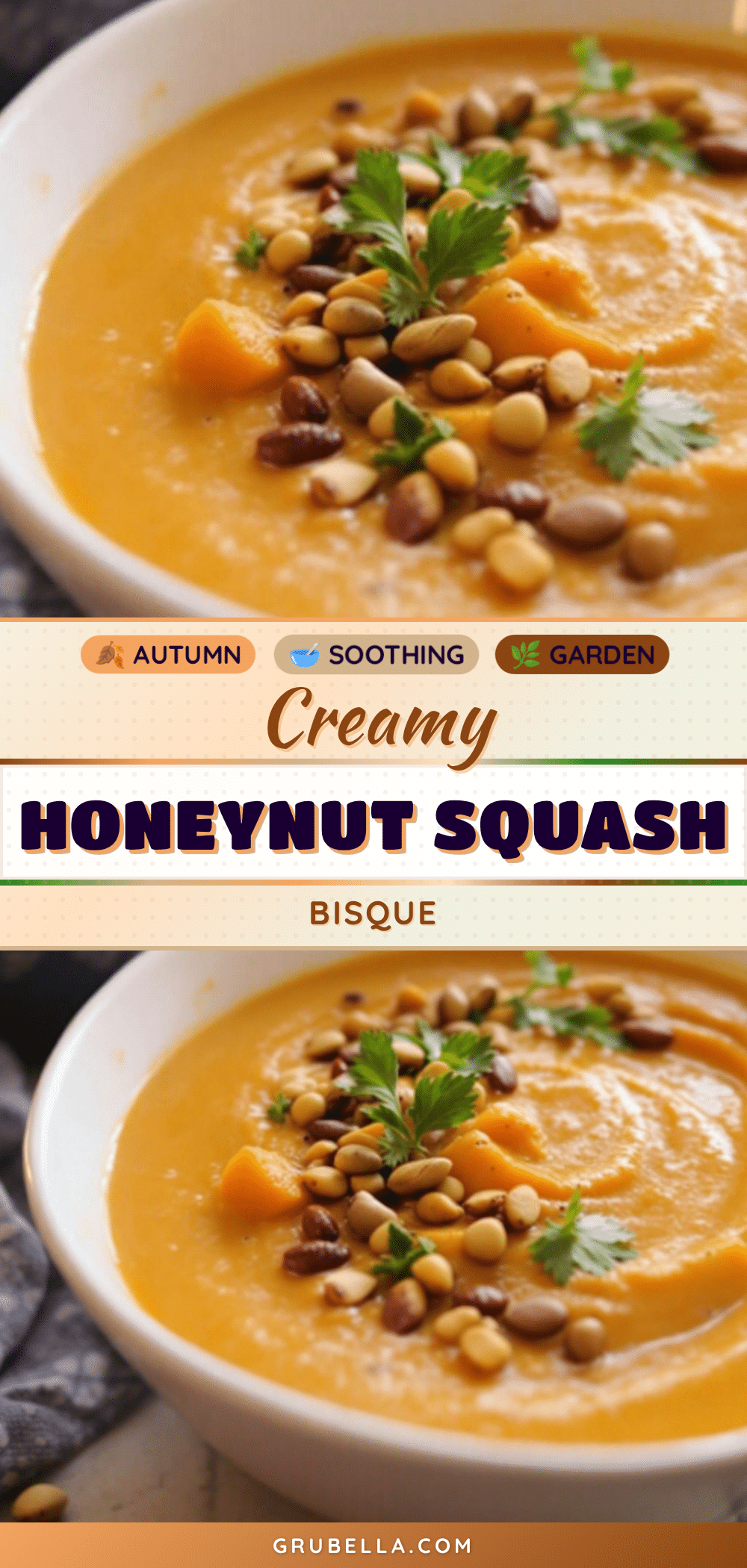
Creamy Honeynut Squash Bisque: 5 Ingredients

A velvety, sweet, and savory bisque made with roasted honeynut squash, cream, and simple spices. This quick and easy recipe is perfect for cozy autumn nights and requires minimal prep time.
- Prep Time: 15 minutes
- Cook Time: 45 minutes
- Total Time: 60 minutes
- Yield: 4 servings 1x
- Category: Main Course
- Cuisine: American
Ingredients
- 2 medium honeynut squash, halved and seeded
- 2 tablespoons unsalted butter
- 1 medium yellow onion, diced
- 2 cloves garlic, minced
- 2 cups vegetable or chicken broth
- 1/2 cup heavy cream
- 1/4 teaspoon freshly grated nutmeg
- 1 tablespoon maple syrup (optional)
- Salt and black pepper to taste
- Fresh sage leaves for garnish
Instructions
- Preheat oven to 400°F (200°C). Line a baking sheet with parchment paper.
- Cut squash in half lengthwise, scoop out seeds, and place cut-side down on the baking sheet. Drizzle with olive oil and sprinkle with salt. Roast for 30-40 minutes until tender and caramelized.
- While squash roasts, melt butter in a large pot over medium heat. Add diced onion and cook until soft and translucent (3-4 minutes). Add garlic and cook for 1 minute until fragrant.
- Remove roasted squash from oven. Scoop flesh out of skin and add to the pot with onions. Pour in broth, bring to a boil, then reduce heat and simmer for 10 minutes.
- Remove pot from heat. Use an immersion blender to blend soup until completely smooth. Alternatively, blend in batches in a standard blender (vent open, covered with towel).
- Stir in heavy cream, nutmeg, and maple syrup (if using). Taste and adjust seasoning with salt and pepper. Heat through for another minute.
- Ladle into bowls and garnish with crispy fried sage leaves and a drizzle of cream or olive oil. Serve immediately.
Notes
Roasting the squash caramelizes the natural sugars, enhancing flavor. If using a standard blender, never fill more than halfway with hot liquid and cover the vent with a towel to prevent explosions. The soup tastes better the next day as flavors meld. Reheat gently on the stove; do not boil vigorously to prevent cream separation.
Nutrition
- Serving Size: 1.5 cups
- Calories: 200
- Sugar: 12
- Sodium: 450
- Fat: 11
- Saturated Fat: 6
- Carbohydrates: 27
- Fiber: 5.5
- Protein: 3.5
Keywords: honeynut squash, squash bisque, creamy soup, fall recipes, vegetarian soup, easy dinner, cozy autumn meals