Love this? Save it for later!
Share the inspiration with your friends
“I wasn’t sure how to start eating clean for dinner without turning every meal into a complicated ordeal,” I confessed to my friend Lisa one evening. She grinned and handed me a simple list she’d scribbled on the back of a grocery receipt. That night, armed with nothing but a cracked ceramic bowl and a half-forgotten grocery list, I set out to make my first clean eating dinner. Honestly, it was a bit messy—spilled olive oil and all—but the flavors? Totally worth it.
Maybe you’ve been there, staring blankly at the fridge, wondering how to put together a healthy meal that doesn’t feel like a chore or a rabbit’s diet. I get it. Clean eating dinners can sound intimidating, especially if you’re new to the whole thing. But the truth is, with the right approach, it’s easier than you think to whip up meals that feel nourishing and satisfy that “comfort food” craving.
That simple list from Lisa became the foundation for what I now call my go-to Healthy Clean Eating Dinner Recipes for Beginners. These meals are straightforward, use ingredients you probably already have, and don’t require hours in the kitchen. Plus, they’re delicious enough that even my pickiest eater has been caught sneaking seconds.
Over time, I learned that clean eating dinner recipes don’t have to be fancy or fussy. They can be quick, satisfying, and still packed with nutrients. So let me share with you this easy 5-step guide that helped me turn chaos into calm and put wholesome dinners on the table without the stress.
Why You’ll Love This Recipe
Let me tell you, these healthy clean eating dinner recipes for beginners have become my lifesaver on hectic nights. After testing dozens of versions, tweaking seasoning, and juggling time, here’s why I’m confident you’ll appreciate them too:
- Quick & Easy: Each recipe comes together in under 30 minutes, perfect for those busy weeknights or unexpected guests.
- Simple Ingredients: No need to hunt for exotic items—most ingredients are pantry staples or fresh produce you can find anywhere.
- Perfect for Beginners: No fancy skills required. Follow the steps and you’ll nail it every time.
- Crowd-Pleaser: Whether it’s a family dinner or a casual get-together, these recipes get rave reviews from all ages.
- Unbelievably Delicious: Balanced flavors and textures that make clean eating feel like a treat, not a sacrifice.
What makes these recipes stand out? Well, it’s the focus on fresh, whole foods combined with easy-to-master cooking techniques. For instance, I blend herbs into dressings for a fresh punch or roast vegetables just right to keep their natural sweetness. It’s not just another “healthy” recipe—it’s the version I keep coming back to when I want real food that feels good inside and out.
Honestly, there’s something about sitting down to a meal that nourishes your body without weighing you down. These dinners bring that kind of comfort. Whether you’re new to clean eating or just want straightforward ideas that don’t involve a million steps, this guide will have you covered.
What Ingredients You Will Need
This collection of recipes uses simple, wholesome ingredients to deliver bold flavor and satisfying texture without the fuss. Most are pantry staples, with fresh veggies and lean proteins making the meals bright and nutritious. Here’s a breakdown of what you’ll commonly need:
- Lean Proteins: Skinless chicken breasts or thighs, firm tofu, wild-caught salmon fillets, and canned chickpeas (great for quick plant-based options).
- Fresh Vegetables: Bell peppers, zucchini, spinach, broccoli florets, cherry tomatoes, and carrots. These add color, crunch, and fiber.
- Whole Grains & Legumes: Quinoa, brown rice, lentils, and whole wheat pasta. I like Bob’s Red Mill quinoa for consistent texture.
- Healthy Fats: Extra virgin olive oil (I usually go for California Olive Ranch), avocado (ripe and creamy), and raw nuts like almonds or walnuts.
- Herbs & Spices: Fresh garlic, ginger, parsley, basil, cumin, turmeric, black pepper, and sea salt. These punch up flavor without extra calories.
- Citrus & Vinegars: Lemon juice, apple cider vinegar, and balsamic vinegar brighten dishes and balance richness.
- Optional Toppings: Crumbled feta cheese, pumpkin seeds, or a dollop of plain Greek yogurt (swap with coconut yogurt if dairy-free).
If you’re cooking seasonally, swap out veggies accordingly—for example, zucchini in summer or roasted root vegetables in fall. Substitutions like almond flour for breading or gluten-free pasta work well if you have dietary needs. Honestly, these recipes are forgiving and flexible, so don’t sweat it if you need to swap an ingredient here and there.
Equipment Needed
Nothing fancy is required to make these healthy clean eating dinners happen, which is great if your kitchen setup is modest. Here’s what you’ll want handy:
- Chef’s Knife: A sharp, sturdy one makes prepping veggies much easier. I love my 8-inch stainless steel knife—it’s my kitchen sidekick.
- Cutting Board: A medium or large board with a groove to catch juices is ideal. Bamboo or plastic works fine.
- Non-stick Skillet or Sauté Pan: Perfect for quick cooking proteins and veggies without sticking.
- Sheet Pan: For roasting vegetables or baking proteins. If you don’t have one, an oven-safe baking dish works too.
- Medium Saucepan: For cooking grains like quinoa or brown rice.
- Mixing Bowls: For tossing salads, marinating, or whisking dressings.
For beginners, a simple digital kitchen timer can be a lifesaver. And if you’re on a budget, consider multi-purpose tools—like a cast iron skillet that can do both stovetop and oven cooking. Keeping your knives sharp makes prep safer and quicker, so a honing steel or sharpening stone is a good investment down the line.
Preparation Method
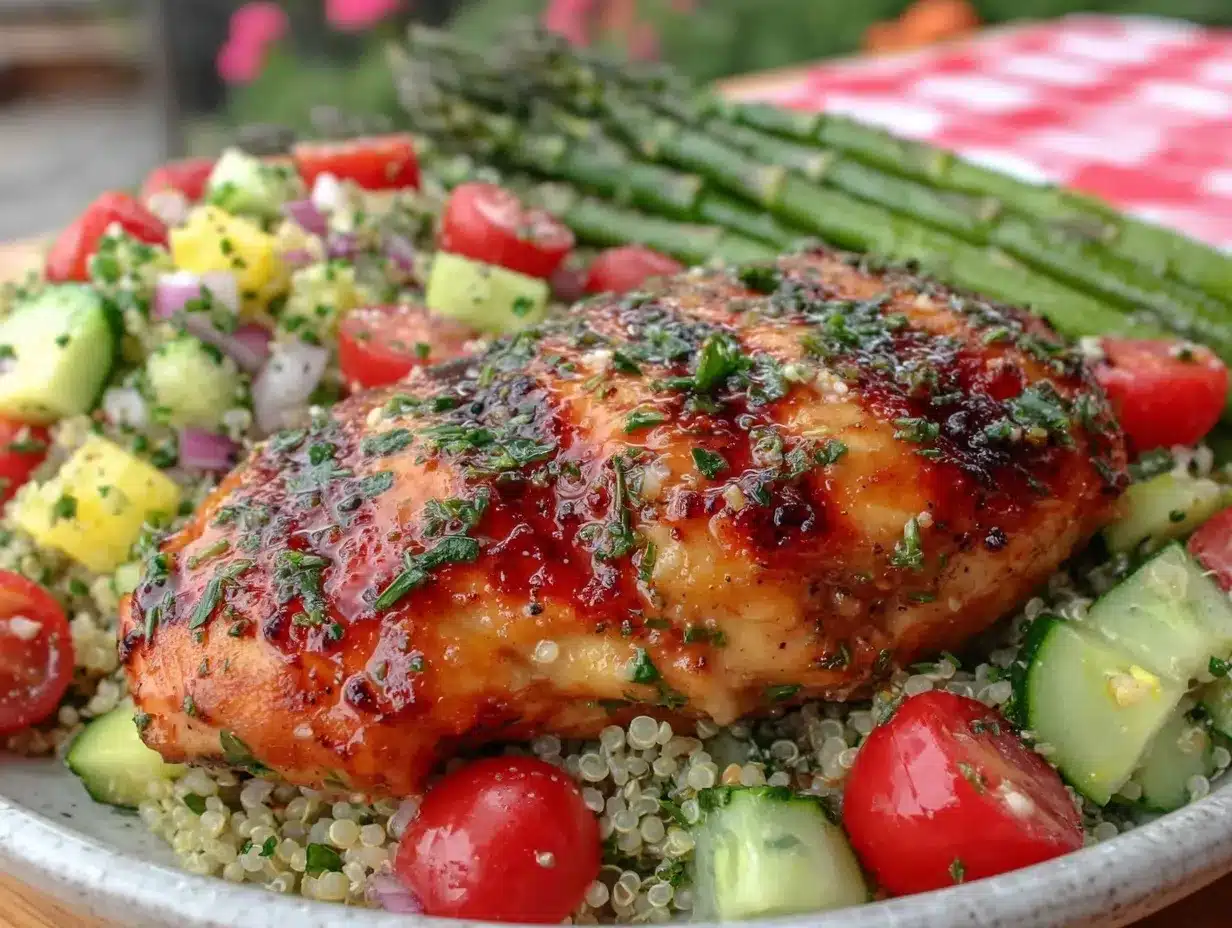
- Gather and Prep Ingredients (10-15 minutes): Wash, peel, and chop your vegetables into bite-sized pieces. If using chicken or salmon, pat dry and season with salt, pepper, and your choice of spices. For grains, rinse quinoa or rice under cold water.
- Cook Whole Grains (15-20 minutes): Bring 1 cup (170g) quinoa or brown rice and 2 cups (480ml) water to a boil in a medium saucepan. Reduce heat to low, cover, and simmer until water is absorbed and grains are tender. Fluff with a fork and set aside.
- Sauté or Roast Proteins and Vegetables (15-20 minutes): Heat 1 tablespoon (15ml) olive oil in a skillet over medium-high heat. Add chicken breasts or tofu and cook until browned and cooked through (about 5-7 minutes per side for chicken). In a separate sheet pan, toss veggies like broccoli, carrots, and bell peppers with olive oil and roast at 425°F (220°C) for 15 minutes, stirring halfway.
- Prepare Dressing or Sauce (5 minutes): Whisk together fresh lemon juice (2 tablespoons/30ml), minced garlic (1 clove), 1 tablespoon (15ml) olive oil, salt, and pepper. Add chopped herbs like parsley or basil for freshness.
- Assemble and Serve (5 minutes): Combine cooked grains, roasted vegetables, and protein in a large bowl. Drizzle with dressing, toss gently, and garnish with optional toppings like feta or seeds. Taste and adjust seasoning as needed.
Pro tip: If your veggies aren’t roasting evenly, cut them into uniform pieces and don’t overcrowd the pan. Also, resting cooked chicken for 5 minutes before slicing helps keep it juicy. If you’re ever unsure about doneness, a meat thermometer should read 165°F (74°C) for poultry.
Cooking Tips & Techniques
Getting comfortable with clean eating dinners means a bit of practice and knowing some tricks I picked up the hard way. For example, I once overcooked quinoa into a mushy mess—lesson learned: rinse it well and keep an eye on simmer time.
Here are some tips to keep your meals tasting great and prep stress low:
- Use High Heat for Roasting: It caramelizes veggies nicely, unlocking natural sweetness without extra sugar.
- Season in Layers: Salt and pepper your proteins before cooking, then taste the whole dish at the end to add more if needed.
- Don’t Skip Resting Time: Let cooked meats rest to redistribute juices, keeping them tender.
- Prep Ahead: Chop veggies or cook grains in advance to speed up weeknight dinners.
- Keep It Colorful: Mix different colored vegetables for variety in nutrients and appeal.
One thing I learned is to embrace imperfections. Sometimes the kitchen gets messy or you forget to preheat the oven—that’s life! The key is to focus on flavors and textures, and you’ll end up with a satisfying meal every time.
Variations & Adaptations
One of the best parts about these recipes is how easy they are to customize. Here are a few ways to make them your own:
- Plant-Based Swap: Replace chicken or salmon with roasted chickpeas or tempeh for a vegan-friendly dinner.
- Seasonal Veggies: Use asparagus and peas in spring, or hearty root vegetables like sweet potatoes and parsnips in winter.
- Spice It Up: Add a dash of smoked paprika or chili flakes for a smoky, spicy kick.
- Cooking Method: Instead of roasting veggies, try grilling them for a charred flavor or sautéing for quicker prep.
- Allergen-Friendly: For gluten-free, stick to quinoa or rice. Use coconut yogurt instead of dairy-based toppings.
Personally, I once swapped salmon for tofu marinated in tamari and ginger, and it turned out surprisingly flavorful and satisfying. Don’t be afraid to experiment a little—that’s where the magic happens!
Serving & Storage Suggestions
These healthy clean eating dinners are best served warm or at room temperature. I like plating them in wide bowls, garnished with a sprinkle of fresh herbs or a wedge of lemon for brightness. They pair wonderfully with a light green salad or a chilled cucumber and mint yogurt dip.
Got leftovers? Store them in airtight containers in the fridge for up to 3 days. When reheating, add a splash of water or broth to keep grains moist and cover loosely to avoid drying out the veggies. Microwave or warm gently on the stovetop.
Flavors often develop and deepen after a day or two, so sometimes the next-day lunch tastes even better. Just remember to keep dressings separate when storing, if possible, to avoid soggy veggies.
Nutritional Information & Benefits
These dinners are balanced meals with lean proteins, complex carbs, healthy fats, and plenty of fiber. For example, a serving might contain around 400-500 calories, 30 grams of protein, 40 grams of carbohydrates, and 12 grams of healthy fats.
Key benefits include sustained energy from whole grains, anti-inflammatory properties from fresh herbs and olive oil, and muscle support from lean protein. Plus, the high vegetable content boosts vitamins A and C, potassium, and antioxidants—important for overall wellness.
Many recipes are naturally gluten-free and low in added sugars, making them accessible to a wide range of dietary needs. Just swap dairy toppings for plant-based alternatives if you’re avoiding lactose.
Conclusion
If you’re new to clean eating or just tired of overcomplicated dinner ideas, these healthy clean eating dinner recipes for beginners are a perfect place to start. They bring together simple ingredients, easy steps, and real flavor without the fuss.
I love these meals because they remind me that healthy eating doesn’t have to be intimidating or boring—it can be joyful and satisfying. I’m excited for you to try them and make them your own.
Give the recipes a go, tweak them to your taste, and please share your thoughts or tweaks in the comments—I’m always curious about how you make these dinners your own!
Here’s to many nourishing, delicious meals ahead.
FAQs
What does “clean eating” mean for dinner recipes?
Clean eating focuses on whole, minimally processed foods with no added sugars or artificial ingredients. For dinners, this means fresh veggies, lean proteins, whole grains, and healthy fats.
Can I prep these meals ahead of time?
Absolutely! You can chop veggies and cook grains in advance, then assemble and cook the protein right before dinner for freshness.
Are these recipes suitable for gluten-free diets?
Yes. Many recipes use gluten-free grains like quinoa or brown rice. Just check labels for sauces or seasonings to be sure.
How do I make these dinners more kid-friendly?
Keep seasonings mild and serve with familiar sides like rice or steamed veggies. Getting kids involved in prepping can also build excitement.
What’s the best way to store leftovers?
Store in airtight containers in the refrigerator for up to 3 days. Reheat gently with a splash of water to keep everything moist.
Pin This Recipe!
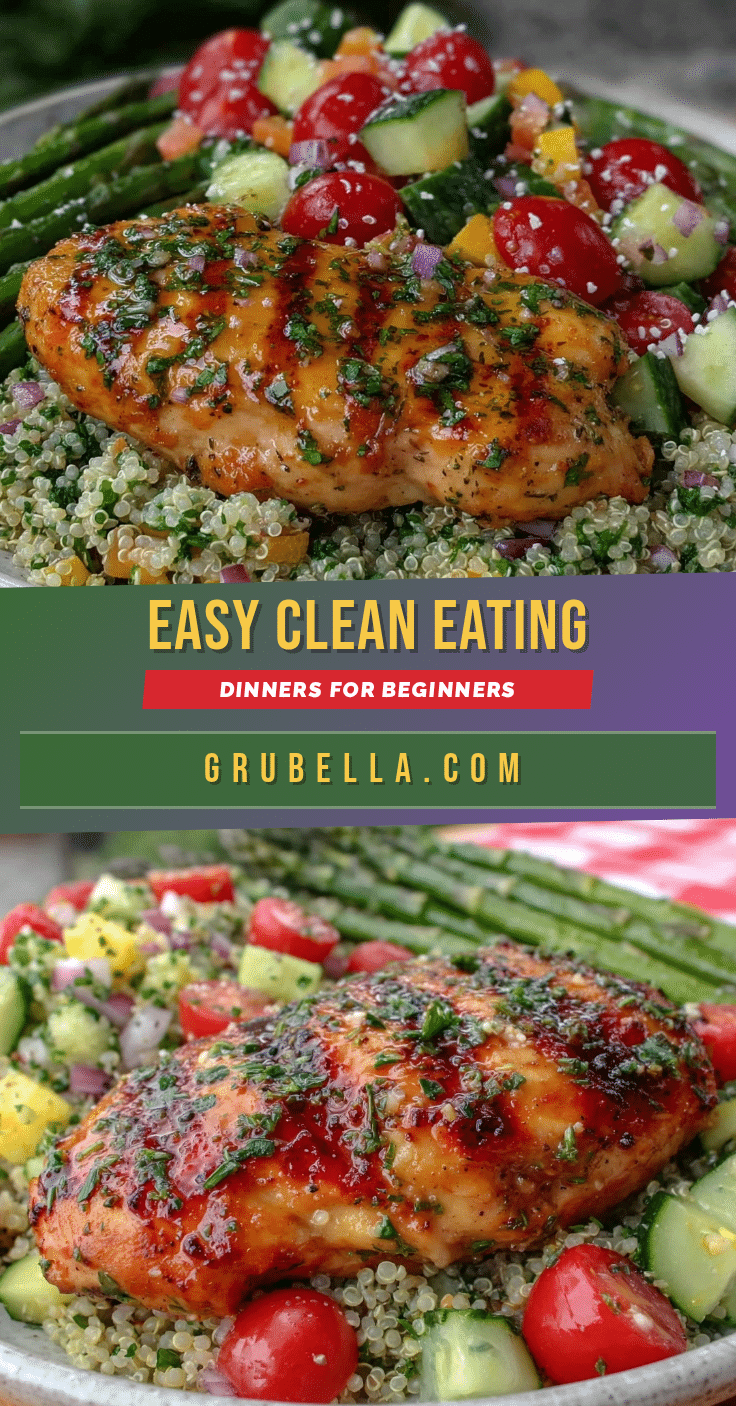
Healthy Clean Eating Dinner Recipes for Beginners Easy 5-Step Guide
A straightforward guide to making healthy clean eating dinners using simple ingredients and easy steps, perfect for beginners seeking quick, nourishing meals.
- Prep Time: 15 minutes
- Cook Time: 20 minutes
- Total Time: 35 minutes
- Yield: 4 servings
- Category: Main Course
- Cuisine: American
Ingredients
- Skinless chicken breasts or thighs
- Firm tofu
- Wild-caught salmon fillets
- Canned chickpeas
- Bell peppers
- Zucchini
- Spinach
- Broccoli florets
- Cherry tomatoes
- Carrots
- Quinoa
- Brown rice
- Lentils
- Whole wheat pasta
- Extra virgin olive oil
- Avocado
- Raw nuts like almonds or walnuts
- Fresh garlic
- Ginger
- Parsley
- Basil
- Cumin
- Turmeric
- Black pepper
- Sea salt
- Lemon juice
- Apple cider vinegar
- Balsamic vinegar
- Optional toppings: crumbled feta cheese, pumpkin seeds, plain Greek yogurt or coconut yogurt
Instructions
- Gather and prep ingredients: wash, peel, and chop vegetables into bite-sized pieces. Pat dry and season chicken or salmon with salt, pepper, and spices. Rinse quinoa or rice under cold water.
- Cook whole grains: bring 1 cup quinoa or brown rice and 2 cups water to a boil in a medium saucepan. Reduce heat to low, cover, and simmer until water is absorbed and grains are tender. Fluff with a fork and set aside.
- Sauté or roast proteins and vegetables: heat 1 tablespoon olive oil in a skillet over medium-high heat. Cook chicken breasts or tofu until browned and cooked through (about 5-7 minutes per side for chicken). Toss vegetables with olive oil and roast at 425°F for 15 minutes, stirring halfway.
- Prepare dressing or sauce: whisk together 2 tablespoons fresh lemon juice, 1 clove minced garlic, 1 tablespoon olive oil, salt, and pepper. Add chopped herbs like parsley or basil.
- Assemble and serve: combine cooked grains, roasted vegetables, and protein in a large bowl. Drizzle with dressing, toss gently, and garnish with optional toppings. Adjust seasoning as needed.
Notes
Cut vegetables into uniform pieces for even roasting. Rest cooked chicken for 5 minutes before slicing to keep it juicy. Use a meat thermometer to ensure poultry reaches 165°F. Rinse quinoa well to avoid mushiness. Store leftovers in airtight containers for up to 3 days and reheat gently with a splash of water or broth.
Nutrition
- Serving Size: 1 serving (approxima
- Calories: 450
- Sugar: 5
- Sodium: 350
- Fat: 12
- Saturated Fat: 2
- Carbohydrates: 40
- Fiber: 6
- Protein: 30
Keywords: healthy dinner, clean eating, beginner recipes, quick meals, lean protein, whole grains, vegetables, easy cooking