Love this? Save it for later!
Share the inspiration with your friends
“I wasn’t planning on making prime rib this Easter,” I confessed to my friend, laughing as we set the table. The truth is, this recipe came about because of a last-minute mix-up at the butcher’s shop. I’d gone in looking for lamb, the usual holiday go-to, but they were out. Instead, the butcher handed me a massive, perfectly marbled prime rib roast and said, “Try this—it’s the real deal.”
Well, you know how these things go. I got home, glanced nervously at the clock, and thought, “What on earth am I going to do with this beast?” Honestly, it felt a little intimidating—prime rib isn’t exactly the easiest cut to master, especially on a tight schedule. But let me tell you, after some trial, error, and more than a few moments where I thought I might have ruined the whole thing, I landed on this Perfect Full Villain Era Prime Rib Roast recipe that’s now my Easter dinner showstopper.
Maybe you’ve been there—facing a holiday meal challenge and wishing for a foolproof recipe that impresses without the stress. This roast, with its crispy crust and juicy, tender center, has become my secret weapon. It’s not just about the meat; it’s about the ritual, the anticipation, and the way the whole house fills with this rich, comforting aroma that makes everyone gather ’round without even needing an invitation.
So, while the story of how this recipe came to be might be a little accidental, the result is pure intentional magic. Let me share with you the steps and secrets to making this prime rib roast the star of your Easter table too. Trust me—once you’ve tried it, you’ll understand why it keeps pulling me back year after year.
Why You’ll Love This Recipe
- Quick & Easy: Comes together in under 3 hours, perfect for busy Easter Sunday preparations.
- Simple Ingredients: No need for exotic spices or hard-to-find items; everything is straightforward and pantry-friendly.
- Perfect for Easter Dinner: A classic centerpiece that’s both elegant and comforting, sure to impress your guests.
- Crowd-Pleaser: The juicy, tender meat with a flavorful crust always gets rave reviews, from kids to adults.
- Unbelievably Delicious: The balance of savory seasoning and the roast’s natural richness is next-level comfort food.
This isn’t just another prime rib recipe—it’s the one I developed after a few kitchen disasters and happy accidents that taught me exactly how to get that perfect crust and tender pink center every single time. The seasoning blend is simple but packs a punch, and the slow roasting method locks in all those juices without drying out the meat.
Honestly, this recipe makes you close your eyes with that first bite—it’s that good. It’s the kind of dish that transforms a holiday meal into a memorable feast, without the usual stress or guesswork. Whether you’re a seasoned cook or a nervous first-timer, this recipe has your back.
What Ingredients You Will Need
This recipe uses straightforward, wholesome ingredients to bring out the prime rib’s rich flavor and tender texture without fuss. Most are pantry staples or easy to find at your local market.
- Prime Rib Roast (Bone-in, about 4 to 5 pounds / 1.8 to 2.3 kg): Choose a roast with good marbling for juicy results. I usually get mine from a trusted local butcher.
- Kosher Salt (3 tablespoons): Essential for seasoning and forming that crispy crust.
- Freshly Ground Black Pepper (2 tablespoons): Adds bold, aromatic heat.
- Garlic Powder (1 tablespoon): For a subtle but savory undertone.
- Fresh Rosemary (2 tablespoons, finely chopped): Adds a fragrant, earthy note.
- Olive Oil (2 tablespoons): Helps the seasoning stick and promotes browning.
- Dijon Mustard (2 teaspoons): Optional but gives an extra tangy depth to the crust.
- Beef Broth (1 cup / 240 ml): For making a quick pan jus after roasting.
If you want to switch things up, feel free to swap fresh rosemary for thyme or add a pinch of smoked paprika for a slightly smoky flavor. For a gluten-free option, this recipe is naturally safe as it contains no flour or breading.
Equipment Needed
- Roasting Pan with Rack: The rack keeps the roast elevated for even cooking and air circulation. If you don’t have a rack, use a sturdy wire cooling rack placed inside the pan.
- Meat Thermometer (preferably digital): Critical for nailing the perfect internal temperature without cutting into the roast.
- Sharp Chef’s Knife: For trimming excess fat if needed and carving the roast.
- Basting Brush: Handy for applying the olive oil and mustard mixture evenly.
- Aluminum Foil: For tenting the roast during rest time.
I used to guess the doneness by time alone, but investing in a good meat thermometer changed everything. It’s like having a cooking coach right there with you—no surprises, just perfect results.
Preparation Method
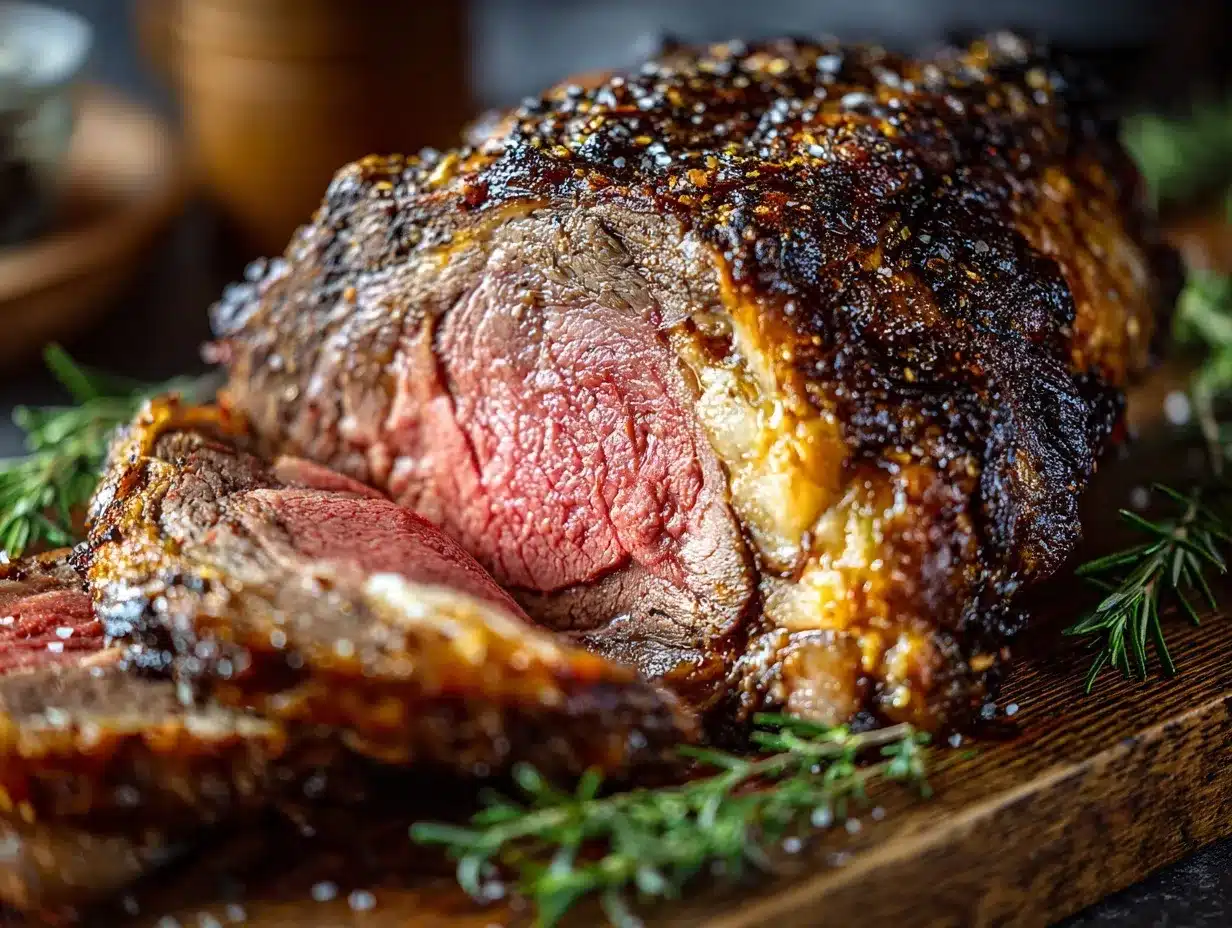
- Bring the Roast to Room Temperature (30 minutes): Take the prime rib out of the fridge and let it sit on the counter. This step helps it cook evenly, so don’t skip it!
- Preheat Oven to 450°F (230°C): A hot start is key to building that flavorful crust.
- Prepare the Seasoning Mix: In a small bowl, combine kosher salt, black pepper, garlic powder, and chopped rosemary. Mix well.
- Apply the Mustard and Olive Oil: Brush the entire surface of the roast with olive oil, then spread Dijon mustard evenly. This helps the seasoning stick and adds flavor depth.
- Rub the Seasoning All Over: Generously coat the roast with the seasoning mix, pressing it into the meat. Don’t be shy here—this crust is everything!
- Place Roast on Rack in Roasting Pan: Position fat side up so the juices baste the meat as it cooks.
- Roast at 450°F (230°C) for 20 minutes: This initial blast forms the crust you’re after.
- Reduce Oven Temperature to 325°F (160°C): Continue roasting for about 1.5 to 2 hours, or until the internal temperature hits 120°F (49°C) for rare, 130°F (54°C) for medium rare.
- Check Temperature Regularly: Insert the meat thermometer into the thickest part, avoiding bone. This is the best way to avoid overcooking.
- Remove Roast and Tent with Foil: Let it rest for at least 20 minutes. This step lets juices redistribute, making every bite juicy and tender.
- Make Pan Jus: Pour off excess fat from the pan, add beef broth, and scrape up the browned bits over medium heat until slightly reduced. Pour over sliced prime rib.
- Carve and Serve: Slice against the grain into thick, juicy pieces and enjoy!
Pro tip: If your oven runs hot or cold, adjust roasting time accordingly and always rely on temperature, not the clock alone. Also, don’t rush the resting period—this is where the magic happens.
Cooking Tips & Techniques
One mistake I made the first time was not letting the roast rest long enough. I sliced into it too soon, and all those precious juices ran out on the cutting board. Lesson learned: patience pays off big time.
Another tip is to season the roast liberally and give the seasoning a good press so it sticks well. This helps form that iconic crust which locks in moisture.
When roasting, start high and then lower the temperature—this two-step method creates a crispy exterior while keeping the inside tender and pink. Also, try to avoid opening the oven door too often; every peek drops the temperature and prolongs cooking.
If you want to multitask, prep your sides while the roast is in the oven. I like to roast some garlic mashed potatoes or prepare a fresh arugula salad to balance the richness.
Finally, always carve against the grain for the most tender slices and serve with warm pan jus for an extra flavor boost.
Variations & Adaptations
- Herb Mix Variations: Swap rosemary for thyme, oregano, or even a sprinkle of smoked paprika for a different flavor profile.
- Cooking Methods: Try sous vide for precise temperature control followed by a quick sear to get that crust.
- Dietary Adaptations: For a low-sodium option, reduce salt and enhance flavor with garlic and fresh herbs.
- Spicy Twist: Add cayenne pepper or crushed red pepper flakes to the seasoning mix for a subtle heat kick.
- Personal Favorite: Once, I added a splash of red wine to the pan jus, and it added a lovely depth that had everyone asking for seconds.
Serving & Storage Suggestions
Serve this prime rib roast warm, right after resting and carving. It pairs beautifully with roasted spring vegetables, creamy mashed potatoes, or a crisp green salad to cut through the richness.
Leftovers? Store them in an airtight container in the refrigerator for up to 3 days. For best results, reheat gently in a low oven (about 250°F / 120°C) covered with foil to keep moisture in. Avoid microwaving if you want to preserve texture.
Flavors actually deepen overnight, so sometimes I find the next-day slices even more delicious, perfect for sandwiches or quick skillet meals.
Nutritional Information & Benefits
This prime rib roast is rich in protein and iron, making it a hearty and nourishing choice for a festive meal. The rosemary and garlic add antioxidants and anti-inflammatory benefits, enhancing the healthfulness of this indulgent dish.
Though it’s a higher-fat cut, the fat content contributes to satiety and flavor—perfect for a celebratory occasion like Easter. If you’re watching sodium, you can adjust salt levels without sacrificing taste thanks to the fresh herb boost.
This recipe is naturally gluten-free and can be made dairy-free by skipping the butter in sides or sauces.
Conclusion
This Perfect Full Villain Era Prime Rib Roast recipe has become my go-to for Easter dinners not because it’s complicated, but because it delivers that wow factor every time. It’s approachable, satisfying, and frankly, a bit of a showstopper on the holiday table.
Feel free to tweak the seasoning or sides to fit your family’s tastes—this recipe is a foundation, not a rulebook. I love how it brings everyone together, filling the room with warmth and delicious aromas.
Give it a try this Easter, and don’t hesitate to share your own twists or stories in the comments—let’s keep the tradition alive and tasty!
FAQs
How long does it take to cook a 5-pound prime rib roast?
After the initial high-heat sear (about 20 minutes at 450°F / 230°C), roast at 325°F (160°C) for roughly 13-15 minutes per pound for medium rare, totaling about 1.5 to 2 hours.
Can I prepare the prime rib the night before?
Yes! You can season and wrap the roast tightly in plastic wrap and refrigerate overnight. Bring it to room temperature before roasting.
What’s the best way to check doneness without cutting into the meat?
A reliable meat thermometer is your best friend. Insert it into the thickest part, avoiding bone, to monitor internal temperature.
How do I get a crispy crust on my prime rib?
Start roasting at a high temperature (450°F / 230°C) for 20 minutes, then lower the heat. Also, brushing with olive oil and mustard helps the seasoning stick and promotes browning.
Can I make this recipe without bone-in prime rib?
Yes, boneless prime rib works fine, but cooking times may be slightly shorter. Monitor the internal temperature closely to avoid overcooking.
Speaking of great roasts, if you love rich flavors, you might appreciate the crispy garlic chicken recipe I shared recently—another crowd-pleaser perfect for holiday meals. And if you’re planning sides, the roasted spring vegetables pair beautifully with this prime rib, bringing fresh balance to your plate.
Pin This Recipe!
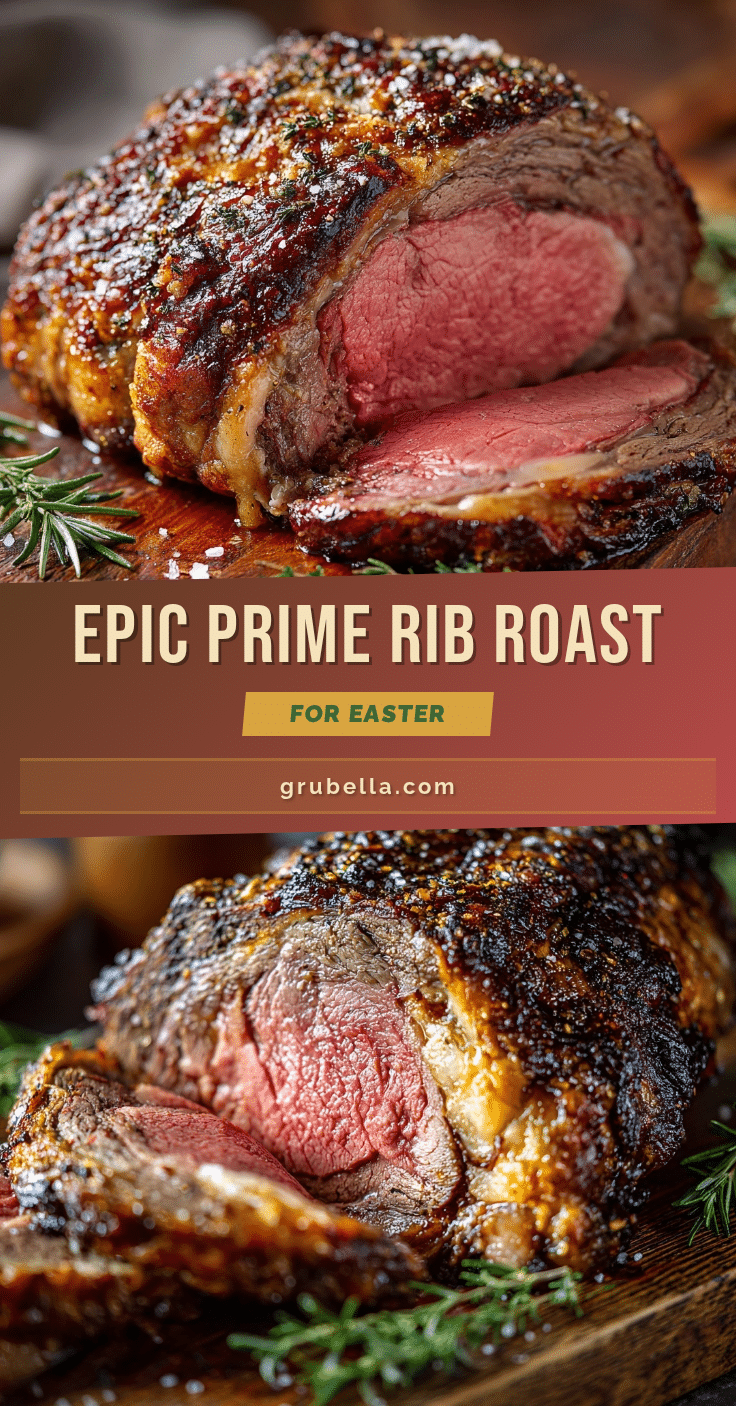
Perfect Full Villain Era Prime Rib Roast Recipe for Easter Dinner
A foolproof prime rib roast recipe with a crispy crust and juicy, tender center, perfect for Easter dinner and special occasions.
- Prep Time: 30 minutes
- Cook Time: 1 hour 50 minutes
- Total Time: 2 hours 20 minutes
- Yield: 8 servings
- Category: Main Course
- Cuisine: American
Ingredients
- Prime Rib Roast (Bone-in, about 4 to 5 pounds / 1.8 to 2.3 kg)
- Kosher Salt (3 tablespoons)
- Freshly Ground Black Pepper (2 tablespoons)
- Garlic Powder (1 tablespoon)
- Fresh Rosemary (2 tablespoons, finely chopped)
- Olive Oil (2 tablespoons)
- Dijon Mustard (2 teaspoons, optional)
- Beef Broth (1 cup / 240 ml)
Instructions
- Bring the roast to room temperature by letting it sit on the counter for 30 minutes.
- Preheat oven to 450°F (230°C).
- In a small bowl, combine kosher salt, black pepper, garlic powder, and chopped rosemary.
- Brush the entire surface of the roast with olive oil, then spread Dijon mustard evenly.
- Rub the seasoning mix all over the roast, pressing it into the meat.
- Place the roast fat side up on a rack in a roasting pan.
- Roast at 450°F (230°C) for 20 minutes to form the crust.
- Reduce oven temperature to 325°F (160°C) and continue roasting for about 1.5 to 2 hours, or until internal temperature reaches 120°F (49°C) for rare or 130°F (54°C) for medium rare.
- Check temperature regularly using a meat thermometer inserted into the thickest part, avoiding bone.
- Remove roast from oven and tent with aluminum foil; let rest for at least 20 minutes.
- Make pan jus by pouring off excess fat, adding beef broth to the pan, and scraping up browned bits over medium heat until slightly reduced.
- Carve the roast against the grain into thick slices and serve with pan jus.
Notes
Bring the roast to room temperature before cooking for even roasting. Use a meat thermometer to avoid overcooking. Let the roast rest for at least 20 minutes to redistribute juices. Adjust roasting time if your oven runs hot or cold. Carve against the grain for tender slices. For variations, swap rosemary for thyme or add smoked paprika. For low sodium, reduce salt and enhance herbs.
Nutrition
- Serving Size: 1 slice (about 6 oz)
- Calories: 650
- Sodium: 900
- Fat: 50
- Saturated Fat: 20
- Carbohydrates: 2
- Protein: 45
Keywords: prime rib, Easter dinner, roast beef, holiday roast, beef roast, easy prime rib, festive meal