Love this? Save it for later!
Share the inspiration with your friends
“I wasn’t expecting a bread lesson from the barista at my local coffee shop,” I confessed to my friend one rainy Saturday. There I was, waiting for my cappuccino, when Marco, the guy behind the counter, casually mentioned his obsession with focaccia art. Turns out, Marco’s weekends were all about crafting beautiful herb garden focaccia art bread with vegetable mosaics—tiny edible masterpieces made right in the dough. I had to know more.
That day, he pulled out a battered notebook, pages dotted with sketches of rosemary leaves and cherry tomato petals arranged like floral tapestries. I remember feeling utterly charmed—and honestly, a bit intimidated. But Marco insisted, “It’s about patience, fresh herbs, and a little creativity. Plus, you get to eat your art!”
Fast forward a few weeks, I made a glorious mess in my own kitchen attempting this perfect herb garden focaccia art bread with vegetable mosaic. I forgot to preheat the oven, spilled olive oil everywhere, and somehow ended up with a cracked bowl mid-kneading (classic me). Yet, that first bite—the crunch of crust, the burst of garden herbs, and the vibrant veggie patterns—made every hiccup worth it. Maybe you’ve been there, trying to get the rosemary just right or coaxing the dough to rise perfectly. This recipe stayed with me because it’s not just bread; it’s a canvas for the flavors of the garden and a feast for the eyes.
Why You’ll Love This Recipe
After countless attempts and a few doughy disasters, I nailed this herb garden focaccia art bread recipe with vegetable mosaic, and let me tell you—it’s a keeper. Here’s why it’s bound to become your go-to:
- Quick & Easy: The dough comes together in under 20 minutes of active prep, making it perfect for busy weekends or last-minute guests.
- Simple Ingredients: No need for exotic items; pantry staples like olive oil, fresh herbs, and seasonal veggies do all the heavy lifting.
- Perfect for Entertaining: Whether it’s a casual brunch or a dinner party, this bread impresses without stressing you out.
- Crowd-Pleaser: Kids love the colorful veggie mosaic, and adults can’t stop commenting on the fragrant herb blend.
- Unbelievably Delicious: The crispy golden crust contrasts beautifully with the soft, airy crumb—a texture dream come true.
What makes this recipe stand out? It’s the careful balance between the herb-infused olive oil soaking into the dough and the artful placement of vegetables that create a garden-inspired masterpiece. I use a technique of pressing the veggies gently into the dough before the final rise, so they stay vibrant and don’t sink in. Also, the secret sprinkle of flaky sea salt adds that perfect finish every time.
Honestly, this isn’t just another focaccia recipe—it’s a celebration of fresh flavors and creativity in your kitchen. You might find yourself closing your eyes after the first bite, savoring that perfect herb hit combined with sweet roasted veggies. Give it a try, and I bet it’ll become your signature bread too!
What Ingredients You Will Need
This recipe uses simple, wholesome ingredients to bring bold flavors and a satisfying texture without fuss. Most are pantry staples or easy to find at your local market, with plenty of room for swaps if you need them.
- For the Dough:
- All-purpose flour – 4 cups (480g), for the perfect chewy texture
- Active dry yeast – 2 ¼ teaspoons (one packet)
- Warm water – 1 ¾ cups (420ml), around 110°F (43°C) to activate yeast properly
- Extra virgin olive oil – ¼ cup (60ml) plus more for drizzling (I recommend Colavita for its rich flavor)
- Granulated sugar – 1 teaspoon, to help yeast bloom
- Fine sea salt – 2 teaspoons, plus extra for topping
- For the Herb Oil:
- Fresh rosemary – 2 tablespoons, finely chopped (adds that garden aroma)
- Fresh thyme – 1 tablespoon, finely chopped
- Garlic – 2 cloves, minced (roasted garlic works wonderfully too)
- Olive oil – ¼ cup (60ml), warmed slightly to infuse herbs
- For the Vegetable Mosaic:
- Cherry tomatoes – halved, for bursts of color and sweetness
- Thinly sliced zucchini – ribbons or rounds work well
- Red onion – thin slices for a mild bite
- Yellow bell pepper – cut into small squares
- Black olives – pitted and sliced (optional but adds a salty contrast)
If you want to tweak the recipe for the seasons, swap zucchini for thin asparagus spears in spring or roasted beets in fall. For gluten-free options, almond or oat flour blends can work, but expect a different crumb texture. And if you need dairy-free or vegan, this recipe already fits the bill!
Equipment Needed
- Baking sheet or rimmed roasting pan – a 9×13 inch (23×33 cm) pan works great for shaping focaccia
- Large mixing bowl – for dough mixing and rising
- Measuring cups and spoons – for precise ingredient amounts
- Whisk or fork – to mix yeast and liquids
- Pastry brush – to apply herb oil evenly
- Dough scraper (optional) – handy for handling sticky dough, but your hands work fine too
- Kitchen towel or plastic wrap – to cover dough while rising
If you don’t have a pastry brush, a spoon works fine for drizzling herb oil. For budget-friendly baking, I sometimes use a rimmed cookie sheet instead of a roasting pan, just adjusting dough size. Keeping your baking sheet lightly oiled before adding dough helps prevent sticking and promotes a crispy bottom crust.
Preparation Method
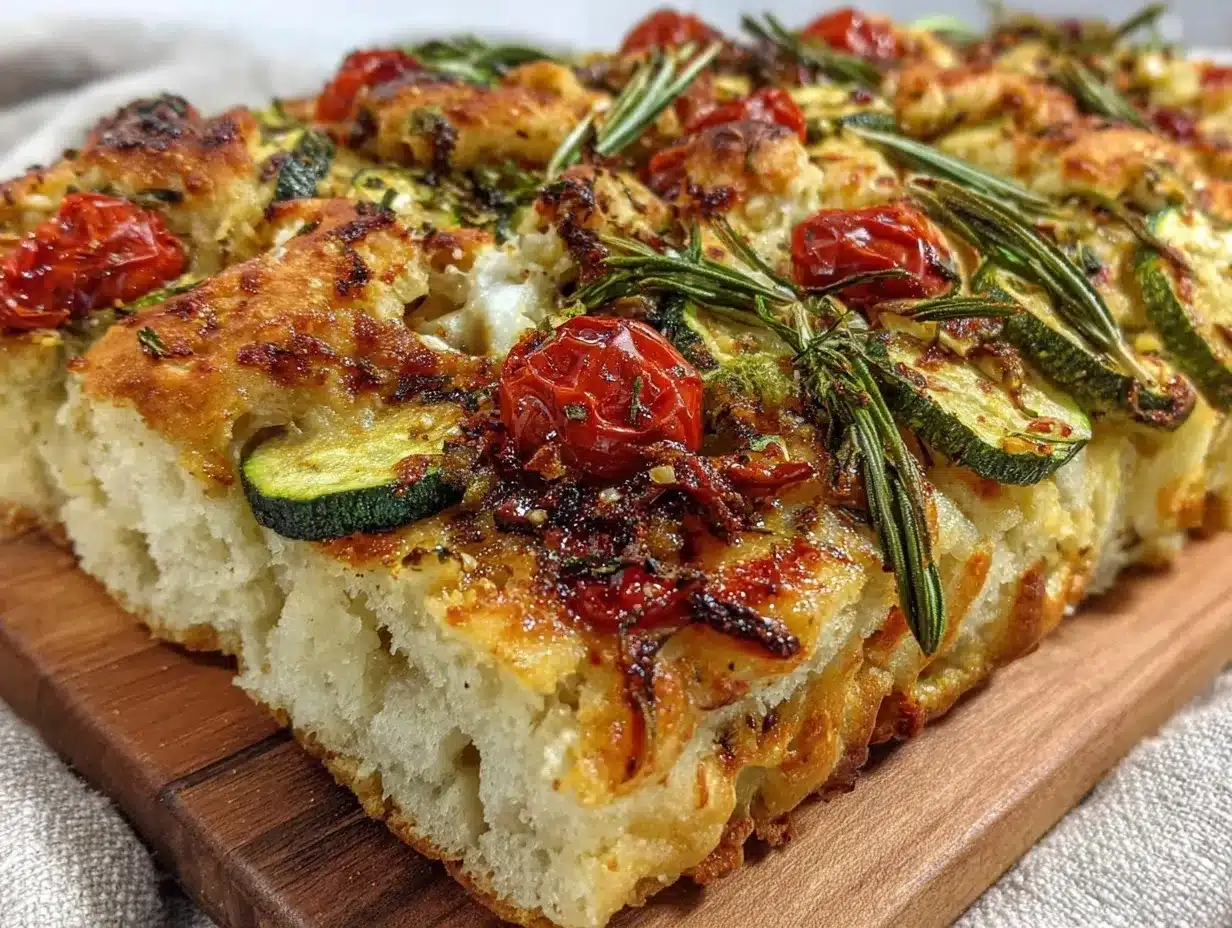
- Activate the yeast: In a large bowl, whisk together the warm water (1 ¾ cups / 420ml), sugar (1 teaspoon), and active dry yeast (2 ¼ teaspoons). Let it sit for 5–10 minutes until frothy and bubbly—if it doesn’t foam, your yeast might be old.
- Mix the dough: Add the flour (4 cups / 480g) and sea salt (2 teaspoons) to the yeast mixture. Stir with a wooden spoon or your hands until it starts to come together. Pour in ¼ cup (60ml) olive oil and knead the dough in the bowl or on a floured surface for about 8–10 minutes until smooth and elastic. It should be soft, slightly sticky but manageable.
- First rise: Lightly oil the mixing bowl, place the dough inside, and cover with a damp kitchen towel or plastic wrap. Let it rise in a warm spot for 1 to 1 ½ hours, until doubled in size. I sometimes put mine near the oven light or a sunny window.
- Prepare the herb oil: While the dough rises, mix the chopped rosemary, thyme, minced garlic, and ¼ cup (60ml) warm olive oil in a small bowl. Set aside to let the flavors meld.
- Shape the dough: Once risen, transfer the dough to a well-oiled 9×13 inch (23×33 cm) baking pan. Gently stretch and press it out to fill the pan evenly. If it resists, let it rest for 5 minutes, then continue. Use your fingertips to dimple the surface deeply all over—these little wells hold the herb oil and give focaccia its signature look.
- Create the vegetable mosaic: Carefully press your vegetable pieces into the dough dimples, arranging them like a garden scene—rosy tomatoes as flowers, zucchini ribbons as leaves, peppers as butterflies, whatever your fancy. Don’t push too deep or they’ll disappear during baking.
- Second rise: Cover the pan loosely with plastic wrap or a towel and let the dough rise again for 30–40 minutes until puffy but not overly risen.
- Brush with herb oil and season: Generously brush the herb-infused olive oil over the entire surface, making sure it pools in the dimples and around the veggies. Sprinkle with a pinch of flaky sea salt for crunch.
- Bake: Preheat your oven to 425°F (220°C). Bake the focaccia on the middle rack for 20–25 minutes, or until golden brown and crispy on the edges. The aroma should be irresistible by now.
- Cool and serve: Let the bread cool in the pan for 10 minutes before slicing. This helps the crumb set and makes cutting easier. Enjoy warm or at room temperature.
If you notice the veggies starting to brown too fast, tent loosely with foil halfway through baking. Also, if your dough feels too sticky to handle at any point, dust lightly with flour but avoid adding too much—you want tender, airy bread, not dense.
Cooking Tips & Techniques
Focaccia art bread is as much about the technique as the ingredients. Here are some tips I learned the hard way:
- Don’t skip the dimpling: Those finger dimples aren’t just for looks; they trap olive oil and herbs, keeping the bread moist and flavorful.
- Use fresh herbs: Dried herbs just don’t have the same punch here. If you must, use them sparingly and combine with fresh garlic or a drizzle of garlic oil.
- Patience with rising: I used to rush the yeast proofing, but slow, steady rises give better flavor and texture.
- Press veggies gently: If you push too hard, the veggies sink and lose their mosaic pattern. A light touch keeps them visible and pretty.
- Multitasking suggestion: While the dough rises, prep your herb oil and slice veggies to keep things moving efficiently.
- Watch your oven temperature: Too hot and the crust burns before the inside cooks; too low and the bread won’t brown. I rely on an oven thermometer for accuracy.
Remember, a little imperfection in your vegetable arrangement gives it charm—like a garden that’s wild, not sterile. I once forgot to oil the pan well and ended up with a stuck focaccia, so don’t skip that step!
Variations & Adaptations
This herb garden focaccia art bread is incredibly versatile. Here are some ways to make it your own:
- Dietary swaps: Use whole wheat flour for a nuttier flavor or switch to a gluten-free flour blend (expect a denser crumb). For vegan versions, the recipe is already free of dairy and eggs.
- Seasonal veggies: In summer, swap the traditional veggies for heirloom tomatoes, fresh basil leaves, or baby zucchini flowers. In fall, roasted root vegetables like carrots and beets add warmth and color.
- Cheese additions: Sprinkle goat cheese or crumbled feta over the top before baking for a tangy twist.
- Cooking methods: You can bake focaccia in a cast-iron skillet for a thicker crust or try grilling the dough outdoors for a smoky flavor.
- Personal favorite: I once made a version with caramelized onions and rosemary, which my family begged me to repeat. The sweetness pairs beautifully with the herb oil.
Serving & Storage Suggestions
This herb garden focaccia art bread is best served warm or at room temperature, fresh from the oven or within the day. It makes a fantastic appetizer or side:
- Serve alongside a fresh green salad or a bowl of tomato soup for a cozy meal.
- Pair with a chilled glass of white wine or sparkling water with lemon for brunch.
- Use as sandwich bread for gourmet veggie or grilled chicken sandwiches.
To store, wrap cooled focaccia tightly in plastic wrap or place in an airtight container. It keeps well at room temperature for up to 2 days or in the refrigerator for 4 days. You can also freeze slices wrapped individually for up to 3 months.
Reheat gently in a 350°F (175°C) oven for 5–7 minutes to refresh the crust. Flavors tend to deepen overnight, so leftovers often taste even better the next day!
Nutritional Information & Benefits
This focaccia recipe offers a delightful balance of carbohydrates, healthy fats, and the nutritional perks of fresh herbs and vegetables.
- Each serving provides approximately 220 calories, 8g of fat (mostly from olive oil), 30g of carbohydrates, and 4g of protein.
- Olive oil contributes heart-healthy monounsaturated fats and antioxidants.
- Fresh rosemary and thyme contain anti-inflammatory compounds and vitamins.
- Vegetables add fiber, vitamins A and C, and natural sweetness without extra sugar.
- Gluten content is present, so this is not suitable for those with celiac disease unless using gluten-free flour.
From my experience, this bread feels indulgent but wholesome—a perfect balance for everyday meals without guilt.
Conclusion
This perfect herb garden focaccia art bread with vegetable mosaic isn’t just a recipe; it’s a joyful way to bring a little edible art and fresh garden flavors to your table. I encourage you to play around with the herbs and veggies to match your taste and season. Honestly, each loaf feels like a new canvas, and I love that it brings smiles and compliments every time I serve it.
If you try this recipe, please share your variations and stories—I’d love to hear how your focaccia turns out. Go ahead, get a little messy, and make this bread your own masterpiece. Happy baking!
FAQs
Can I make the dough ahead of time?
Yes! You can prepare the dough the night before and refrigerate it overnight. Just bring it to room temperature before shaping and rising again.
What vegetables work best for the mosaic?
Firm, colorful veggies like cherry tomatoes, zucchini, bell peppers, and red onions work wonderfully. Avoid watery veggies like raw mushrooms, which can make the dough soggy.
How do I store leftover focaccia?
Wrap cooled focaccia tightly in plastic wrap or an airtight container. Store at room temperature for up to 2 days or freeze slices for longer storage.
Can I use dried herbs instead of fresh?
Fresh herbs are best for flavor and aroma, but if you must, use half the amount of dried herbs and combine with garlic for a flavor boost.
What’s the secret to a crispy crust?
Generous dimpling, ample olive oil, and baking at a high temperature (425°F / 220°C) help create that signature crispy crust.
Pin This Recipe!
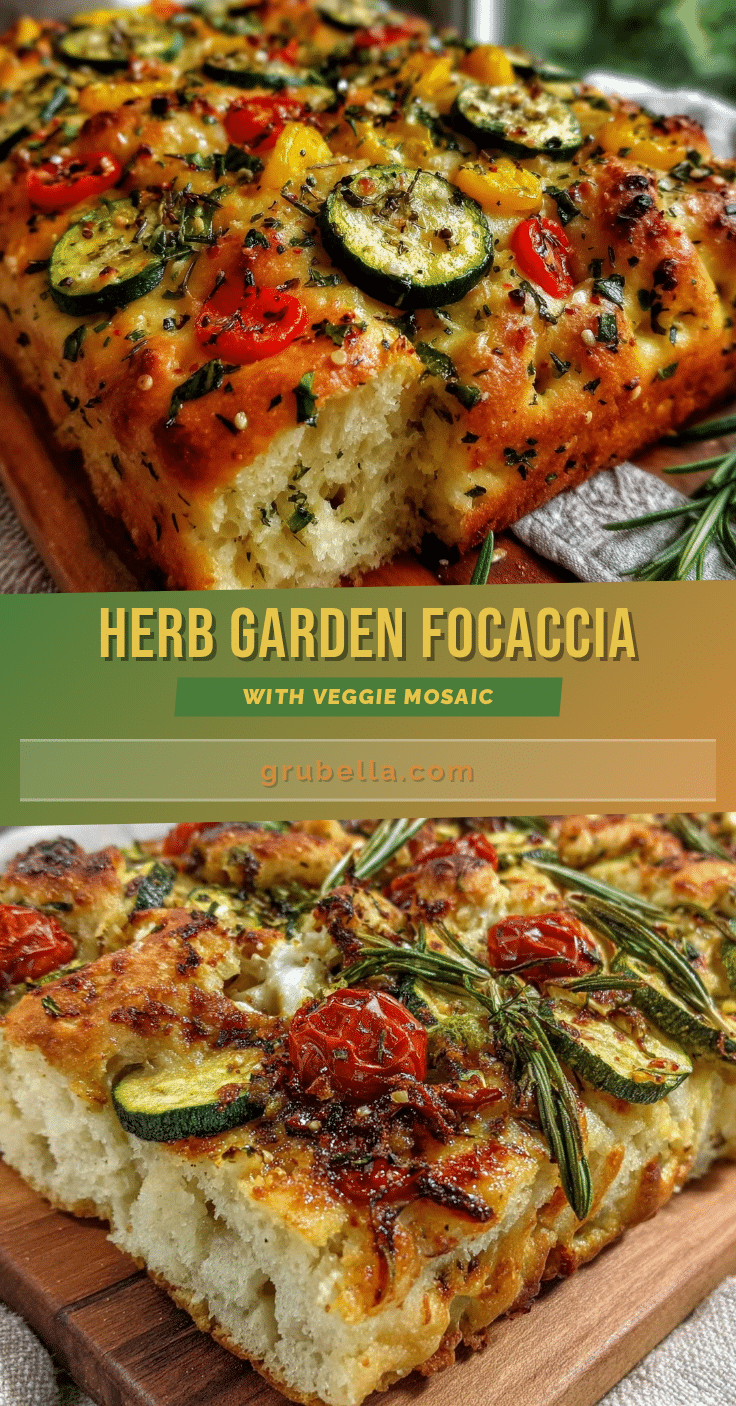
Perfect Herb Garden Focaccia Art Bread Recipe with Easy Vegetable Mosaic Tutorial
A beautiful and delicious herb garden focaccia art bread featuring a vegetable mosaic, combining fresh herbs and seasonal veggies for a flavorful and visually stunning bread.
- Prep Time: 20 minutes
- Cook Time: 25 minutes
- Total Time: 2 hours 15 minutes
- Yield: 1 focaccia (about 8 servings) 1x
- Category: Bread
- Cuisine: Italian
Ingredients
- 4 cups (480g) all-purpose flour
- 2 ¼ teaspoons active dry yeast (one packet)
- 1 ¾ cups (420ml) warm water (around 110°F / 43°C)
- ¼ cup (60ml) extra virgin olive oil, plus more for drizzling
- 1 teaspoon granulated sugar
- 2 teaspoons fine sea salt, plus extra for topping
- 2 tablespoons fresh rosemary, finely chopped
- 1 tablespoon fresh thyme, finely chopped
- 2 cloves garlic, minced
- ¼ cup (60ml) olive oil (for herb oil), warmed slightly
- Cherry tomatoes, halved
- Thinly sliced zucchini (ribbons or rounds)
- Thin slices of red onion
- Yellow bell pepper, cut into small squares
- Black olives, pitted and sliced (optional)
Instructions
- Activate the yeast: In a large bowl, whisk together warm water, sugar, and active dry yeast. Let sit for 5–10 minutes until frothy and bubbly.
- Mix the dough: Add flour and sea salt to the yeast mixture. Stir until it starts to come together. Pour in ¼ cup olive oil and knead for 8–10 minutes until smooth and elastic.
- First rise: Lightly oil a mixing bowl, place dough inside, cover with a damp towel or plastic wrap, and let rise in a warm spot for 1 to 1 ½ hours until doubled in size.
- Prepare the herb oil: Mix chopped rosemary, thyme, minced garlic, and ¼ cup warm olive oil in a small bowl. Set aside.
- Shape the dough: Transfer dough to a well-oiled 9×13 inch baking pan. Stretch and press to fill the pan evenly. Dimple the surface deeply all over with fingertips.
- Create the vegetable mosaic: Press vegetable pieces gently into the dough dimples, arranging them like a garden scene.
- Second rise: Cover the pan loosely and let dough rise again for 30–40 minutes until puffy.
- Brush with herb oil and season: Generously brush herb-infused olive oil over the surface, making sure it pools in dimples and around veggies. Sprinkle with flaky sea salt.
- Bake: Preheat oven to 425°F (220°C). Bake on middle rack for 20–25 minutes until golden brown and crispy on edges.
- Cool and serve: Let bread cool in pan for 10 minutes before slicing. Serve warm or at room temperature.
Notes
[‘Don’t skip the dimpling to trap olive oil and herbs for moist, flavorful bread.’, ‘Use fresh herbs for best flavor; if using dried, use half the amount and combine with garlic.’, ‘Press veggies gently to keep mosaic pattern visible.’, ‘If veggies brown too fast, tent with foil halfway through baking.’, ‘Dust dough lightly with flour if too sticky, but avoid adding too much.’, ‘Pre-oil baking sheet to prevent sticking and promote crispy bottom crust.’, ‘Dough can be prepared ahead and refrigerated overnight; bring to room temperature before shaping.’]
Nutrition
- Serving Size: 1 slice (1/8 of foca
- Calories: 220
- Sugar: 3
- Sodium: 300
- Fat: 8
- Saturated Fat: 1
- Carbohydrates: 30
- Fiber: 2
- Protein: 4
Keywords: focaccia, herb bread, vegetable mosaic, rosemary, thyme, olive oil, easy bread recipe, garden bread, vegetarian, vegan, appetizer