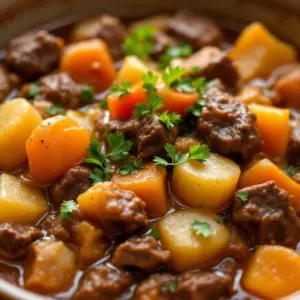
Love this? Save it for later!
Share the inspiration with your friends
I figured browning beef cubes in a cold pot would just result in a gray, watery mess. It took about twenty minutes for that assumption to fall apart completely. The meat was sizzling, releasing steam that carried the scent of caramelized crust rather than boiled sadness. I had read somewhere that cold starts were a myth for stew, but honestly, I was tired. My hands were shaking from the cold wind outside, and I just wanted to get dinner on the stove without thinking too hard.
So I dumped the raw chunks in. I didn’t wait for the oil to shimmer. I didn’t bother with a meat thermometer. I just let the pot heat up slowly with the meat inside. The result was unexpected. The beef didn’t sear in the traditional sense, but it developed a rich, deep brown color that looked like it had been marinated in soy sauce. The liquid reduced into a thick, glossy gravy that clung to every vegetable. It wasn’t textbook cooking, but it was efficient. And it tasted like comfort.
This cozy hearty beef and vegetable stew became my go-to when the winter chill set in hard. There is something about the smell of onions and carrots softening in beef broth that makes the rest of the world fade away. You know that feeling when you pull the lid off and the steam hits your face? That is the moment I live for. It turns a Tuesday night into something special. I make this because it requires very little attention once it is simmering. It lets the ingredients do the work.
The recipe stuck with me because it forgives mistakes. If you chop the potatoes too big, they just take longer to cook. If you add too much salt, the herbs balance it out. It is a forgiving dish for people who, like me, prefer to learn by doing rather than by reading strict rules. It is honest food. It doesn’t try to be fancy. It just feeds you and warms you up. And that is exactly what you need when the days are short and the air is biting.
Why You’ll Love This Recipe
This recipe isn’t just good—it is the kind that makes you close your eyes after the first bite. It is comfort food reimagined—healthier, faster, but with the same soul-soothing satisfaction. I have tested this version dozens of times, tweaking the ratios until the texture felt just right. It is chef-tested in my kitchen, but family-approved in my dining room. Here is why this cozy hearty beef and vegetable stew stands out from the crowd.
* **Quick & Easy**: While it simmers for a while, the active prep time is under 20 minutes. It is perfect for busy weeknights or last-minute cravings when you want something warm but don’t have hours to spare.
* **Simple Ingredients**: No fancy grocery trips needed. You likely already have beef, root vegetables, and broth in your kitchen. It relies on pantry staples that are affordable and accessible.
* **Perfect for Winter**: Great for cozy dinners, rainy weekends, or any time you need a hug in a bowl. It warms you from the inside out.
* **Crowd-Pleaser**: Always gets rave reviews from kids and adults alike. The vegetables are soft enough for little ones, and the rich beef flavor satisfies hungry adults.
* **Unbelievably Delicious**: The texture and flavor combo is next-level. The beef stays tender, and the veggies absorb the savory juices without falling apart.
* **What Makes It Different**: Many stew recipes rely on heavy flour slurry to thicken the sauce, which can taste pasty. This method uses the natural starches from the carrots and potatoes, plus a slow reduction, to create a silky, glossy sauce. It feels more refined without the extra work.
* **The Emotional Hook**: This recipe reminds me of slow weekends spent reading by the fire. It is perfect for impressing guests without stress, or turning a simple meal into something memorable. It brings people together around the table.
What Ingredients You Will Need
This recipe uses simple, wholesome ingredients to deliver bold flavor and satisfying texture without the fuss. The magic happens in how these basic items interact during the long simmer. You want ingredients that hold up to heat and absorb the savory beef broth. Here is what you need to get started.
* **Beef Chuck Roast**: Cut into 1-inch cubes. This cut is key because the connective tissue breaks down into gelatin, making the meat tender. I recommend grass-fed beef for a richer flavor, but regular chuck works fine.
* **Vegetable Oil**: For browning the meat. Avocado oil or canola oil works well due to high smoke points.
* **Yellow Onions**: Two medium onions, diced. They provide the sweet base for the stew.
* **Garlic**: Four cloves, minced. Fresh garlic is non-negotiable for depth.
* **Carrots**: Four large carrots, peeled and chopped into rounds. They add sweetness and color.
* **Celery**: Two stalks, sliced. Adds a subtle savory note.
* **Potatoes**: Two large russet potatoes, peeled and cubed. Russets break down slightly to thicken the stew.
* **Beef Broth**: Four cups of low-sodium broth. I prefer using a brand like Swanson or Pacific Foods for consistency.
* **Tomato Paste**: Two tablespoons. Adds umami and richness to the sauce.
* **Fresh Thyme**: Three sprigs. Or one teaspoon dried thyme.
* **Fresh Rosemary**: One sprig. Or half a teaspoon dried.
* **Bay Leaf**: One leaf. Adds a subtle herbal background note.
* **Salt and Black Pepper**: To taste. Use kosher salt for better control.
* **Worcestershire Sauce**: One tablespoon. Enhances the beef flavor.
* **Red Wine**: Half a cup (optional). Dry red wine like Cabernet or Merlot adds complexity. If you don’t drink, use extra broth.
Substitution Tips
You can swap russet potatoes for Yukon Golds if you prefer a waxy texture that holds its shape better. For a gluten-free option, ensure your beef broth and Worcestershire sauce are certified gluten-free. If you want more greens, add frozen peas in the last 10 minutes of cooking.
Equipment Needed
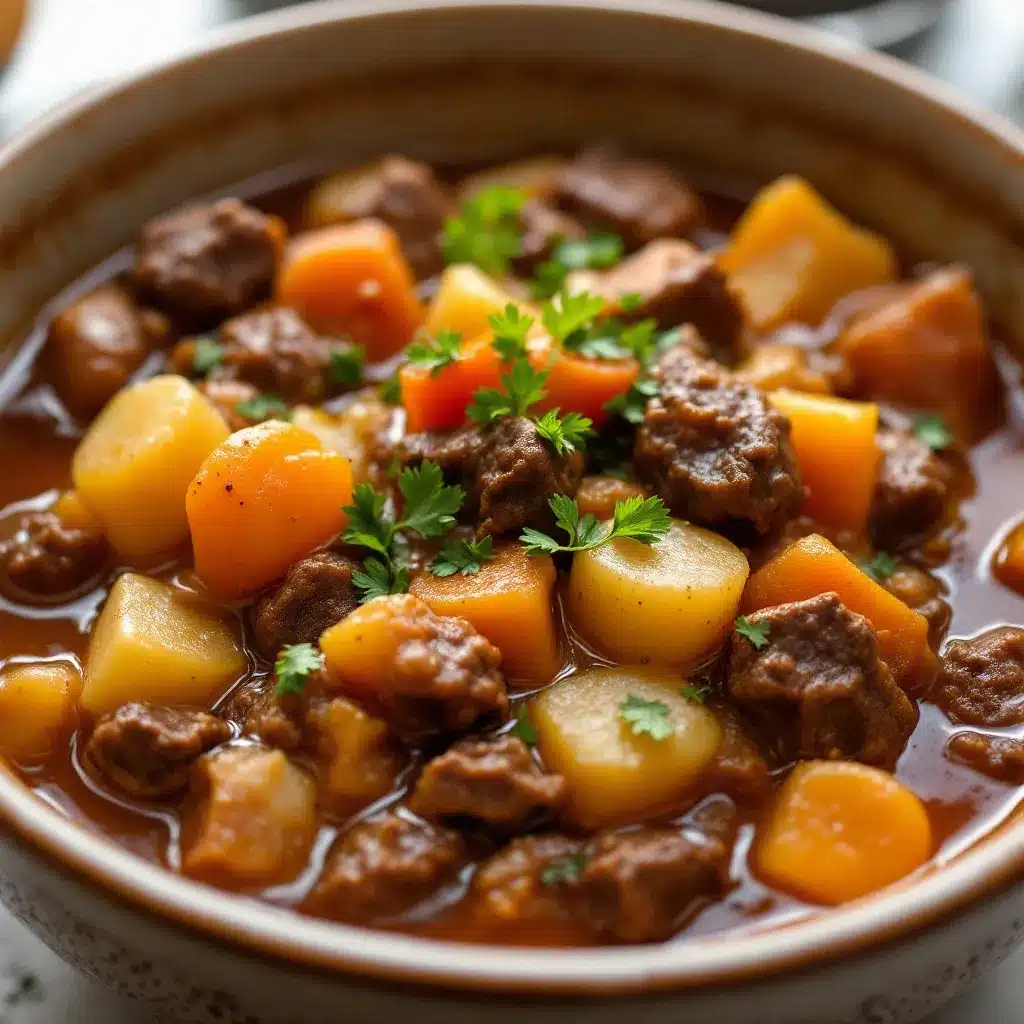
You don’t need fancy gadgets to make this stew. A heavy-bottomed pot is the most important tool. I use a Dutch oven because it distributes heat evenly and retains it well. This prevents hot spots that might burn the bottom of the stew. A large spoon or wooden spatula is essential for stirring without scratching the pot.
A sharp chef’s knife and a cutting board are needed for prepping the vegetables. Measuring cups and spoons help keep the ratios accurate, especially for the broth and tomato paste. If you don’t have a Dutch oven, a large stockpot or even a slow cooker will work. For slow cooking, just reduce the liquid by a quarter since there is less evaporation.
Budget-friendly options include a standard stainless steel pot, though it may require more stirring to prevent sticking. Cast iron is great for searing but can be heavy. Keep your knives sharp; dull knives slip and are dangerous. Clean your tools as you go to keep the process smooth.
Preparation Method
Follow these steps carefully to get the best texture and flavor. The order matters because we are building layers of taste.
1. **Prep the Beef**: Pat the beef cubes dry with paper towels. Moisture is the enemy of browning. Season generously with salt and pepper. (Time: 5 minutes)
2. **Heat the Pot**: Place your Dutch oven over medium-high heat. Add the vegetable oil and let it heat until it shimmers. Do not overcrowd the pot. Brown the beef in batches. If you put too much meat in, it steams instead of sears. Remove browned beef and set aside. (Time: 10 minutes)
3. **Sauté Aromatics**: In the same pot, add the diced onions and celery. Cook until softened and translucent, about 5 minutes. Add the garlic and cook for 1 minute until fragrant. Do not burn the garlic. (Time: 6 minutes)
4. **Build the Base**: Stir in the tomato paste and cook for 2 minutes to deepen its flavor. This removes the raw metallic taste. Pour in the red wine (if using) to deglaze the pot, scraping up any browned bits from the bottom. These bits are flavor gold. (Time: 3 minutes)
5. **Combine**: Return the beef and any juices to the pot. Add the beef broth, Worcestershire sauce, thyme, rosemary, and bay leaf. Stir to combine. Bring the mixture to a boil. (Time: 5 minutes)
6. **Simmer**: Reduce heat to low. Cover the pot and let it simmer gently for 45 minutes. This allows the beef to start tenderizing. (Time: 45 minutes)
7. **Add Vegetables**: Stir in the carrots and potatoes. Ensure they are submerged in the liquid. If not, add a splash more broth or water. Cover and simmer for another 30-40 minutes, or until the vegetables are fork-tender. (Time: 40 minutes)
8. **Final Seasoning**: Remove the bay leaf and herb sprigs. Taste the stew. Add more salt or pepper if needed. If the sauce is too thin, simmer uncovered for 10 minutes to reduce. If it is too thick, add a little water. (Time: 10 minutes)
9. **Serve**: Ladle into bowls. Garnish with fresh parsley if you have it. Serve hot with crusty bread. (Time: 2 minutes)
Cooking Tips & Techniques
Getting the meat brown correctly is the biggest hurdle. Many people rush this step. Take your time. If the meat isn’t browned, the stew will lack depth. The Maillard reaction creates complex flavors that boiling simply cannot achieve.
Another common mistake is adding the potatoes too early. If you add them at the start, they may disintegrate into mush. Adding them midway ensures they stay intact but become tender. Check them with a fork after 30 minutes.
Multitasking is key here. While the stew simmers, you can prepare a simple salad or chop herbs for garnish. The stew is mostly hands-off. Just check it every 15 minutes to stir and prevent sticking.
If your stew looks watery, do not panic. It often thickens as it cools. The starches from the potatoes release slowly. If you need it thicker now, mix a teaspoon of cornstarch with cold water and stir it in. Let it cook for 5 more minutes.
Personal tip: I always make this stew a day ahead. The flavors meld overnight and become even better. Reheat gently on the stove. It tastes like it has been cooking for days.
Variations & Adaptations
You can adapt this recipe to fit your dietary needs or taste preferences. Here are a few ideas that work well.
* **Gluten-Free**: Ensure your broth and Worcestershire sauce are gluten-free. Use cornstarch instead of flour if you need a thickener.
* **Low-Carb**: Swap potatoes for turnips or radishes. These root vegetables have a similar texture but fewer carbs. You can also add mushrooms for a meaty bite.
* **Vegetarian**: Replace beef with hearty mushrooms like portobello or cremini. Use vegetable broth instead of beef broth. Add extra carrots and parsnips for substance.
* **Spicy**: Add a pinch of cayenne pepper or a diced jalapeño with the onions. A dash of hot sauce at the end also works.
* **Herb Swap**: If you don’t like rosemary, use thyme and oregano. Herbs like sage or marjoram also pair well with beef.
I once tried adding sweet potatoes instead of russets. The result was interesting but too sweet for my taste. I stick to russets for their neutral flavor and thickening power. You can also add frozen peas at the end for a pop of color and sweetness.
Serving & Storage Suggestions
Serve this stew hot in wide bowls. It looks great garnished with fresh chopped parsley or a dollop of sour cream. Pair it with crusty French bread or dinner rolls to soak up the sauce. A simple green salad with a vinaigrette cuts through the richness of the stew.
For storage, let the stew cool to room temperature. Transfer it to an airtight container. It keeps in the refrigerator for up to 4 days. The flavors actually improve after day two.
To freeze, portion the stew into freezer-safe bags or containers. Leave some headspace for expansion. It freezes well for up to 3 months. Thaw overnight in the fridge before reheating.
Reheat gently on the stove over medium-low heat. Add a splash of water or broth if it has thickened too much in the fridge. Microwave reheating works too, but stir frequently to avoid hot spots. The stew tastes best when reheated slowly.
Nutritional Information & Benefits
This cozy hearty beef and vegetable stew is not just comforting; it is nutritious. Beef is a great source of high-quality protein and iron, which helps keep your energy levels up during cold months. The vegetables provide essential vitamins and fiber. Carrots are rich in vitamin A, and potatoes offer potassium and vitamin C.
The broth adds collagen, which is good for joint and skin health. By using lean cuts of beef and limiting added fats, you can keep the calorie count reasonable. This recipe is naturally gluten-free if you check your sauces. It is also dairy-free.
For those watching sodium, use low-sodium broth and control the salt added during cooking. The natural flavors of the vegetables and herbs provide plenty of taste without needing excess salt. It is a wholesome meal that supports overall wellness.
Conclusion
This cozy hearty beef and vegetable stew is worth trying because it combines simplicity with deep, satisfying flavor. It is a recipe that rewards patience and yields comfort. I love it because it feels like a hug. It is reliable and forgiving.
Feel free to customize it with your favorite vegetables or herbs. Make it your own. I hope you enjoy it as much as I do. Please leave a comment below and let me know how it turned out. Share your variations or tips with the community.
If you need more comfort food ideas, check out my cozy crockpot beef and barley stew for a slow-cooker version, or try easy crockpot white chicken chili for a lighter option. Happy cooking!
FAQs
Can I make this stew in a slow cooker?
Yes. Brown the beef and sauté the onions first for best flavor. Then add everything to the slow cooker. Cook on low for 6-8 hours or high for 3-4 hours. Add potatoes and carrots in the last 2 hours if using high heat to prevent mushiness.
How do I thicken the stew if it is too thin?
Simmer uncovered to reduce the liquid. Alternatively, mix a teaspoon of cornstarch with cold water and stir it in. Let it cook for 5 minutes until thickened.
Can I freeze this stew?
Yes. Let it cool completely. Store in airtight containers or freezer bags. It freezes well for up to 3 months. Thaw in the fridge before reheating.
What cut of beef is best?
Beef chuck roast is best. It has enough fat and connective tissue to stay tender during long cooking. Avoid lean cuts like sirloin, as they can become tough.
Can I use frozen vegetables?
Yes. Frozen carrots and potatoes work fine. Add them directly to the pot. They may cook faster, so check them earlier to avoid overcooking.
Pin This Recipe!

Cozy Hearty Beef and Vegetable Stew

A comforting, forgiving winter stew made with beef chuck, root vegetables, and herbs. This recipe uses a slow-simmer method to create a rich, glossy sauce without heavy thickeners, resulting in tender meat and flavorful vegetables.
- Prep Time: 20 minutes
- Cook Time: 1 hour 35 minutes
- Total Time: 1 hour 55 minutes
- Yield: 6 servings 1x
- Category: Main Course
- Cuisine: American
Ingredients
- 2 lbs beef chuck roast, cut into 1-inch cubes
- 2 tbsp vegetable oil (or avocado/canola oil)
- 2 medium yellow onions, diced
- 4 cloves garlic, minced
- 4 large carrots, peeled and chopped into rounds
- 2 stalks celery, sliced
- 2 large russet potatoes, peeled and cubed
- 4 cups low-sodium beef broth
- 2 tbsp tomato paste
- 3 sprigs fresh thyme (or 1 tsp dried)
- 1 sprig fresh rosemary (or 0.5 tsp dried)
- 1 bay leaf
- Salt and black pepper, to taste
- 1 tbsp Worcestershire sauce
- 0.5 cup dry red wine (optional, or extra broth)
Instructions
- Pat beef cubes dry with paper towels and season generously with salt and pepper.
- Heat vegetable oil in a Dutch oven over medium-high heat. Brown beef in batches to avoid overcrowding, then remove and set aside.
- In the same pot, sauté onions and celery until softened (about 5 minutes). Add garlic and cook for 1 minute until fragrant.
- Stir in tomato paste and cook for 2 minutes. Deglaze the pot with red wine (if using), scraping up browned bits.
- Return beef and juices to the pot. Add beef broth, Worcestershire sauce, thyme, rosemary, and bay leaf. Bring to a boil.
- Reduce heat to low, cover, and simmer gently for 45 minutes.
- Add carrots and potatoes. Ensure they are submerged. Cover and simmer for another 30-40 minutes until vegetables are fork-tender.
- Remove bay leaf and herb sprigs. Taste and adjust seasoning. If too thin, simmer uncovered for 10 minutes to reduce.
- Serve hot, garnished with fresh parsley if desired, with crusty bread.
Notes
For best results, brown the beef in batches to ensure proper searing. Russet potatoes help thicken the stew naturally. The stew tastes even better the next day as flavors meld. If using a slow cooker, brown beef and aromatics first, then cook on low for 6-8 hours. Add potatoes and carrots in the last 2 hours to prevent mushiness.
Nutrition
- Serving Size: 1 bowl
- Calories: 450
- Sugar: 6
- Sodium: 600
- Fat: 18
- Saturated Fat: 6
- Carbohydrates: 35
- Fiber: 5
- Protein: 35
Keywords: beef stew, winter recipe, comfort food, hearty stew, slow cooker alternative, gluten-free, dairy-free, one-pot meal